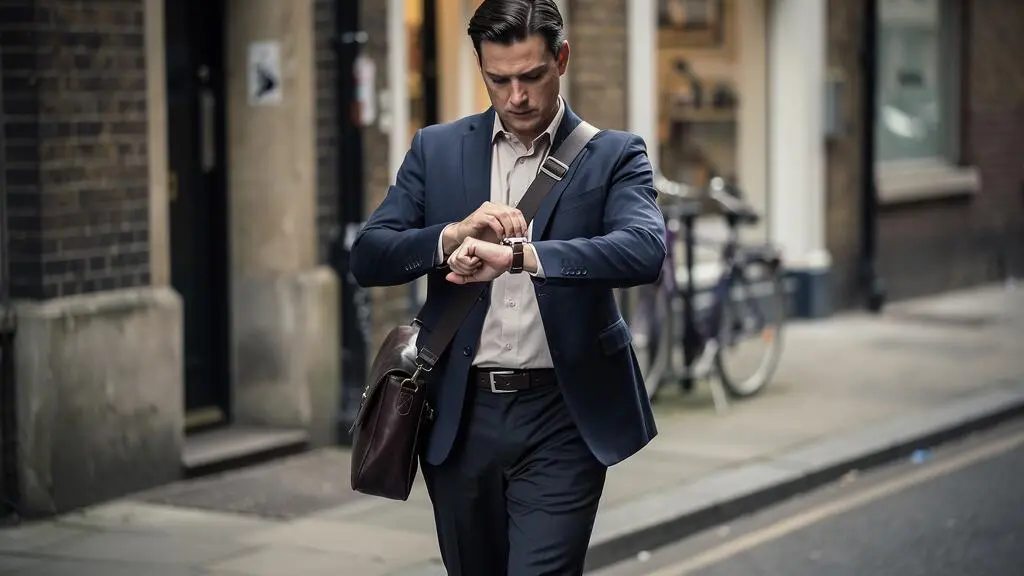
The most refined men’s designer accessories rarely announce themselves. A well-proportioned watch, a quietly finished leather bag or a carefully chosen belt can make familiar clothes feel considered without drawing attention to their price or label.
The difference lies in function, proportion and consistency. A bag should carry what your working day demands. A watch should suit the clothes you actually wear. Leather and metal finishes should complement your wardrobe rather than compete with it.
For men navigating UK offices, business-casual settings, commuting and social occasions, restraint is particularly useful. An accessory that works with a navy blazer, an Oxford shirt and dark jeans may offer more everyday value than a conspicuous piece reserved for special occasions.
The practical approach is to identify what you use, choose the appropriate construction and keep visual signals controlled. Designer quality is worth considering where craftsmanship, comfort or repairability genuinely improve the experience—not simply because a name is recognisable.
Understated designer accessories: the essentials
- Choose accessories that solve an everyday need and complement at least three existing outfits.
- Prioritise proportion, comfortable carrying, reliable hardware and suitable materials over visible branding.
- Keep accessories within a coherent level of formality, and maintain useful pieces before replacing them.
- Why Can One Accessory Make You Look More Put-Together Than A New Jacket?
- How to Choose Men’s Accessories Based on What You Carry Every Day, Not Hype?
- Watch or Bag: Which First Designer Accessory Gets More Daily Use?
- The Accessories Mistake That Makes Smart Casual Look Confused Instantly
- When Should You Replace an Everyday Accessory Before It Starts Undermining Your Look?
- How to Measure What You Actually Carry So You Don’t Buy the Wrong Satchel Size?
- How to Choose One Suit That Works for Interviews and Weddings Without Looking the Same?
- Which Leather Satchel Works for a UK Commute Without Killing Your Shoulder?
Why Can One Accessory Make You Look More Put-Together Than A New Jacket?
One well-chosen accessory can make an outfit look more considered because it provides a consistent finishing detail across different clothes. A discreet watch, properly maintained leather bag or simple belt may complement several outfits without requiring a wardrobe overhaul. The effect comes from proportion, condition and coordination rather than the accessory’s price or brand recognition.
A jacket establishes much of an outfit’s silhouette, but accessories contribute details that become noticeable during conversation and everyday interaction. A watch appears when checking the time or reaching across a table; a bag accompanies its owner through the commute and into meetings.
That repeated visibility gives these pieces opportunities to reinforce an impression of care. It does not mean accessories matter more than the fit or condition of the clothes themselves. A badly fitting jacket cannot be rescued by an expensive watch.
Refinement is not the same as visibility. A useful personal test is whether someone notices the individual first and the accessory later. That is a styling judgement, not a measurable universal rule, but it helps distinguish thoughtful design from attention-seeking decoration.
Consider a navy blazer, white shirt and charcoal trousers. A dark leather watch strap or understated brown satchel introduces texture without dominating the combination. A brightly branded bag or highly reflective oversized watch could instead become its main visual focus.
Material character also matters. Full-grain leather retains its natural grain, while some vegetable-tanned leathers develop a distinctive patina. These properties, explained in Leather Naturally‘s material and care FAQs, can add visual interest without relying on conspicuous hardware. The organisation represents the leather industry, so its guidance should be understood as material information rather than independent proof of leather’s superiority.
Before purchasing an accessory, apply a simple three-outfit rule: identify three combinations already in your wardrobe in which the piece looks appropriate. Ideally, these should cover more than one part of your routine—for example, the office, a weekend lunch and an evening out.
This avoids purchasing an accessory that looks impressive in isolation but is difficult to wear. It also highlights why restrained colours and uncomplicated designs often make practical first investments.
The opposite mistake is treating an expensive accessory as a substitute for care. Poor stitching, peeling coatings, excessive shine or visibly damaged edges may undermine an otherwise polished appearance. Construction and maintenance deserve attention before prestige.
A useful accessory should make getting dressed easier. The next decision is therefore less about which designer to choose and more about which object your daily routine actually requires.
How to Choose Men’s Accessories Based on What You Carry Every Day, Not Hype?
Choose men’s accessories by recording what you genuinely wear and carry during a normal working week, then matching purchases to those repeated needs. Separate items worn on the body from objects transported in a bag and accessories used only occasionally. Frequent use should guide spending priorities, while materials and construction should reflect how the item will be handled.
An attractive accessory can be a poor purchase if it belongs to an imagined lifestyle. A slim document case is inconvenient when your commute involves a laptop, charger, water bottle and lunch. An oversized wallet adds unnecessary bulk if you only carry a few cards.
Start with a seven-day carry audit. Record the contents of your pockets and bag before leaving home, then check what you actually used when you return.
Group the results into three categories:
- Worn on the body: watches, belts, eyewear and other accessories used throughout the day.
- Carried regularly: wallets, keys, laptop bags, travel-card holders and equipment organisers.
- Occasional: cufflinks, formal pocket squares, special-event bags and other infrequently used pieces.
The first two groups generally provide the strongest opportunities for functional improvements. Occasional accessories may still be worthwhile, but they should not automatically absorb the largest share of your budget.
Next, assess material suitability. A daily bag needs sound stitching, secure strap anchors, dependable closures and a surface suited to repeated handling. Full-grain leather is one option, but a well-constructed technical textile may be preferable where low weight and moisture resistance are central concerns.
For occasional use, a finer finish or more delicate leather may be acceptable. The important distinction is between material prestige and material suitability. Neither a premium label nor a particular tanning method guarantees that a product will endure your routine.
The principle extends to small accessories. A cardholder should hold the cards you actually need without stretching. A belt should fasten comfortably with sufficient adjustment. A watch should be readable, comfortable and appropriate for your working environment.
Your five-step everyday accessory audit
- Record every item you carry for seven days. Produce one consolidated inventory showing how often each item is used.
- Sort the inventory into worn, carried and occasional categories. Mark the items used on at least five days.
- Identify one recurring inconvenience, such as overfilled pockets or an uncomfortable strap. Write a specific problem statement.
- Set minimum buying requirements for dimensions, closure, material and comfort. Create a short specification that can be checked against product details.
- Test each potential purchase against three existing outfits and its intended contents. Keep a written shortlist of pieces that pass both checks.
Once the need is established, choosing between a watch and a bag becomes a practical decision rather than a contest between designer names.
Watch or Bag: Which First Designer Accessory Gets More Daily Use?
A watch is often the more versatile first designer accessory for someone who travels light, while a bag can offer greater practical value for a commuter carrying equipment every day. Compare how frequently each item will be used, which situations it suits and whether it solves an existing inconvenience. Neither category is automatically the better investment.
A restrained watch can accompany office tailoring, knitwear, jeans and many evening outfits. Its compact size and relatively neutral appearance make it easy to incorporate into different wardrobes.
However, someone who relies entirely on a phone to check the time may find that a watch provides mainly aesthetic value. That can still justify a purchase, but it should be recognised rather than disguised as necessity.
A bag serves a different purpose. For someone carrying a laptop, documents or gym clothing on most working days, better organisation and carrying comfort may have a more immediate effect than a new watch.
The following comparison is a practical decision framework rather than a ranking based on measured consumer performance.
| Decision criterion | Watch | Bag |
|---|---|---|
| Daily usefulness | High if worn regularly and used to tell the time | High if equipment is transported every day |
| Versatility | Often suitable across casual and formal settings | Depends on size, construction and destination |
| Comfort priorities | Case size, weight and strap fit | Loaded weight, strap support and access |
| Maintenance | Strap, case, clasp and movement requirements | Surface, stitching, closures and strap anchors |
| Best first buyer | Someone who travels light | Someone with substantial daily carry needs |
Consider cost per actual use, rather than purchase price alone. Divide the amount paid by the number of times you expect realistically to use the accessory during a defined period. This is a personal budgeting tool, not proof of resale value or long-term durability.
For example, as a hypothetical comparison, a bag used on every commuting day may offer more frequent practical benefit than a watch reserved for weekends. Reverse those habits and the conclusion changes.
The best first accessory also establishes a useful reference for future choices. A black grained-leather bag with discreet hardware can sit alongside a wide range of restrained watches, belts and shoes. A highly distinctive colour or finish may demand more deliberate coordination.
That does not mean every piece of metal or leather must match exactly. Consistency of visual weight and formality generally matters more than rigid colour matching.
Once that choice is made, the next challenge is ensuring the accessory belongs with the rest of the outfit rather than introducing a competing dress code.
The Accessories Mistake That Makes Smart Casual Look Confused Instantly
The most common smart-casual accessories mistake is combining pieces that communicate incompatible levels of formality without an intentional connection. A tailored blazer, conspicuously sporty watch and oversized gym bag can pull an outfit in different directions. A more coherent approach is to choose accessories that share a similar degree of polish, even when their materials or colours differ.
Smart casual allows contrast, but contrast works best when the elements feel deliberate. A textured jacket and clean trainers can coexist; a heavily worn sports bag may be less convincing alongside polished office shoes and a crisp shirt.
The aim is not to enforce absolute dress-code rules. It is to prevent one accessory from appearing disconnected from the setting and the rest of the clothing.
Menswear specialist publication Permanent Style‘s examples of tailored, evening and casual outfits illustrate how watches, footwear and other details can change alongside the overall level of dress. These are editorial styling examples, not evidence of universal rules.
It helps to classify accessories into three broad registers before getting dressed.
| Register | Suitable watch and belt | Suitable bag |
|---|---|---|
| Casual | Simple sports watch, woven strap or textured leather belt | Understated canvas bag or practical backpack |
| Smart casual | Discreet watch with leather or restrained metal bracelet; plain leather belt | Grained-leather satchel or structured minimalist backpack |
| Formal | Slim, understated watch and simple leather belt where appropriate | Structured briefcase or unobtrusive document case |
These categories are starting points, not prohibitions. A sports watch can look perfectly intentional with a blazer in a contemporary workplace, while polished metal can suit relaxed clothing. Context and proportion decide whether the combination works.
Material texture is an especially useful clue. Canvas, woven straps and grained leather tend to feel more relaxed. Smooth leather and polished metal can convey a more dressed-up impression. Mixing them is not inherently wrong, but a shared colour palette or restrained shape can help connect the pieces.
Visible branding introduces another variable. A large monogram may become the first thing observers notice, even when the item’s formal character otherwise fits. For men seeking understated refinement, smaller branding or unmarked surfaces offer a simpler solution.
Before leaving, examine your watch, belt, footwear and bag together. If one piece seems to belong to an entirely different occasion, consider changing that item rather than rebuilding the outfit.
Coordination improves the initial impression, but the condition of frequently used accessories determines whether that impression lasts.
When Should You Replace an Everyday Accessory Before It Starts Undermining Your Look?
Replace an everyday accessory when its structure, function or visible condition can no longer be restored to an acceptable standard. Attractive leather patina is not the same as damage: colour variation and gentle surface wear may add character, while failing stitching, broken closures and cracked load-bearing components require attention. Inspect high-stress areas and consider repair before replacing the entire item.
A leather bag can look better as its surface develops depth and variation, provided it remains clean and structurally sound. A wallet can soften with use without losing its function. A watch strap can acquire character while still fitting securely.
Patina should not disguise deterioration. Loose stitching, distorted strap attachments, failing clasps and cracked edges may indicate functional problems rather than desirable ageing.
Check each accessory where friction or tension is concentrated:
- Leather bags: strap anchors, handles, stitching, corners, closures and the base.
- Wallets: fold lines, card slots, edge finishing and separation between layers.
- Watches: strap holes, spring bars, bracelet links, clasp security and case condition.
- Belts: buckle attachment, adjustment holes, bending points and cracking around the edges.
A useful inspection interval is the change of each season, with additional checks whenever a defect appears. This is a practical personal routine rather than a manufacturer-prescribed replacement schedule.
Weather exposure also deserves attention during a UK commute. Repeated wetting and unsuitable drying practices may affect leather, but the degree of vulnerability depends on its finish, construction and care. Rain exposure does not automatically mean an accessory needs replacing.
Repair options include replacing a shoulder strap, restitching a seam, changing a buckle or clasp and professionally restoring certain leather surfaces. Leather Naturally discusses cleaning, conditioning and repair, although not every finish or structural defect can be restored.
Before applying any balm or conditioner, check the product maker’s guidance and test the treatment discreetly. Some finishes require specialised cleaning, and unsuitable products can change colour or texture.
Where a strap attachment is separating or a closure cannot reliably secure valuable contents, stop relying on the accessory until it has been assessed and repaired.
Keeping a useful item in service is often preferable to replacing it for cosmetic reasons alone. For a daily bag, however, long-term satisfaction also depends on choosing the correct dimensions from the start.
How to Measure What You Actually Carry So You Don’t Buy the Wrong Satchel Size?
Measure the largest items you regularly carry, including their protective sleeves, then compare those measurements with the satchel’s usable internal compartments. External bag dimensions and advertised capacity do not guarantee that a laptop or document folder will fit. Check the opening, compartment geometry and remaining space, then test the bag with your normal belongings before keeping it.
Begin with the largest rigid object in your daily load. This is often a laptop inside a padded sleeve, but it could be a document folder, lunch container or piece of specialist equipment.
Measure its width, height and thickness in centimetres. Record the dimensions of the protected item, not merely the manufacturer’s nominal laptop screen size.
Next, inspect the bag’s internal dimensions and its opening. A compartment may appear large enough when measured across its widest area but be difficult to use because the opening is narrower or the upper corners taper.
Leave a modest allowance for insertion, removal and the movement of other objects. The amount required depends on the bag’s construction and the rigidity of the item; no single clearance measurement suits every design.
Capacity in litres is not the same as usable geometry. A padded laptop sleeve, internal dividers, reinforced walls and pockets can reduce or separate the available space. Two bags with the same published capacity may accommodate very different combinations of belongings.
A larger bag is not automatically the safer choice. Excess dimensions can add weight, make small items harder to locate and create an awkward silhouette when the bag is lightly packed. Conversely, choosing a satchel that only just closes around your belongings can place unnecessary strain on seams and hardware.
REI‘s daypack selection and fit advice recommends starting with intended use, contents, organisation and carrying comfort. Its guidance concerns backpacks rather than leather satchels, but the principle of assessing a bag with a realistic load is applicable here.
When trying a satchel in a shop—or assessing it at home before deciding whether to keep it—load it with everything you expect to carry during a working day.
- Insert the largest protected item without forcing it past the opening.
- Add your charger, wallet, keys, umbrella and other essentials in their intended locations.
- Close the bag and inspect whether its shape remains balanced.
- Wear it for approximately ten minutes as a practical personal trial, using your normal carrying position.
- Check whether frequently used objects can be reached without unpacking the entire compartment.
The ten-minute trial is a suggested shopping check, not a scientifically established comfort test. It can reveal immediate pressure points or awkward access, but it cannot predict how the bag will feel after months of commuting.
If the contents fit but the loaded bag is uncomfortable, reconsider its strap and weight distribution rather than choosing a larger version by default.
Once the size is established, the same principle of versatility can guide formal clothing purchases: select a restrained foundation, then change its character with appropriate accessories.
How to Choose One Suit That Works for Interviews and Weddings Without Looking the Same?
Choose a well-fitting navy or medium-grey suit in a restrained, versatile fabric, then change the accessories and shirt to suit the occasion. A simple two-piece with moderate proportions can look professional at an interview and more celebratory at a wedding. The distinction comes from styling, provided the suit satisfies the dress expectations of both events.
The foundation should be uncomplicated. Look for a jacket that sits comfortably across the shoulders, trousers that fall cleanly and a silhouette that allows movement without excessive tightness.
A navy or medium-grey wool suit with a subtle texture generally provides more styling flexibility than a highly patterned or shiny design. For many UK settings, a moderate fabric weight can work across several seasons, though comfort still depends on temperature, venue and personal preference.
Avoid unnecessary details that force the suit towards a particular aesthetic: strongly contrasting stitching, conspicuous lining, overly decorative buttons or exaggerated lapel proportions. These are not inherently poor design choices, but they can reduce versatility.
For an interview, keep the accessories calm and the presentation precise. A white or pale-blue shirt, appropriate tie if the sector calls for one, polished leather shoes and a simple watch communicate a conventional professional appearance.
For a wedding, consider changing to a lightly textured shirt, a complementary pocket square, a different tie or a watch strap with a warmer finish. The correct degree of formality depends on the invitation, ceremony and venue.
The contrast is easiest to see when the same suit is styled for two situations.
| Element | Job interview | Wedding guest |
|---|---|---|
| Suit | Navy or medium grey, neatly fitted | The same suit, properly pressed |
| Shirt | White or pale blue | White or subtle texture |
| Neckwear | Reserved tie where appropriate | Complementary tie or open collar if permitted |
| Watch | Understated, restrained strap | Understated metal or warmer leather strap |
| Additional detail | Minimal decoration | Optional discreet pocket square |
Accessories should change the emphasis, not disguise the suit. A pocket square or watch bracelet can produce a different impression, but an outfit still needs to respect the occasion’s expectations.
Not every interview calls for traditional tailoring, and not every wedding permits a standard business suit. Black-tie invitations, for example, require a different approach; an ordinary navy business suit does not become black tie simply through accessory changes.
Similarly, warmer months may make a heavier fabric uncomfortable, while colder outdoor events may call for suitable outerwear. Assess seasonal use before expecting one suit to serve every possible occasion.
A versatile wardrobe reduces the number of pieces required, but daily comfort remains essential. This becomes especially important when choosing a leather bag for a commute involving walking, standing and changing transport.
What matters before choosing a commuter satchel
- The right internal dimensions matter more than a nominal laptop-size claim or advertised capacity.
- Loaded weight, strap width and the route you actually take should shape the carrying design.
- Leather finish, construction and maintenance requirements matter more than assuming every premium leather performs equally in rain.
Which Leather Satchel Works for a UK Commute Without Killing Your Shoulder?
For a UK commute, choose a leather satchel that fits your actual daily load without excess bulk, has a comfortable adjustable shoulder strap and keeps heavy contents secure. Look for stable strap anchors, practical access and a finish suited to occasional rain. If your journey involves long walks or substantial weight, a discreet two-strap backpack may be more comfortable.
Single-shoulder bags concentrate much of their carried weight through one strap. A wider, suitably padded strap can make contact more comfortable, although it cannot eliminate the effects of carrying a heavy load on one side.
Choose a strap that adjusts enough to keep the bag close to the body without restricting movement. Cross-body carrying can help stabilise a satchel and reduce swinging during walking, provided the strap and bag are designed for that position.
A satchel that hangs very low may move more as you walk and become inconvenient on stairs or crowded public transport. One positioned excessively high may feel restrictive. Test several lengths with the actual contents inside.
Construction deserves closer inspection than branding. Check the strap attachment points, reinforced stitching, handle security and closures. A heavy leather body can look substantial but become tiring once a laptop, charger and other equipment are added.
For a commuter who frequently uses a train or bus, a quick-access pocket can be particularly valuable. Travel cards, keys or a phone should be reachable without opening the entire main compartment. The pocket must also keep its contents sufficiently secure for the conditions in which it will be used.
Leather choice affects maintenance. Full-grain leather describes the retention of the original grain surface; vegetable tanning describes a processing method. Neither term alone establishes that a bag is suitable for repeated wet-weather use.
Leather Naturally’s leather-care fact sheet distinguishes pigmented finishes, which can provide some liquid protection, from more absorbent aniline, nubuck and suede surfaces. It also recommends finish-appropriate care. These are industry recommendations, not independent comparative waterproofing results.
For regular UK commuting, a suitably finished leather is often more practical than an easily marked, absorbent surface. However, water resistance depends on more than the leather itself: seams, openings, lining and construction all affect how well the contents are protected.
A sensible maintenance routine is straightforward:
- After exposure to rain, remove surface moisture with a suitable soft cloth and allow the bag to dry naturally according to its maker’s instructions.
- Avoid placing wet leather directly against radiators or other intense heat sources.
- Inspect stitching, strap anchors and hardware regularly, especially after heavy use.
- Clean and condition only with products appropriate to the specific finish, testing them first in an inconspicuous area.
No leather satchel should be treated as fully waterproof without a specific, substantiated product claim. If essential electronics are carried through frequent heavy rain, consider suitable internal protection or a bag designed and tested for that exposure.
Finally, match the bag design to the journey rather than the office alone. A structured briefcase may work for a short walk between a car and a desk. A cross-body leather satchel may suit a moderate train commute with a light load. A minimalist backpack distributes weight over two shoulders and can be preferable when walking further or carrying heavier equipment.
Comfort depends on the individual, the load and the route. A short in-store fitting test is useful, but recurring shoulder discomfort is a reason to reduce or redistribute the load rather than assume a more expensive satchel will solve the problem.
For the next purchase, pack everything you normally take to work, measure the largest item and test a shortlisted bag while loaded. Choose the design that performs comfortably and complements your existing clothes; visible branding need not enter the decision.
Do designer accessories need to match the same brand?
No. A coordinated outfit depends more on proportion, colour, material character and formality than on purchasing everything from one label. Accessories from different makers can complement one another when their design details are restrained and their functions suit the wearer.
Are black or brown leather accessories more versatile?
Both can be versatile. Black often integrates easily with charcoal, grey and darker formal combinations, while brown adds warmth to navy, olive and many casual wardrobes. Examine your existing shoes, belts and bags before deciding. Exact shade matching is less important than creating an intentional overall appearance.
Can a luxury accessory look understated if it has a visible logo?
Yes, depending on its size, placement and contrast. A small, discreet mark may have little visual impact, whereas repeated monograms or prominent branding can become the focal point. If avoiding overt status signals is the priority, unmarked or minimally branded designs are easier to integrate.
Is expensive leather always more durable than a technical fabric?
No. Durability depends on material quality, finishing, construction, hardware, exposure and maintenance. Leather may offer a desirable appearance and repair options, while technical fabrics can be advantageous for weight, cleaning or moisture management. Compare the complete product against its intended use rather than treating price or material category as a guarantee.
Should a watch and belt use exactly the same colour of leather?
Not necessarily. Similar levels of formality and complementary colour tones are usually sufficient. A dark-brown watch strap can work with a medium-brown belt, particularly in smart-casual clothing. A coherent outfit does not require every leather item to share an identical shade or finish.