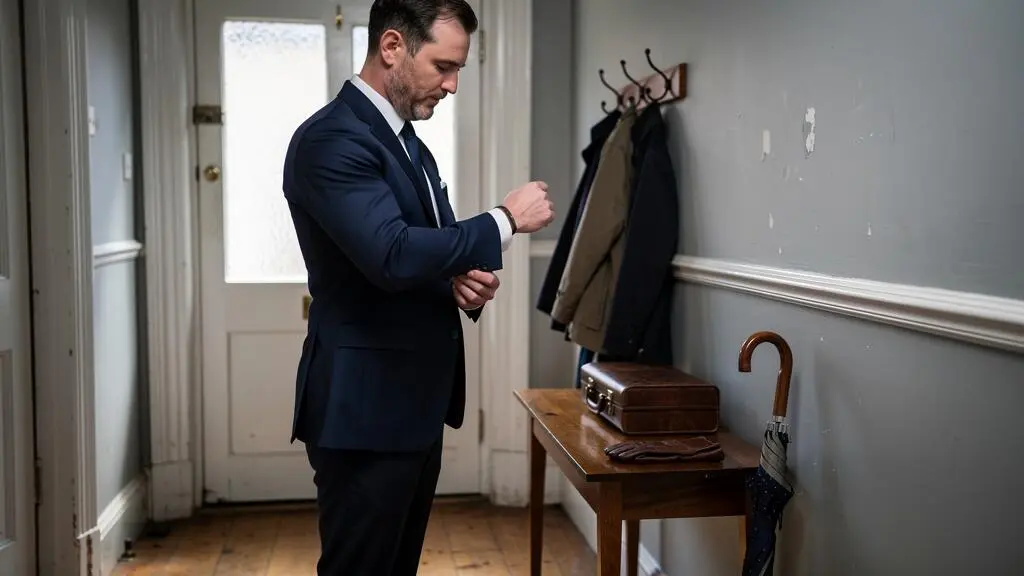
Traditional suiting still has a place in modern British life, but it no longer needs to be the default choice for every working day. For someone who rarely wears formal clothing, the sensible approach is to own a suit that serves specific occasions rather than maintaining a wardrobe built around a dress code that may no longer apply.
A well-chosen suit can cover a formal interview, a daytime wedding, an important client meeting and certain solemn occasions. Its usefulness depends less on an impressive label than on appropriate colour, comfortable construction, correct proportions and the ability to change its appearance with different accessories.
That makes the buying decision particularly important. A suit worn only occasionally must feel comfortable when taken out of the wardrobe, photograph well, accommodate reasonable movement and avoid expensive alterations that could have been prevented at the fitting stage.
Understanding when to wear one, how to judge its construction and which adjustments genuinely improve its fit will help you get more occasions from fewer garments.
Traditional suiting: what matters most
- A suit remains appropriate for occasions where formality conveys professionalism or respect, but the event’s actual dress code should decide.
- A restrained navy or charcoal suit, preferably in a versatile wool fabric, can cover several occasions through changes of shirt, shoes and accessories.
- Prioritise shoulders, chest balance and movement before paying for alterations. Minor length adjustments are generally easier than structural corrections.
- Why Does a Traditional Suit Sometimes Feel Overdressed Now?
- How to Choose One Suit That Works for Interviews and Weddings Without Looking the Same?
- Navy or Charcoal: Which Suit Colour Works Better for UK Daytime Events?
- The Suit Fit Mistake That Makes Even Premium Cloth Look Cheap
- When Should You Tailor a New Suit So You Don’t Pay Twice for Alterations?
- How to Check Stitch Density, Lining, and Seam Allowances in 90 Seconds at the Rail?
- How to Check Blazer Fit in 7 Points Without Needing a Tailor on the Spot?
- How Do You Wear a Tailored Blazer Without Looking Like You’re in a Uniform?
Why Does a Traditional Suit Sometimes Feel Overdressed Now?
A traditional suit can feel overdressed because everyday British clothing conventions have become less formal, particularly in workplaces where smart casual clothing is accepted. The discomfort usually comes from a mismatch between the outfit and the occasion, not from the suit itself. A suit that looks excessive at an informal office gathering may be entirely appropriate at a formal interview or wedding.
British workplace dress has changed considerably from the period when a suit was a routine professional uniform. In research published in November 2023, YouGov reported that just 7 % of UK workers wore business attire, while 34% described their usual clothing as smart casual and 26% as casual.
7%
The proportion of UK workers reporting that they wore business attire in research published in November 2023. This describes the surveyed workplace habits, not a universal dress requirement or an October 2026 measurement.
Even traditionally formal sectors cannot be treated as having one universal policy. An interview at a corporate law firm may warrant conservative tailoring, while a meeting at a creative agency may call for a less structured outfit. The safest approach is to assess the specific organisation rather than rely entirely on its industry.
Before getting dressed, consider four signals:
- The invitation: an explicit dress code takes priority over general assumptions.
- The venue: a formal dining room, hotel ballroom or ceremonial setting suggests different expectations from a neighbourhood restaurant.
- The time and purpose: a daytime celebration, networking event and evening reception may call for different levels of formality.
- The people involved: an employer, host or professional organisation may have conventions worth checking in advance.
A court appearance provides a useful distinction between appropriate and mandatory clothing. According to HM Courts & Tribunals Service guidance on attending court, general attendees are not subject to a formal dress code, but are expected to dress respectfully. A suit can be suitable without being compulsory. The guidance does not define the separate professional dress requirements of legal practitioners.
Funerals, ceremonial occasions and formal dinners may also favour restrained tailoring, although the family’s wishes, invitation or stated dress code should take precedence. An evening event requiring black tie is different from one asking for an ordinary dark suit.
The modern suit succeeds when its formality is intentional. Once the occasion justifies it, the next consideration is whether one dependable suit can cover several events without looking repetitive.
How to Choose One Suit That Works for Interviews and Weddings Without Looking the Same?
Choose a single-breasted, two-button suit in plain navy or charcoal, with restrained lapels, comfortable proportions and a fabric suitable for repeated wear. Keep the suit itself visually neutral, then change the shirt, tie, shoes and accessories to suit each occasion. This creates distinct outfits without requiring separate formal wardrobes for interviews, weddings and receptions.
For an occasional suit, versatility begins with restraint. A plain or subtly woven wool cloth offers more styling options than a dramatic check, highly shiny fabric or heavily textured finish. A moderate fabric weight suited to much of the British year is generally more adaptable than a very lightweight summer cloth or substantial winter tweed.
The same suit can serve three hypothetical situations:
| Occasion | Shirt and accessories | Footwear and overall effect |
|---|---|---|
| Formal job interview | White or pale-blue collared shirt, understated silk tie, simple watch | Clean dark leather lace-up shoes; conservative and professional |
| Daytime wedding in England | White or light-blue shirt, softly coloured or patterned tie, optional tasteful pocket square | Polished brown or dark leather shoes; celebratory without becoming theatrical |
| Evening reception without a black-tie requirement | Crisp white shirt, dark textured tie or open collar if the dress code permits, restrained accessories | Dark leather shoes; relaxed or formal according to the invitation |
These are styling examples, not prescribed national dress rules. A wedding party may specify morning dress, black tie or a particular colour scheme, in which case those instructions override the suggested combinations.
A classic shirt collar can accommodate different ties, while changing from a conservative tie to a softer textured one creates a noticeable shift. A pocket square or subtle buttonhole can add a celebratory touch, although a flower should be coordinated with the wedding party’s wishes rather than assumed appropriate.
For repeated weddings within the same friendship group, a different shirt, tie colour and pocket square can make a familiar suit look fresh. The aim is to vary the outfit’s character, not disguise the garment.
A common mistake is buying a supposedly versatile suit with extremely narrow lapels, exaggerated waist suppression, conspicuous stitching or satin details associated with eveningwear. These features can make the suit less useful in conservative settings and harder to restyle.
Once the design is simple enough to work across occasions, colour becomes the main decision. Navy and charcoal both qualify, but they convey slightly different levels of formality.
Navy or Charcoal: Which Suit Colour Works Better for UK Daytime Events?
Navy is usually the more flexible choice for a UK daytime suit because it works comfortably with a broad range of shirts, ties and wedding accessories. Charcoal offers a more reserved appearance that can suit formal interviews, professional settings and solemn occasions. Neither is universally superior: the best colour depends on where you expect to wear the suit most often.
British daylight often includes overcast conditions, making it sensible to examine suit colours under natural light rather than relying on bright shop lighting. Medium-to-dark navy can retain a recognisable blue tone, while dark charcoal may look almost black in low light. The precise fabric shade and texture matter as much as the colour name.
| Consideration | Navy | Charcoal |
|---|---|---|
| Daytime weddings | Adaptable with lighter accessories and seasonal colours | Elegant but potentially more solemn, especially in a very dark shade |
| Conservative interviews | Professional and widely adaptable | Particularly restrained and authoritative in appearance |
| Overcast daylight | A clear navy retains a useful colour distinction | Very dark charcoal can appear nearly black |
| Shirt and tie options | Works with white, blue, burgundy and many muted colours | Works well with white, pale blue and controlled accent colours |
| Somber occasions | A dark navy may be appropriate where permitted | A useful understated option, subject to the stated dress code |
It is worth distinguishing charcoal grey from true black. Charcoal contains visible grey undertones, whereas black is more stark and is commonly associated with mourning, uniforms and certain formal evening contexts. Neither colour should be confused with a dinner suit intended for black-tie events.
When shopping, compare the actual jacket against a white shirt or neutral background. Step towards a window if possible, and check whether it remains recognisably navy or charcoal. Indoor lighting can distort colour, and online photographs may not faithfully reproduce a fabric’s appearance.
If most of your anticipated events are weddings, celebrations and occasional interviews, navy generally leaves more room for variation. If your principal need is conservative professional dress or suitably restrained clothing for solemn events, charcoal may be a more logical purchase.
After choosing the colour, spend more time checking the fit than comparing marginal differences between cloth labels. Poor proportions will undermine either colour.
The Suit Fit Mistake That Makes Even Premium Cloth Look Cheap
The most damaging suit-fit mistake is choosing a jacket whose shoulders do not follow the wearer’s natural frame. Excessively wide shoulders can create a drooping silhouette, while narrow ones may produce pulling and restricted movement. Incorrect sleeve and trouser lengths compound the problem. Expensive wool cannot compensate for visibly poor proportions, so structural fit should come before fabric prestige.
Shoulder fit is especially important because it establishes the jacket’s overall outline. The sleeve should descend naturally from the shoulder without a large unsupported overhang or obvious tension. A lightly structured or unstructured jacket may sit differently from a heavily padded one, so judge the intended silhouette rather than requiring every design to look identical.
Fit problems are not limited to garments that are too large. An excessively tight jacket may develop an X-shaped crease around the fastening button, pull across the upper arms or cause its rear vents to spread. These signs often indicate insufficient room rather than a fashionable contemporary cut.
Tailoring professionals interviewed in The Guardian‘s advice on choosing a timeless suit emphasise smooth fit across the chest, appropriate shoulder alignment, movement and attention to alterations.
The practical distinction is between changes that are relatively straightforward and those that may be disruptive or uneconomical.
- Often practical: adjusting trouser hems, shortening uncomplicated jacket sleeves and making modest waist adjustments where sufficient fabric and suitable construction allow.
- More conditional: significant waist reshaping, sleeve alterations involving working buttonholes and minor collar corrections. Feasibility depends on the garment.
- Potentially expensive or impractical: major shoulder reconstruction, changing armholes and correcting a jacket that was cut substantially too short.
Jacket shortening deserves particular caution. Although some jackets can be shortened, the operation may disturb pocket placement, button spacing and the relationship between the front and back. It is not a routine solution to buying the wrong length.
Try sitting, walking and reaching forwards. Clothing can look convincing while the wearer stands still yet become uncomfortable during an ordinary journey or a seated interview.
A suitable off-the-peg suit should already fit reasonably well through its difficult structural areas. Alterations then become refinements rather than an attempt to rebuild the garment.
When Should You Tailor a New Suit So You Don’t Pay Twice for Alterations?
Arrange necessary alterations after selecting the correct suit size and before its first important outing. Confirm the overall fit, wear the shoes and shirt intended for the occasion, and agree the required changes in one fitting plan. Avoid paying for minor adjustments before establishing whether the jacket’s underlying proportions are suitable, as later structural decisions may undo earlier work.
A new suit does not normally need to be worn several times before straightforward alterations. Wool can settle with wear, but that is not evidence that early wear permanently fixes creases or that every alteration should be postponed. The practical priority is to assess the garment accurately while it is clean, pressed and in a representative fitting condition.
Some decisions can be made immediately: trouser length, clearly excessive sleeve length and a modest waist adjustment where appropriate. Other changes, such as substantial reshaping or correction of collar balance, warrant a careful discussion with an experienced alterations tailor before any work begins.
Fit the garment with the items you actually intend to wear. Shoes influence how a trouser hem falls, while shirt-cuff length affects the appearance of jacket sleeves. A thin shirt and a thick knit can also change how a jacket feels across the chest.
Check the suit both standing and seated. Photographs taken from the front, side and rear can provide a useful record of shoulder alignment, collar contact, hem length and vent behaviour. They are especially valuable when discussing alterations that are difficult to judge while looking down at yourself.
Five checks before approving suit alterations
- Put on the intended shirt and shoes. Record the exact outfit used for the fitting so the tailor can judge the correct lengths.
- Photograph the jacket from the front, side and back. Keep three clear images showing shoulders, chest and jacket balance.
- Stand, sit and reach forwards. Write down any pulling, restriction or gaping observed during these movements.
- Ask the tailor to separate straightforward adjustments from structural changes. Obtain an itemised alteration proposal before approving work.
- Arrange a final try-on with the same shirt and footwear. Check the completed lengths, fastening and movement before accepting the garment.
Resist the temptation to make a ready-to-wear suit resemble bespoke tailoring through extensive suppression and reshaping. Excessive reduction can distort lapels, pockets, vents and fastening points, especially when the starting size or cut is unsuitable.
When buying on a budget, compare the combined cost of the suit and proposed alterations with the cost of another model that fits better from the outset. The cheaper garment is not necessarily the better-value purchase.
The best result comes from a compatible starting garment and a short, deliberate alteration plan. Understanding the suit’s construction can help you recognise which garments provide that flexibility before you buy.
How to Check Stitch Density, Lining, and Seam Allowances in 90 Seconds at the Rail?
A quick shop-floor quality check should examine stitch consistency, lining comfort, available seam allowance and the construction of the jacket front. Ninety seconds is enough to spot obvious warning signs, but not to establish durability or workmanship conclusively. Look for regular stitching, sound seam finishing, comfortable lining and evidence that future alterations are possible rather than trusting any single quality indicator.
Use the following inspection as a practical screening exercise, not a certified textile test.
- First 20 seconds — visible stitching: inspect a straight seam and its reverse where accessible. Look for regular spacing, loose threads, skipped stitches or uneven tension. Counting stitches within a centimetre may help compare similar seams, but there is no universal stitch-density threshold that proves suit quality.
- Next 20 seconds — lining: open the jacket and check whether the lining is smoothly attached, comfortable against the body and free from obvious pulling. A lining that feels restrictive or poorly attached may reduce comfort, regardless of the outer fabric.
- Next 20 seconds — seam allowances: inspect accessible internal seams, particularly in the trousers. Additional fabric can sometimes make later waist adjustments possible. A neatly finished seam with little spare fabric may still be well made, but provide limited alteration scope.
- Final 30 seconds — jacket front and details: gently feel the chest and lapel construction, then examine buttonholes, buttons and the overall finish. Ask the retailer about the jacket’s internal construction if it cannot be identified confidently.
An important distinction is often overlooked: jacket lining and interlining are not the same thing. The lining is the inner fabric that helps the jacket sit comfortably against clothing. The canvas or fused interlining supports the structure between the outer cloth and the inside of the jacket.
A fully canvassed jacket has an internal canvas extending through the front. A half-canvassed jacket combines canvas in part of the front with fused construction elsewhere, while a fused jacket uses adhesive interlining. These choices influence construction and feel, but none should be treated as a complete measure of quality.
The traditional pinch test involves gently feeling the layers of the jacket front for a separate floating canvas. It can offer a clue, but it is not conclusive for every jacket. Modern fused construction has also improved, so a fused jacket should not automatically be dismissed as defective.
Specialist menswear writer Derek Guy discusses these distinctions in Put This On‘s examination of clothing construction and quality, including why visible luxury details do not necessarily establish the quality of the whole garment.
Working sleeve buttonholes may indicate a more elaborate finish, but they can also complicate sleeve shortening. Decorative stitching, horn-style buttons and branded linings deserve much less weight than actual fit, sensible construction and usable fabric.
A quick inspection helps narrow the selection, but the final buying decision still depends on how the garment sits on your body. The same systematic approach can be applied to a blazer without needing a tailor in the shop.
How to Check Blazer Fit in 7 Points Without Needing a Tailor on the Spot?
Check a blazer’s shoulders, collar, sleeves, overall length, chest, vents and freedom of movement before deciding to buy. These seven observations reveal whether the garment is fundamentally compatible with your body or merely needs straightforward adjustments. A blazer with incorrect shoulders or severe chest distortion is usually a poorer purchase than one requiring only a modest sleeve-length correction.
Stand naturally in front of a full-length mirror, wearing the sort of shirt or knit you would normally pair with the blazer. Avoid pulling the garment into place to conceal an issue before judging it.
- Shoulders: check whether the shoulder line follows your natural frame without excessive overhang or pulling. Different shoulder constructions have different shapes, but major misalignment is difficult and often uneconomical to alter. Reject an obvious structural mismatch.
- Collar: look for a reasonably close relationship between the jacket collar and the shirt collar. Persistent gaping, bunching or lifting may indicate a balance problem. Some collar issues can be corrected, but feasibility requires professional assessment.
- Sleeves: let your arms rest naturally. A small amount of shirt cuff may show according to the chosen styling. Simple sleeve-length adjustments are common, although functional buttonholes and construction details can limit the options.
- Jacket length: judge the overall front and rear proportions, including appropriate coverage for the intended design. Lengthening a jacket is generally not a practical option; shortening is possible only within limits.
- Chest and fastening: fasten the appropriate button and check that the lapels lie reasonably smoothly. A pronounced X-shaped pull suggests tightness. Minor waist adjustments may help, but a jacket that is fundamentally too narrow across the chest is unsuitable.
- Rear vents: check that the vents lie naturally when you stand. Persistent opening can indicate tightness through the hips, seat or back. Small adjustments may be possible, depending on available fabric.
- Movement: sit, turn and reach forwards as though holding a steering wheel. Some restriction is normal in tailored clothing, but persistent pulling or discomfort points towards the wrong size or cut rather than a simple alteration.
Use a phone photograph to inspect the back of the blazer and its full silhouette. A picture taken at a reasonably level angle is often more revealing than looking over your shoulder in a mirror. Avoid judging proportions from an unusually close, wide-angle photograph.
These checks should also account for individual body shapes and intended styling. A deliberately relaxed blazer need not fit like a sharply structured business jacket, but it should still hang coherently and allow comfortable everyday movement.
Once the blazer passes these basic checks, its versatility depends on what you wear with it. A well-fitting jacket need not make the entire outfit look formal.
Key takeaways before styling your blazer
- A blazer should fit its intended role: a relaxed everyday jacket can have softer structure than a formal suit jacket without looking untidy.
- Choose contrasting textures and complementary colours rather than trying to assemble a suit from unrelated tailored pieces.
- Changing the trousers or shirt can soften the overall appearance more effectively than adding numerous decorative accessories.
How Do You Wear a Tailored Blazer Without Looking Like You’re in a Uniform?
Wear a tailored blazer with clothing that deliberately differs from a matching business suit. Dark jeans, well-fitting chinos, fine knitwear or a clean polo shirt can make the jacket feel appropriate for everyday British life. The key is controlled contrast: retain the blazer’s tailored shape while relaxing at least one other part of the outfit, without making the combination appear accidental.
A blazer can look uniform-like when paired automatically with a formal shirt, tie and trousers that resemble suit trousers. Breaking one of those associations can shift the outfit towards smart casual while keeping a polished appearance.
The surrounding garments should reflect the setting. A casual office, restaurant dinner and relaxed weekend gathering do not demand the same level of formality.
| Combination | Overall impression | Suitable context |
|---|---|---|
| Navy blazer, pale shirt, stone chinos, brown loafers | Polished smart casual | Informal client meetings, business-casual workplaces and daytime gatherings |
| Textured blazer, fine-gauge knit, dark straight-leg jeans, suede shoes | Relaxed but considered | Restaurant visits and social occasions without a formal dress code |
| Unstructured blazer, plain polo shirt, tailored chinos, understated leather trainers | Contemporary casual tailoring | Relaxed workplaces and informal daytime events |
These combinations work across different wardrobes and genders, although the precise cut, shoe choice and proportions should be adapted to the wearer. For more formal settings, replacing trainers with leather shoes or the polo with a collared shirt can raise the level of polish without buying another jacket.
Fabric makes a significant difference. A softly constructed blazer in hopsack wool, subtle tweed or fine corduroy naturally suits mixed outfits. Texture helps distinguish the blazer from a conventional suit jacket, particularly when worn with cotton chinos or denim.
By contrast, a smooth, highly structured suit jacket may appear incomplete when separated from its matching trousers. This does not make separates impossible, but it increases the importance of deliberate contrast.
Avoid pairing two similar yet visibly mismatched suiting fabrics. For example, a dark navy suit jacket and slightly different navy tailored trousers can look like an unsuccessful attempt at a matching suit. Clearly contrasting trousers in grey, beige or denim usually create a more intentional outfit.
Also consider proportion. A very long, heavily structured blazer can overwhelm narrow casual trousers, while an extremely cropped jacket may sit awkwardly with traditional formal trousers. Aim for a consistent silhouette rather than combining pieces simply because their colours work together.
For someone building a small, adaptable wardrobe, a plain navy or charcoal suit and a separate, more textured blazer may eventually offer useful variety. However, there is no need to purchase both immediately. Start with the garment required for your most important occasion, then assess what your everyday clothes are missing.
Before making your next purchase, identify the occasions you genuinely expect to attend, try the garment with clothes you already own and check its fit in motion. A traditional suit or blazer earns its place in a modern wardrobe when it provides reliable options without requiring unnecessary extra purchases.
Is a wool suit practical if it is only worn a few times a year?
Yes. A versatile wool suit can be useful for occasional formal events because wool cloth is available in different weights and constructions. Choose a fabric suitable for your expected seasons and environments, follow the care label and store the suit on a supportive hanger in a suitable garment cover. Avoid unnecessary cleaning when careful airing and appropriate spot treatment are sufficient.
Can the same suit be worn to both a wedding and a funeral?
A restrained dark suit may work for both, depending on the invitation and the preferences of the people organising the occasion. Change the shirt, tie and accessories to suit the event. For a funeral, understated clothing is generally the safer choice when no instructions are given, but specific family requests should take priority.
Is it better to buy a cheaper suit and pay for alterations?
That depends on the starting fit and the work required. A reasonably priced suit with suitable shoulders and proportions may become an excellent purchase after minor alterations. A cheap suit requiring major reconstruction can cost more overall and still fit poorly. Compare the complete purchase and alteration cost before deciding.
Should a traditional suit always be worn with a tie?
No. A tie can be appropriate for conservative interviews, formal ceremonies and occasions specifying traditional business dress. For less formal gatherings or workplaces with a relaxed dress code, a clean open-collar shirt may be suitable. The invitation and professional context matter more than a blanket styling rule.
How can you keep an occasional suit ready for an unexpected event?
Store the suit clean and dry, with enough space to retain its shape. Keep an appropriate shirt, reliable shoes and a neutral tie available. Before an event, inspect the garment for marks, missing buttons and creases, then try it on with the intended outfit to confirm the fit. This is particularly useful if the suit has been unworn for a long period.