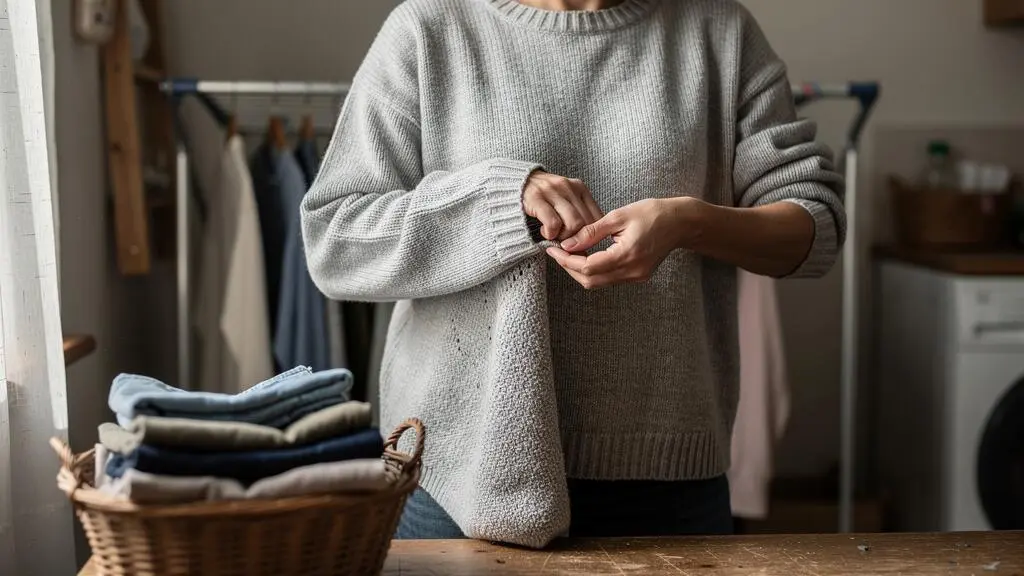
A garment’s lifecycle is shaped by decisions made long before it becomes waste. Fibre composition and construction influence how it ages. Washing habits affect its appearance and condition. Repair choices determine whether damage ends its useful life, while resale and donation decisions influence what happens after the original owner stops wearing it.
For UK consumers, the practical challenge is not achieving a perfectly sustainable wardrobe. It is identifying which choices actually help clothes stay useful, avoid unnecessary replacement and deliver better value.
Cost-per-wear provides a useful starting point: divide the total amount spent on a garment, including repairs, by the number of times it is worn. This does not measure its full environmental footprint, but it reveals how purchase price, longevity and actual use interact.
The most useful approach connects the garment’s entire lifecycle: choose appropriately, maintain according to condition, repair when worthwhile, keep wearing what works and select a realistic next destination when ownership ends.
Garment lifecycle decisions: the essentials
- Judge condition, not labels alone. Fabric composition, construction, visible damage and actual wear frequency are more informative than price or washing instructions in isolation.
- Extend useful wear before replacing. Regular checks, appropriate laundering and targeted repairs can preserve garments that still serve a purpose.
- Plan the next destination. Resale, donation and recycling depend on garment condition, available services and material composition; none guarantees circularity.
- Why Do Clothes “Wear Out” Faster Now Even When Care Labels Look the Same?
- How to Extend Garment Life With a 10-Minute Weekly Routine, Not Special Detergent
- Repair or Resell: Which Choice Makes Sense When a £120 Item Needs a £25 Fix?
- The Donation Mistake That Sends Perfectly Usable Clothes to Waste Streams
- When Should You Check End-of-Life Options Before Buying a New Fabric Blend?
- How to Build Your Personal Impact Ladder So You Focus on the 20% That Matters Most
- How to Check a Recycled Fibre Claim in 3 Details Before You Pay More
- Which Circular Fashion Principles Actually Work in Real Wardrobes, Not Just Reports?
Why Do Clothes “Wear Out” Faster Now Even When Care Labels Look the Same?
Two garments with identical care instructions can age differently because their fibres, fabric weight, construction and stretch properties differ. A care label tells you how to maintain an item, not how long it will last. Although some clothes appear to deteriorate quickly, available evidence does not establish that all modern garments wear out faster than older ones.
A lightweight knitted top, a structured cotton shirt and an elastane-rich jersey garment may all permit similar washing conditions. Yet they experience different mechanical stresses. Repeated stretching may affect shape retention, surface friction may produce pilling, and weak stitching may compromise seams before the fabric itself fails.
Research published in Cleaner and Responsible Consumption developed a multi-factor framework for measuring the physical durability of commercially available T-shirts and denim jeans. The findings showed that retail price alone could not reliably predict durability. The research on measuring physical garment durability demonstrates why evaluating several garment characteristics is more informative than relying on a price tag.
It also helps to distinguish technical wear-out from perceived wear-out. A split seam or broken fabric indicates structural deterioration. Fading, mild pilling or a dated appearance may make an otherwise functional item feel unsuitable. These are different problems and do not require the same response.
Use three checkpoints to assess a garment:
- Seam integrity: inspect underarms, crotch seams, hems and other stressed joins for opening stitches or fabric tearing.
- Pilling zones: examine cuffs, sides and friction points, distinguishing surface fuzz from thinning or holes.
- Shape recovery: after washing and drying according to the label, assess whether the garment returns to a comfortable, usable fit.
This is a practical household diagnostic, not a scientifically validated durability test. It can nevertheless help separate a cosmetic inconvenience from a problem that requires repair.
Consider an explicitly hypothetical comparison: a £30 top worn 60 times costs £0.50 per wear, while a £90 top worn only ten times costs £9 per wear. The second item might be physically more durable, but that potential has not translated into actual use.
Once the type of wear is understood, maintenance can be directed towards preventing further deterioration rather than treating every imperfect garment as disposable.
How to Extend Garment Life With a 10-Minute Weekly Routine, Not Special Detergent
A ten-minute weekly routine can help clothes last longer by concentrating on three actions: airing garments that do not yet need washing, treating isolated marks appropriately, and checking vulnerable seams or fastenings. The goal is not to avoid necessary cleaning but to prevent unnecessary laundering and identify small problems before they become larger ones.
Washing is an essential part of clothing care, but it also exposes fabrics to water, movement, friction and, depending on the cycle, heat. Repeated inappropriate laundering can contribute to colour change, surface deterioration or distortion. The extent depends on fabric construction and care conditions.
Rather than buying a specialist detergent, start by deciding whether each garment actually needs a wash. A clean outer layer worn briefly may only need airing. Clothing that is sweaty, visibly dirty, contaminated or develops an unpleasant odour should be cleaned appropriately.
Spot treatment is useful for a small, localised mark, provided the fabric and its care instructions permit it. Test delicate materials cautiously and avoid rubbing aggressively.
For a manageable routine, spend approximately three minutes examining frequently worn garments, three minutes checking and treating suitable localised stains, and four minutes airing, folding or setting aside items requiring attention. These timings are a suggested organisational method, not a research-established optimum.
Prioritise high-rotation clothes: everyday trousers, workwear, frequently worn knitwear and regularly used outer layers. Less frequently used seasonal items can receive a monthly check, especially before storage or reuse.
Pay particular attention to elbows, knees, crotch seams, button threads and pocket corners. A loose button discovered early may be straightforward to secure. A seam beginning to separate may require stitching before more fabric becomes damaged.
Maintenance has limits. Airing cannot replace necessary cleaning, and careful washing cannot restore broken fibres or strengthen severely weakened fabric. Once structural damage appears, the question changes from prevention to repair.
The value of this habit comes from making maintenance proportionate to actual use. When damage is already present, the next decision is whether fixing it offers enough additional wear to justify the expense.
Repair or Resell: Which Choice Makes Sense When a £120 Item Needs a £25 Fix?
A £25 repair on a £120 garment makes sense when it restores useful function and the owner expects enough additional wears to justify the expense. The original price alone cannot settle the decision because that money has already been spent. Compare future use, repair quality, likely resale proceeds and the possibility of continuing to wear the item unchanged.
The important distinction is between the original purchase cost and the additional cost of extending use. A repair should be assessed against the value of what it enables next, rather than against the initial price as though that purchase could be reversed.
Consider this explicitly hypothetical scenario. A coat originally cost £120, has been worn 40 times and now needs a £25 repair. Three realistic outcomes are possible:
| Decision | Potential benefit | Main condition |
|---|---|---|
| Repair and keep | More useful wears without purchasing a replacement | The repair restores function and the coat will actually be worn |
| Sell without repair | Recover some value without additional repair spending | A buyer accepts the disclosed defect |
| Repair and resell | Possibly improve the selling price | The extra net proceeds exceed the repair expense |
| Keep wearing without repair | Avoid immediate spending while retaining use | The defect is cosmetic, stable and does not affect safety or function |
Suppose the repaired coat is worn another 50 times. The £25 repair adds £0.50 for each additional wear. Across all 90 wears, the combined £145 purchase-and-repair expenditure would equal approximately £1.61 per wear. These figures illustrate arithmetic, not a prediction of how long any particular coat will last.
Resale requires a different calculation. Imagine that, after marketplace fees, packaging and postage costs borne by the seller, the defective coat would generate £30 in net proceeds, while repairing it first would generate £45. Spending £25 to obtain £15 more would leave the seller £10 worse off.
Those are hypothetical transaction values. Actual platform charges, shipping arrangements and buyer preferences vary. Calculate net resale proceeds rather than comparing advertised listing prices.
Repair quality also matters. Restitching a sound seam may restore structural function, whereas placing a decorative patch over fabric that continues to tear might not provide lasting use.
A garment with minor stable fading or harmless pilling may need no intervention at all. Continued wear can be more economical than either repairing or replacing something that already works.
When neither continued ownership nor resale is practical, passing the garment to another user becomes the next possibility. That requires choosing a donation destination capable of handling its condition.
The Donation Mistake That Sends Perfectly Usable Clothes to Waste Streams
The common donation mistake is assuming that placing clothing in any collection bag guarantees another person will wear it. Donation organisations sort items according to condition, demand and their own operating requirements. Usable clothes can miss a suitable reuse opportunity when sent through an inappropriate channel, although rejection does not automatically mean landfill disposal.
A charity shop selling second-hand clothing needs items that customers are willing to purchase. A textile recycling collection may accept materials unsuitable for direct reuse. A community exchange or direct-giving platform depends on finding a recipient who wants the particular item.
These routes are not interchangeable. A wearable jumper with no damage may be suitable for a charity shop, while a badly torn garment might require a collection service that explicitly accepts damaged textiles.
UK charity Traid explains that it requests clean, wearable clothing and sorts collected garments by hand. Pieces unsuitable for resale may be redirected towards other uses, including upcycling or textile recycling. Its clothing donation FAQs also explain why damaged donations can create extra handling costs.
Traid’s procedures are specific to that organisation. They should not be treated as universal acceptance rules for every UK charity or textile bank.
Before donating, use three questions as a practical screening tool:
- Would I give this to a friend? Check cleanliness, functionality, visible damage and whether the item is genuinely wearable.
- Is it relevant to current demand? Consider season and local needs, but do not assume out-of-season clothing is automatically rejected.
- Does the chosen organisation accept it? Check the collection channel’s published conditions rather than relying on assumptions.
This test helps organise decisions but does not predict whether a donation will pass sorting with certainty.
The European Environment Agency’s analysis of EU textile flows also shows why the destination matters: collected textiles can enter resale, recycling, export or waste-management pathways. European figures and processes cannot automatically be applied to UK donations.
If an item is usable but unlikely to attract charity-shop demand, direct giving to a willing recipient may provide a more certain immediate reuse opportunity. If it is damaged beyond ordinary use, identify a collection scheme that explicitly accepts that condition.
Some difficulties encountered at disposal can be anticipated much earlier. Fibre composition and garment construction influence which reuse, repair and recycling opportunities may remain available.
When Should You Check End-of-Life Options Before Buying a New Fabric Blend?
Check a garment’s potential end-of-life options before buying when its fibre blend is complex, its recyclability is being used as a selling point, or you expect to rely on resale or recycling later. A two-minute label and scheme check can reveal practical limitations, but it cannot guarantee that a specific garment will eventually be recycled.
Fabric composition matters because recycling technologies and collection systems are not equally equipped to process every textile construction. Mono-fibre materials can be simpler to identify and process than combinations of different fibre types, but single-fibre composition alone does not guarantee a viable recycling route.
A polyester-cotton blend contains different fibre types that may need separation for certain fibre-to-fibre recycling processes. Elastane can introduce additional processing challenges. However, recyclability depends on the exact composition, additives, textile construction, technology and available facilities.
It would therefore be misleading to promise that all pure cotton or pure polyester garments are recyclable, or that every blended garment is unrecyclable.
For consumers, the practical question is whether a real collection and processing route exists for the garment in question. A general statement that fabric is technically recyclable is not equivalent to proof that a local scheme accepts and processes it into new fibre.
The pre-purchase check should record the label, identify the material mix, and verify any claimed take-back arrangement. The checklist below combines these decisions with a realistic plan for use and eventual disposal.
Five checks before committing to a new garment
- Read the composition label. Record the named fibres and their stated percentages in a note or photograph.
- Identify material complexity. Mark the garment as single-fibre or mixed-fibre, noting elastane and other disclosed components.
- Check care requirements. Confirm that the garment can realistically be maintained with the equipment and time available at home; record any restrictions.
- Verify a downstream option. Find an identifiable resale, take-back or textile collection service and record its published acceptance conditions for that material.
- Estimate realistic wear. Write down an expected number of wears and calculate the proposed purchase cost-per-wear, identifying whether the purchase replaces something already owned.
These five outputs provide a practical purchase record, not a certification of sustainability.
A garment that is difficult to clean, unlikely to retain its function, expensive to repair and poorly supported by local recovery systems may create more future constraints. Even then, it could be a sensible purchase if it fulfils a genuine need and receives substantial use.
Recyclability is only one quality signal. Repairability, comfort, fit and expected frequency of wear also influence the garment’s lifecycle. Information about actual recycling outcomes often remains incomplete or dependent on the collecting organisation.
Once the available options are clear, the next challenge is prioritisation. Not every wardrobe decision deserves the same time, money or attention.
How to Build Your Personal Impact Ladder So You Focus on the 20% That Matters Most
A personal impact ladder ranks wardrobe decisions by their likely environmental benefit relative to effort, cost and actual behaviour. Start with unnecessary purchases you can avoid, then opportunities to extend useful wear, maintain high-use garments and repair items you would otherwise replace. Treat the 20% rule as a prioritisation prompt, not a measured universal distribution of clothing impacts.
The aim is to distinguish actions that change consumption from actions that merely change the characteristics of an individual purchase.
The European Environment Agency identifies longer use, repair, reuse and more effective recycling as important approaches for reducing textile-related pressures. Its briefing on textile circularity also warns that rising consumption can offset gains from efficiency improvements.
17 kg → 19 kg per person
Average apparent consumption of clothing, footwear and household textiles in the EU increased between 2019 and 2022. These are historical EU figures covering several textile categories, not UK clothing-only consumption statistics.
European Environment Agency, 2025 briefing on EU textile circularity.
The ladder below is a practical household framework. It is not an empirically validated ranking of carbon savings or environmental impact per minute of effort.
| Priority | Action | Decision test |
|---|---|---|
| First | Avoid unnecessary acquisitions | Can an existing garment fulfil the same need? |
| Next | Increase useful wear | Which owned pieces could replace a planned purchase? |
| Next | Maintain and repair | Which frequently worn items can remain functional with modest intervention? |
| Conditional | Buy more suitable replacements | Will the purchase meet a real need and withstand expected use? |
| When ownership ends | Resell, give away or donate appropriately | Which available route offers a realistic chance of further use? |
| When reuse is unsuitable | Investigate material recovery | Does an appropriate collection and processing route exist? |
Imagine a household where most clothing use comes from a small collection of everyday items. That is a hypothetical wardrobe pattern, not a confirmed population-wide 80/20 rule.
For that household, maintaining everyday trousers and jumpers may deserve more attention than researching a premium alternative to an occasionally worn shirt. Another household may gain more from reducing repeated purchases of similar clothes.
The benefit of wearing something longer also depends on whether those additional wears actually replace demand for new clothing. Keeping an unused garment in storage does not automatically deliver the same outcome.
Reassess priorities after major changes such as a new job, altered clothing needs, relocation or significant changes in fit. A useful ladder follows the wardrobe’s current function rather than enforcing permanent rules.
This approach also prevents smaller purchasing signals from dominating attention. Recycled materials can matter, but the next decision is whether the particular claim provides enough evidence to justify a higher price.
How to Check a Recycled Fibre Claim in 3 Details Before You Pay More
Before paying more for a garment advertised as containing recycled fibres, verify three details: the certification supporting the claim, the stated recycled-content percentage and the origin of the recycled material. These checks establish what is being claimed and how it is verified. They do not, by themselves, prove that the garment is more durable or has a lower overall environmental footprint.
A claim such as “made with recycled materials” can describe products with very different compositions and verification arrangements. A recognisable standard provides a clearer basis for assessing the claim than an unexplained marketing phrase.
First, check the certification. Textile Exchange administers standards including the Recycled Claim Standard (RCS) and Global Recycled Standard (GRS). Its official certification FAQs describe recycled-content requirements and chain-of-custody controls.
The guidance distinguishes a minimum recycled input of 20% for GRS certification from the 50% threshold for consumer-facing GRS product claims under the requirements described. The applicable version and product-specific claim conditions must still be checked.
Second, identify the percentage. Read the garment’s fibre composition and any separate disclosure of recycled content. For example, a label indicating 60% polyester and 40% cotton does not establish how much of the polyester is recycled.
A fibre-composition percentage and a certified recycled-content percentage answer different questions. Where a product is certified, look for clear product-level information rather than assuming a general corporate certification applies to every garment sold by that brand.
Third, establish the material’s origin. Pre-consumer recycled inputs generally arise from material diverted from waste streams before consumer use. Post-consumer inputs come from products or materials after consumer use. Neither category automatically guarantees a particular lifecycle benefit without additional evidence.
Now compare the price premium with what those details actually establish.
Consider a hypothetical £50 conventional jumper and a £65 alternative carrying a recycled-fibre claim. If both are worn 100 times, their purchase costs are £0.50 and £0.65 per wear respectively. The £15 premium may reflect sourcing, certification or other product differences, but those reasons must be assessed rather than presumed.
If certification, recycled percentage and material origin are unclear, the premium lacks a clearly verifiable recycled-content justification. That does not prove the conventional alternative has a lower environmental impact; it means the available information cannot establish the claimed advantage.
Durability is another independent consideration. Recycled content alone does not establish whether a garment will retain its shape, resist wear or survive laundering better or worse than its conventional counterpart.
On a high-rotation garment, documented material content, suitable construction and reliable expected use can all contribute to the purchasing decision. For an item unlikely to be worn regularly, preventing an unnecessary purchase may matter more than choosing between two material claims.
The broader lesson is that recycled content is one part of a garment’s lifecycle, not a substitute for considering acquisition, use, durability and what happens after ownership.
What to carry into your next wardrobe decision
- A garment delivers useful value through actual wear, not simply through its purchase price, material label or sustainability claims.
- Maintenance, repair and resale are most effective when they preserve genuine use or avoid an otherwise necessary replacement.
- Circularity depends on both personal decisions and working collection, reuse and recycling systems; a claim of recyclability is not proof of a circular outcome.
Which Circular Fashion Principles Actually Work in Real Wardrobes, Not Just Reports?
The most actionable circular-fashion principles are reducing unnecessary purchases, extending useful garment life, repairing worthwhile items, enabling further wear through resale or giving, and using suitable collection channels at end-of-life. Closed-loop recycling and industrial take-back systems may also contribute, but their results depend on infrastructure and processes that individual consumers cannot fully control.
Circular fashion is often presented as a system in which materials continually return to productive use. In practice, several activities sit beneath that ambition, and they do not produce identical results.
Reselling a wearable coat transfers ownership and may enable continued use. Recycling textile material attempts to recover some of its material value. A take-back programme collects garments, but collection alone does not explain how they are subsequently handled.
These distinctions are important because reuse and material recycling are not interchangeable. An item can have substantial remaining use even when recovering its fibres is difficult. Conversely, a garment that is no longer wearable may still have a potential material recovery route, depending on available services and its composition.
The European Environment Agency identifies extending product lifespans and improving reuse, repair and recycling as complementary strategies. It also highlights gaps in data about garment lifespan, repair activity and recycling outcomes, making sweeping claims about complete textile circularity difficult to substantiate.
For an individual wardrobe, the most useful principles are those that can be translated into observable decisions:
- Reduce acquisition: establish whether a genuine clothing gap exists before purchasing another item.
- Design for continued personal use: choose fit, comfort, care requirements and construction that match how the garment will be worn.
- Preserve utility: maintain frequently used clothes and address structural problems before they worsen.
- Enable another use phase: resell or give away suitable garments through channels that can realistically place them with another wearer.
- Use credible recovery routes: when continued wear is no longer practical, check what the chosen collection service accepts and does with the material.
Other circular-fashion mechanisms depend more heavily on businesses, manufacturers and waste-management systems. Fibre separation, industrial textile recycling, product traceability and the performance of take-back programmes cannot be guaranteed by a consumer’s purchasing intentions.
There is also a purchasing trap. Repeatedly buying items described as sustainable can increase total consumption even when each product carries an improved material attribute. Environmental gains from product improvements may be reduced or offset if purchasing volumes rise.
This is why cost-per-wear should remain a decision aid rather than the only objective. A cheap item worn many times may offer good financial value, but that calculation alone cannot account for production impacts, labour conditions or waste treatment. Likewise, a garment’s recycled content provides only partial information about its overall lifecycle.
The practical target is a wardrobe that meets real clothing needs with fewer unnecessary replacements and credible routes for continued use.
Start with five frequently worn garments this week. Check their condition, identify one avoidable maintenance problem, and decide whether anything genuinely needs repair or replacement. Repeat the exercise when your wardrobe needs change. The goal is not to become a perfect consumer; it is to make better decisions at the moments that determine how long clothes remain useful.
Does keeping an item of clothing for longer always reduce its environmental impact?
Not automatically. Longer active use can help reduce demand for new production when it replaces another purchase. Simply storing an unused garment for years does not provide the same benefit. Maintenance requirements, actual wearing behaviour and whether new purchases are avoided all influence the outcome.
How do you calculate cost-per-wear when a garment has been repaired?
Add the purchase price and repair spending, then divide by the total number of wears. For example, a hypothetical £80 garment repaired for £20 and worn 100 times has a combined cost-per-wear of £1. The figure helps evaluate financial use but is not a complete environmental impact measure.
Can a garment be recyclable even if no local textile collection service accepts it?
Yes. Technical recyclability and access to a working recycling service are different matters. A material may be processable using a particular technology without an accessible local collection and recycling pathway. Check the accepted materials and actual processing arrangements of the service available to you.
Is donating clothing better than selling it?
Neither route is automatically superior. Both can enable further use if a suitable recipient is found. Resale may recover some money but involves time, potential fees and sometimes shipping. Donation may be simpler, but the chosen organisation must accept the garment’s condition. Direct giving can also be effective when a recipient is known.
What should you do when a clothing brand does not disclose enough information about recycled fibres?
Ask for the relevant product certification, recycled-content percentage and material origin. If that information remains unavailable, treat the recycled-content advantage as unverified rather than assuming it is false or environmentally beneficial. Compare the item’s fit, construction, expected use and price with alternatives before purchasing.