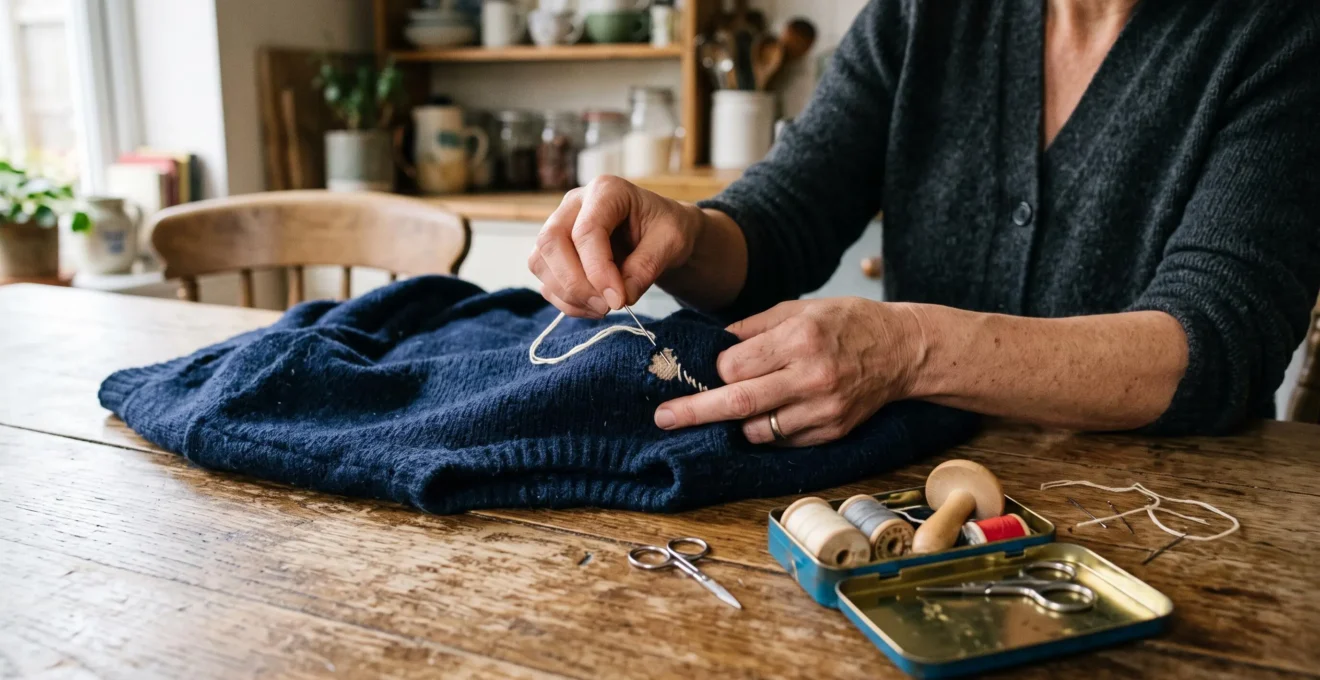
Circular fashion becomes meaningful when clothes stay useful for longer, fewer unnecessary garments enter wardrobes, and products are designed to survive repair, resale and eventual material recovery. Recycling matters, but it cannot compensate automatically for purchasing more clothing than can realistically be worn.
For everyday consumers, the most effective principles are often surprisingly ordinary: wear what already fits, maintain it properly, repair worthwhile pieces, buy fewer replacements and pass usable garments to another wearer. For fashion brands, these behaviours need support from durable construction, accessible repairs, realistic resale systems and transparent product information.
The challenge is deciding which action actually improves a garment’s life rather than simply making an individual purchase feel more sustainable. A repaired jacket that remains unworn achieves little. A rented dress delivered repeatedly across long distances may not be the obvious environmental winner. Even a secondhand wardrobe can become overcrowded.
The practical test is whether each decision increases useful wear, avoids unnecessary replacement or gives an existing garment a credible next life.
Circular fashion: the practical essentials
- Keep useful clothes in circulation through regular wear, appropriate care and repairs before relying on recycling.
- Evaluate repair, rental and resale against realistic future use, not original prices or sustainability labels alone.
- Measure wardrobe inflows, unworn garments and completed repairs so circular habits reduce consumption rather than disguise it.
- Why Is Circular Fashion So Hard When Recycling Seems Like an Easy Fix ?
- How to Build a Circular Wardrobe System Using 4 Habits You Can Do Weekly ?
- Repair or Rental: Which Is More Circular for Occasionwear You Wear Twice a Year ?
- The Circularity Mistake That Lets You Buy More While Feeling Less Guilty
- When Should You Use Rental or Resale Because Your Size or Lifestyle Might Change Soon ?
- Repair or Resell: Which Choice Makes Sense When a £120 Item Needs a £25 Fix ?
- How to Build Your Personal Impact Ladder So You Focus on the 20% That Matters Most ?
- What Decisions Shape a Garment’s Lifecycle From First Wear to End-of-Life ?
Why Is Circular Fashion So Hard When Recycling Seems Like an Easy Fix ?
Circular fashion is difficult because recycling addresses what happens after a garment is discarded, while much of its environmental impact is already connected to production and consumption. Keeping suitable clothes in use, repairing damage and avoiding unnecessary purchases often tackle the problem earlier. Recycling remains useful, but its technical limitations prevent it from acting as an automatic solution.
A circular wardrobe follows a practical sequence: maintain and wear existing garments, repair where worthwhile, enable reuse by someone else, and select appropriate textile recovery when further use is no longer realistic. The sequence is a decision framework, not a guarantee that every repair or reuse transaction delivers the same environmental benefit.
The European Environment Agency briefing on circular textile design identifies durability, repairability, resource efficiency, collection and recycling as important parts of a circular textile system. It also recognises the need to address overall consumption.
Recycling itself covers different outcomes. A worn garment might become cleaning cloths, insulation or another lower-value product rather than new clothing. This is commonly called downcycling. Fibre-to-fibre recycling instead attempts to recover materials suitable for producing new textile fibres.
That second route is technically challenging. Polyester-cotton blends require material separation, elastane complicates processing, and finishes, dyes and trims can affect recovery. Collection therefore does not mean that an old garment will become an equivalent new garment.
There is also a behavioural obstacle: moral licensing. Someone may feel that donating or recycling clothes earns permission to buy replacements more frequently. This is a possible psychological explanation, not an inevitable reaction.
For a specific purchase, a better circularity test asks four questions:
- How many realistic wears will the garment receive?
- Can common damage be repaired affordably?
- Could another person use it afterwards?
- Is there a suitable collection route when reuse ends?
A product can be labelled recyclable and still perform poorly against these practical questions.
Once recycling stops being the default justification for purchasing, everyday wardrobe management becomes the more useful place to intervene.
How to Build a Circular Wardrobe System Using 4 Habits You Can Do Weekly ?
A workable circular wardrobe system needs four repeatable habits: audit one neglected garment, rotate clothing deliberately, prevent avoidable damage and complete one repair or redistribution action. A short weekly routine is more manageable than repeatedly reorganising an entire wardrobe. It also creates observable results without demanding specialised software or expensive clothing purchases.
The starting point is a ten-minute wardrobe audit. Select one item that has not been worn recently and identify the actual obstacle: unsuitable fit, a missing button, lack of outfit combinations, a lifestyle mismatch or simply forgetting it exists.
Assign a single next action. A shirt that fits but feels difficult to style might need an outfit combination rather than resale. A coat with a broken fastening needs a repair decision, not another season of storage.
The second habit is wear rotation. Set a personal target for how often frequently used garments should appear during a relevant season, then make a simple tally in a notebook. Targets should reflect actual circumstances: an everyday jumper and a funeral outfit should not be judged by identical expectations.
The third habit is preventive maintenance. Check loose buttons and seams, follow garment care labels, use appropriate washing programmes and avoid unnecessary laundering. Different textiles need different treatment, so a universal washing routine is rarely appropriate.
Finally, practise active re-entry: move one garment towards its next useful destination each week. That might involve arranging a repair, creating a resale listing, organising an exchange or delivering suitable clothing to a donation organisation.
26%
In WRAP’s UK clothing research, an estimated 26% of garments in the average wardrobe had not been used during the preceding year. This describes the research period, not a verified 2026 wardrobe rate.
WRAP research on clothing longevity and circular business models
This finding illustrates why improving utilisation matters. Owning clothing for many years is not the same as wearing it regularly.
Your five-action circular wardrobe checklist
- Identify one unworn garment and record the precise reason it stays unused. Deliverable: one written diagnosis.
- Choose three seasonally appropriate garments for deliberate rotation. Deliverable: a three-item wear tally.
- Inspect one frequently worn item for damage or incorrect care. Deliverable: one completed maintenance action.
- Select a suitable exit or repair route for one neglected item. Deliverable: a booking, listing, exchange arrangement or completed handover.
- Review garments entering and leaving your wardrobe. Deliverable: a dated record of additions, exits and outstanding actions.
Once regular use becomes measurable, more occasional decisions, such as whether to repair or rent formalwear, become easier to assess.
Repair or Rental: Which Is More Circular for Occasionwear You Wear Twice a Year ?
Repair is usually worth considering when an existing occasionwear item still fits, suits future events and will realistically be worn again. Rental can make more sense when occasions are infrequent or clothing requirements change. Neither option is automatically more circular: expected wears, avoided purchases, delivery, cleaning and garment utilisation all influence the outcome.
Start with the previous twelve months. How often did you actually attend an event requiring this type of clothing? How often did you choose the garment already in your wardrobe?
The answers provide a more credible forecast than imagining future weddings, parties or formal dinners that are not yet planned.
For a financial comparison, divide the expected repair cost by anticipated additional wears, and account separately for storage or accessories where relevant. Compare that with the total rental fee, delivery, returns, any permitted alterations and additional accessories across the same events.
For illustration, suppose an already-owned outfit needs a hypothetical £30 repair and is expected to be worn six more times. The repair contributes £5 per future wear. If a hypothetical rental costs £35 per event, six rentals would total £210 before any additional charges. These invented figures demonstrate the calculation, not prevailing UK rental prices or environmental savings.
Environmental circularity requires another question: what purchase is actually displaced? Rental is more persuasive when several people genuinely use the same garment instead of each buying an outfit that receives little wear.
However, repeated deliveries, packaging, returns and cleaning can add impacts. A 2025 IVL research summary comparing clothing reuse, rental and repair reported that rental benefits were less certain in its modelled scenarios, with outcomes influenced by service design and whether new purchases were avoided.
Some exceptions justify repairing despite low expected wear. Sentimental clothing may hold value beyond economics. Unusual sizing, distinctive tailoring or a fabric unavailable through rental can also make keeping an existing piece reasonable.
Conversely, rental deserves consideration for an isolated occasion, an experimental silhouette or a period when fit may change.
The same logic prevents a broader problem: circular services can unintentionally encourage more clothing consumption instead of replacing it.
The Circularity Mistake That Lets You Buy More While Feeling Less Guilty
The most damaging circularity mistake is treating resale, secondhand shopping or recycling as permission to acquire more clothing. Circular systems only deliver their intended benefits when garments remain useful and new production is displaced where possible. Moving more products through secondhand platforms does not, by itself, demonstrate that overall fashion consumption has fallen.
The familiar justification is simple: buying preloved feels better than buying new, so purchasing becomes easier to rationalise. A similar assumption emerges when recycling a garment is treated as compensation for buying its replacement.
The issue is not that secondhand shopping is inherently ineffective. It is that the number of purchases can rise even when individual transactions appear environmentally preferable.
A 2025 study published in Scientific Reports on secondhand fashion consumption analysed 1,009 US consumers and found a positive correlation between secondhand and new-clothing purchasing (r = 0.58, p < 0.01). The result challenges the assumption that buying secondhand automatically substitutes for buying new.
Importantly, correlation does not establish that secondhand shopping causes additional purchasing. The researchers discuss possible rebound effects and moral licensing, but the observational finding does not prove the psychological mechanism for each consumer.
For an individual wardrobe, a useful safeguard is a one-in, one-out substitution rule. Before acquiring a secondhand shirt, identify which existing shirt it will genuinely replace in regular use. The outgoing piece should have a credible next destination; simply discarding it does not create circularity.
Then review total incoming items monthly, counting secondhand, new, gifted and swapped clothing. A wardrobe might contain roughly the same number of pieces while still experiencing excessive turnover, so tracking additions matters as well as overall size.
Online thrift hauls and rapidly changing resale listings can reproduce the excitement and purchasing frequency of fast fashion. An inexpensive garment is not automatically valuable if it receives no meaningful wear.
The distinction is between real circularity, where clothing has a longer useful life, and cosmetic circularity, where garments repeatedly change owners without clear evidence of reduced new purchasing.
This matters particularly when lifestyles and sizes are changing, because temporary needs can make repeated buying feel unavoidable.
When Should You Use Rental or Resale Because Your Size or Lifestyle Might Change Soon ?
Rental and resale are particularly useful when a garment’s future fit, purpose or frequency of wear is uncertain. Rental limits commitment for brief or unpredictable needs, while buying with a realistic resale plan can suit clothing worn regularly during a transition. The best option depends on expected wear, total costs, fit flexibility and actual resale demand.
Before purchasing, consider likely changes over the next 12–24 months. These might include pregnancy, a changing body size, a different workplace dress code, relocation or a shift towards remote working.
Classify prospective purchases into three groups:
- Stable: garments likely to remain useful regardless of foreseeable changes, such as a versatile outer layer with suitable fit.
- Size-sensitive: fitted trousers, tailored dresses or other pieces with limited flexibility.
- Context-sensitive: specialised officewear, climate-specific clothing or outfits needed only for a temporary role.
Stable needs are usually easier to justify as lasting purchases. For the other groups, first investigate adjustments, borrowing, rental or secondhand options.
Resale is not a guaranteed financial safety net. Recovering value depends on demonstrable market demand, condition, recognisable design, available sizes, selling fees and buyer interest. A garment’s original retail price does not determine what another person will pay.
Check completed resale transactions for comparable items rather than assuming that high asking prices indicate successful sales.
Rental may reduce unwanted ownership for a short period but can be inconvenient for clothing needed several times each week. In that case, purchasing a suitable used garment and reselling it later may be more practical, provided the resale estimate remains conservative.
Prepare for resale from the outset without letting future value dominate the purchase decision. Keep relevant care information, spare buttons and any useful original documentation. Photograph the garment in good condition, retain accurate measurements and record significant repairs.
Original packaging may help with certain items, but preserving unnecessary packaging has no inherent circular advantage. Accurate condition disclosure matters more than presenting a garment as untouched.
When a garment is already owned and needs attention, however, the calculation shifts from acquisition towards the value of restoring its usefulness.
Repair or Resell: Which Choice Makes Sense When a £120 Item Needs a £25 Fix ?
For a £120 garment requiring a £25 repair, the original price should not decide whether fixing it makes sense. Compare the repair cost with credible additional wears, the price and longevity of a suitable replacement, and possible resale proceeds. Repair is attractive when it restores meaningful use; resale may be better if the garment no longer suits its owner.
Consider the hypothetical case of a £120 blazer with a damaged zip. The £120 has already been spent, so it is a sunk cost for today’s decision. A £25 repair would cost £2.50 per additional wear if the owner expects ten more wears.
If only one future wear is likely, the immediate repair cost is £25 per wear. The economics change substantially, even though the original purchase price is identical.
For a full ownership-cost assessment, the original purchase cost can be allocated across total lifetime wears, together with repair costs. However, for deciding what to do today, comparing incremental future spending is usually clearer than allowing historical expenditure to distort the choice.
The comparison should also consider the cost per expected wear of an actual replacement. An inexpensive alternative that fails quickly may provide poorer value than a well-executed repair.
Repairability matters just as much as arithmetic. Replacing a button, reinforcing a seam or repairing a lining is different from treating widespread fabric deterioration. Zip replacement may be straightforward in some garments and disproportionately complicated in others.
Ask the repairer which materials are available, what the repair involves and whether the surrounding fabric is strong enough to withstand further use. No repair can guarantee a particular number of additional wears.
There is also a hybrid option: repair first, then resell. If the owner is unlikely to wear the blazer again, compare the expected resale proceeds in damaged and repaired condition.
Suppose, hypothetically, a damaged garment could sell for £15 and a repaired one for £45. After a £25 repair, the repaired route yields £20 before selling costs, compared with £15 without repair. The potential improvement is £5, not £30. Fees, time and uncertainty may eliminate that advantage.
When neither repair nor resale is feasible, useful components may still be recovered. Buttons, lining material and undamaged fabric sections can sometimes support another project. Repurposing should serve a real need rather than create objects destined for storage.
Individual repair decisions become easier when they sit within a broader set of priorities, rather than being treated as separate sustainability dilemmas.
How to Build Your Personal Impact Ladder So You Focus on the 20% That Matters Most ?
A personal circular fashion impact ladder ranks the actions most relevant to your current wardrobe: use existing clothes more effectively, reduce avoidable new purchases, then improve the quality and circular potential of necessary acquisitions. The aim is to identify one or two high-value habits instead of pursuing every sustainability initiative. There is no universal percentage of impact guaranteed by this approach.
The phrase “the 20% that matters most” is a prioritisation principle, not a demonstrated finding that precisely 20% of wardrobe actions produce 80% of environmental savings.
Start with three diagnostic questions:
- How many garments entered your wardrobe during the previous 90 days?
- How many seasonally appropriate garments have remained unworn?
- What proportion of planned repairs have actually been completed?
The answers point towards different priorities. A person with many neglected but suitable garments may benefit most from improving rotation. Someone purchasing repeatedly despite a functional wardrobe may need to concentrate on acquisition frequency.
A wardrobe with several repairable items awaiting attention presents a different opportunity: resolving maintenance bottlenecks before buying substitutes.
The ladder can be organised into three levels.
| Priority level | Main decision | Progress indicator |
|---|---|---|
| Foundation: extend use | Wear, maintain and repair suitable existing clothing | More garments returning to regular use |
| Middle: avoid excess purchasing | Reduce unnecessary additions and replacements | Fewer avoidable garments entering the wardrobe |
| Upper level: improve necessary choices | Assess materials, durability, repairability and credible secondhand options | More useful wears from garments genuinely needed |
This ladder is a practical prioritisation tool rather than a universal scientific ranking. Outcomes depend on the garment, the replacement avoided and how the item is used.
Review progress quarterly. Select the habit that currently blocks the greatest amount of useful wear or drives the most unnecessary purchasing. Keep the other habits manageable rather than attempting complete wardrobe perfection.
Consumers can also influence brands by asking for spare components, accessible repair services, construction information and verifiable durability evidence. Brands, in turn, should distinguish measurable improvements in garment lifetimes from promotional claims about collection or resale programmes.
The final step is understanding how these priorities interact across the garment’s whole life, from its initial design through its last viable use.
Key takeaways before evaluating a garment’s lifecycle
- A longer product life requires both durable design and an owner who can realistically use and care for the garment.
- Every change of ownership should have a credible next use; transfer alone does not prove environmental benefit.
- End-of-life decisions should depend on garment condition and suitable recovery routes, not collection labels alone.
What Decisions Shape a Garment’s Lifecycle From First Wear to End-of-Life ?
A garment’s useful life is shaped by decisions made before purchase, during everyday wear, when damage occurs and when the original owner no longer needs it. Designers influence durability and repairability, while wearers influence care, utilisation and redistribution. Circularity works best when these decisions reinforce each other rather than relying on end-of-life recycling to correct earlier problems.
At the design stage, fabric selection, stitching, lining construction, fasteners and access to replacement components affect whether garments can survive everyday use and practical repairs. Material combinations can also influence eventual recycling feasibility.
At the purchasing stage, consumers can check four useful characteristics:
- Material composition: identify fibres and blends, considering both care requirements and possible end-of-life complexity.
- Repair access: look for spare buttons, extra fabric or sufficient seam allowance where appropriate.
- Construction: inspect stitching, seam finishing, zip operation and fastening security.
- Replacement support: check whether the brand provides accessible repair information, services or components.
No single feature guarantees durability. A well-designed mixed-fibre garment may remain useful longer than a poorly constructed mono-material alternative. Price and broad sustainability claims are also incomplete measures of expected lifetime.
During ownership, care decisions accumulate. Suitable washing, drying and storage reduce avoidable damage, while prompt attention to loose seams or faulty fastenings may prevent more serious deterioration.
This is where brand decisions and consumer behaviour meet. A repairable garment cannot fulfil its potential if a minor fault goes unattended until it becomes extensive. Equally, excellent care cannot overcome every weakness in poor construction.
When the first owner no longer needs the garment, condition determines the next route. A useful item with realistic demand may be resold or exchanged. Wearable clothing without practical resale value may be appropriate for donation, subject to the receiving organisation’s requirements.
Unwearable textiles require a different approach. In the UK, check local council guidance and textile collection providers before choosing a dedicated textile recovery route. Some services accept damaged textiles; others restrict collections to reusable garments or particular materials.
Clothing that is heavily contaminated or specifically excluded by collection rules must be handled according to local disposal guidance. Donating unusable garments can simply transfer sorting and disposal responsibilities to a charity.
Brands have responsibilities at the same junctions: providing useful material information, avoiding construction that blocks straightforward repairs, and communicating clearly what their take-back programmes actually accept and achieve.
Choose one garment you already own today, inspect its condition, estimate its next realistic wears and decide whether it needs maintenance, a repair or a better-suited next owner. Repeat that assessment before your next purchase. A circular wardrobe is built through decisions that change what clothes actually do, not simply what their labels say.
Can a synthetic garment still be part of a circular wardrobe?
Yes. A synthetic garment that is suitable for its purpose, durable, frequently worn and repairable can support circular use. Fibre composition matters for environmental assessment and eventual recovery, but it should not be judged separately from lifespan, actual use and care requirements.
Should clothing be donated if it has a minor defect?
Check the recipient organisation’s acceptance rules. Some organisations may accept particular repairable items, but others require garments to be clean and immediately wearable. Repairing a minor defect before donation can improve usability when practical. Never assume a charity will repair or recycle every item it receives.
Does cost per wear measure a garment’s environmental impact?
No. Cost per wear measures financial cost relative to use. Environmental assessment also considers production, materials, laundering, transport, repair and disposal. It is useful for checking whether a purchase or repair is financially sensible, but cannot by itself establish carbon savings.
What should a fashion brand disclose to make circularity claims more credible?
Useful disclosures include garment construction and care information, spare-part availability, repair options, and clearly defined resale or take-back processes. Where brands make measurable environmental claims, the underlying method, scope and limitations should be available for examination. A collection programme alone does not establish that recovered textiles become new clothing.
Is a smaller wardrobe always more sustainable than a larger one?
Not necessarily. Wardrobe needs differ according to work, climate, accessibility, caring responsibilities and lifestyle. A larger collection of well-used clothing may be more functional than an artificially small wardrobe requiring frequent replacement. The meaningful questions are whether garments serve genuine needs, remain useful and avoid unnecessary turnover.