Low-impact dyes can hold their colour as well as conventional dyes, but the answer depends on what “low-impact” means, which fibre has been dyed and how the garment is washed. A responsibly managed synthetic dyeing process may deliver excellent colourfastness. A naturally dyed fabric, meanwhile, may develop a softer or slightly different tone with repeated wear and laundering.
The distinction matters when choosing clothing for everyday use. A cotton T-shirt washed several times a week faces different demands from a wool jumper aired between wears. For someone with sensitive skin, chemical residues and finishing treatments can also be more relevant than whether the colour originally came from a plant.
Rather than treating natural colour as automatically better or less durable, it helps to examine dye fixation, washing conditions and the garment’s intended use. These practical details reveal whether a particular piece is likely to remain comfortable, attractive and wearable over time.
Low-impact dyes and everyday colour retention: the essentials
- Low-impact synthetic dyes can provide strong wash fastness. Natural dyes vary considerably according to the colourant, fibre and fixation method.
- Cool washing, gentle agitation and drying away from direct sunlight can help preserve colour, provided the garment’s care label permits those methods.
- For sensitive skin, verified harmful-substance testing and appropriate garment care are more informative than a “natural dye” claim alone.
- Why Dye Houses Are the Hidden Hotspot in Fashion’s Environmental Footprint
- How to Wash Naturally Dyed and Low-Impact Clothing So Colour Lasts Beyond the First Weeks
- Natural Dye or Low-Impact Dye: Which Is Better if You Have Sensitive Skin?
- The Expectation Mistake That Makes ‘Natural’ Colour Look Like a Defect
- When Should You Choose Naturally Dyed Colours So They Don’t Sit Unworn?
- How to Extend Garment Life With a 10-Minute Weekly Routine, Not Special Detergent
- How to Read Fibre Blends So You Don’t End Up Sweaty, Static, and Uncomfortable
- Are Synthetic Fibres Always Bad, or Are Some Actually the Best Choice for Daily Wear?
Why Dye Houses Are the Hidden Hotspot in Fashion’s Environmental Footprint
Textile dye houses deserve attention because colouring fabric involves more than adding pigment. Dyeing may require heated water, auxiliary chemicals, repeated rinsing and wastewater treatment. The environmental burden depends on the dye chemistry, fibre, equipment and process controls. A lower-impact process can reduce certain inputs without necessarily changing the dye’s chemical origin or compromising its colourfastness.
Low-impact describes a process or environmental claim, not a universally defined dye family. In industrial dyeing, improvements may include better dye uptake, more efficient rinsing, lower water consumption or reduced energy requirements. Some reactive dye systems for cotton are designed to improve fixation and reduce the amount of dye left in the bath.
These advantages are not automatic. Actual environmental performance depends on the complete production process, including energy sources, chemicals, wastewater treatment and the quantity of usable fabric produced.
Three commonly confused categories deserve separate consideration:
| Dye category | How it works | What to expect from washing |
|---|---|---|
| Conventional synthetic dyes | Manufactured colourants selected for particular fibres, including reactive dyes for cotton. | Often capable of strong colour retention when properly fixed and washed. |
| Low-impact synthetic dyes or processes | Manufactured dyes or dyeing methods intended to reduce specified environmental impacts. | Can perform comparably to conventional processes; results require garment-specific evidence. |
| Natural dyes | Colourants derived from sources such as plants, insects or microorganisms. | Performance varies by colourant, fibre, mordant and processing method. |
The term “organic dye” adds another complication. It may refer to organic chemical compounds, naturally sourced colourants or dyes applied to organically grown fabric. Those meanings are not interchangeable. Organic cotton, for example, does not establish how the finished fabric was dyed.
A 2024 scientific review of natural textile dyes and mordants, published in Environmental Chemistry Letters, identifies limited colourfastness as a challenge for some bio-based dyes. It also explains how mordants and bio-mordants can improve dye bonding and washing performance.
That evidence does not mean every natural dye fades quickly. Nor does it mean environmentally improved dyeing necessarily creates weaker colour bonds. A correctly fixed low-impact reactive dye can retain colour effectively, while a poorly controlled conventional process can leave excess unfixed dye.
Before buying, examine the product description for precise dye terminology, ask whether wash-fastness testing is available and check what any certification actually covers. A label assessing harmful substances does not automatically verify water savings or colour durability.
The practical question is therefore not simply whether a dye is environmentally preferable. It is whether that specific dyeing process produces a stable colour on the chosen fibre, and whether the finished garment can tolerate the washing routine it will receive.
How to Wash Naturally Dyed and Low-Impact Clothing So Colour Lasts Beyond the First Weeks
To preserve naturally dyed and low-impact clothing, follow the care label, reduce unnecessary washing and use the gentlest effective cleaning method. For suitable garments, cool water, mild mechanical action and shade drying can limit colour loss. However, cotton, linen, wool and silk react differently to dyes and washing conditions, so one routine cannot guarantee the same results for every garment.
Colourfastness begins with the interaction between dye molecules and textile fibres. Reactive dyes can form strong chemical bonds with cellulose fibres such as cotton. Many natural colourants instead depend on different forms of attraction, complex formation or mordant-assisted fixation.
Wool and silk have protein-based structures with different chemical binding sites from cotton and linen. Their colour response can therefore differ even when the same natural colourant is used. Wool and silk also require particular attention to washing temperature, pH and mechanical agitation.
Four laundering variables are especially important:
- Water temperature: Hotter conditions may increase dye release or accelerate changes in some colourants. Cool washing can reduce this risk when compatible with hygiene needs and care instructions.
- Detergent chemistry: Strongly alkaline products can affect certain natural dyes and delicate protein fibres. An appropriate mild detergent is preferable where the garment requires it.
- Mechanical agitation: Extended washing, vigorous rubbing and overloaded drums increase friction, which can affect the fabric surface and colour appearance.
- Drying conditions: Excessive heat and prolonged direct sunlight can contribute to colour changes. Drying in shade is often a practical alternative.
These variables interact. A short, cool wash may be suitable for a colourfast cotton shirt, while a naturally dyed wool garment labelled for hand washing may require a much more controlled approach.
Rapid fading within six weeks is possible, but it is not an established lifespan for naturally dyed clothing. Consider a hypothetical linen shirt repeatedly washed hot, exposed to a harsh detergent and dried in strong sunlight. If its colourant is sensitive to those conditions, noticeable change may occur relatively quickly.
The same garment might retain a more consistent appearance when washed less frequently and cared for according to its fibre and dye requirements. Neither outcome can be predicted precisely without knowing the colourant, fixation quality and actual laundering conditions.
For the first wash, consult the label and separate a new dark or strongly coloured item if instructed, or when dye transfer is uncertain. Observe whether the wash water becomes coloured, whether other fabrics acquire colour and whether the garment dries evenly.
Some initial dye release may reflect residual unfixed colourant. Persistent bleeding or visibly patchy fading, however, deserves closer attention and may justify contacting the seller. Slightly tinted wash water alone cannot establish a manufacturing fault.
The American Cleaning Institute advice on preventing dark-clothing fade supports practical measures such as turning machine-washable garments inside out, considering shorter cycles, using cold water and air drying.
The first few washes are useful observations, not a countdown to inevitable fading. Once the garment’s behaviour becomes familiar, a consistent, fibre-appropriate routine is usually easier to maintain than repeatedly experimenting with treatments.
Natural Dye or Low-Impact Dye: Which Is Better if You Have Sensitive Skin?
Neither natural dyes nor low-impact synthetic dyes are automatically safer for sensitive skin. Natural colourants may involve mordants and other processing agents, while properly tested synthetic-dyed garments can meet defined harmful-substance limits. For clothing worn directly against the body, verified product testing, comfortable fabric construction and washing new garments before use are more useful starting points than dye origin alone.
The word “natural” describes where a colourant comes from, not the complete chemical composition of the finished textile. Natural dyeing may involve metal-based mordants, plant-derived fixing agents, pH adjustments and additional finishing processes.
Whether any residual substance presents a concern depends on its identity, concentration, availability for skin exposure and the wearer’s individual sensitivity. The presence of a mordant does not by itself establish that a garment is irritating.
Likewise, a synthetic colourant is not automatically unsuitable for sensitive skin. What matters is the finished textile, including any unfixed dye, finishing residues and other substances that may remain after manufacturing.
One useful purchasing reference is OEKO-TEX STANDARD 100 product-class requirements. This certification system distinguishes textiles according to their intended skin contact.
| Garment use | Practical purchasing priority | Relevant consideration |
|---|---|---|
| Underwear, T-shirts and bedding | Evidence of testing appropriate for prolonged direct skin contact. | OEKO-TEX STANDARD 100 Product Class 2 covers direct-contact products. |
| Baby clothing | Requirements specifically appropriate for babies and toddlers. | Product Class 1 has the strictest requirements within this certification system. |
| Jackets and outer layers | Appropriate finished-product testing, comfortable linings and suitable care. | Product Class 3 covers products without direct skin contact. |
| Naturally dyed garments | Transparent information about colourants, mordants, finishing and testing. | Natural origin alone does not demonstrate suitability for sensitive skin. |
Certification is useful evidence of compliance with a particular testing standard, not a guarantee against every individual reaction. It also does not prove that the dyeing process consumed less water or that the colour will resist repeated washing.
Skin irritation may arise from detergent residues, fabric finishes, friction or substances unrelated to the dye itself. Washing a new garment before wearing it can help remove some residues, although it cannot eliminate every potential trigger.
The American Academy of Dermatology recommends washing new clothes before use and seeking dermatological advice when contact dermatitis recurs or causes significant discomfort. Reactions can sometimes appear hours or days after exposure, making a simple comparison between two garments inconclusive.
If a new garment raises concern, it is reasonable to introduce one item at a time, initially wear it for a limited period and note whether irritation develops around contact areas. This is a cautious observation strategy, not a validated allergy test. Anyone with a known textile allergy should avoid suspected triggers and follow professional advice rather than deliberately testing them.
The most practical choice for sensitive skin is therefore a garment with relevant testing information, appropriate care instructions and a fabric that feels comfortable during wear. A dermatologist can help investigate recurring reactions more reliably than repeated changes between dye categories.
The Expectation Mistake That Makes ‘Natural’ Colour Look Like a Defect
Naturally dyed clothing can change in appearance without necessarily becoming defective. Some colours soften, lose intensity or shift in hue as the material is worn and washed. However, uneven patches and persistent dye transfer may indicate a problem. The important distinction is between expected colour evolution, avoidable care-related changes and evidence of inadequate dye fixation.
Conventional clothing often creates an expectation that a purchased shade should remain visually identical for as long as the garment is worn. Natural colourants can challenge that expectation because their response to light, moisture and washing chemistry is highly variable.
Even two garments dyed with the same botanical material may behave differently if their fibres, mordants or processing conditions differ.
Three phenomena should not be confused:
- Bleeding: Colourant transfers into water, onto another garment or onto a surface. Inadequate removal of unfixed dye can be one possible cause.
- Fading: The colour becomes less intense, whether through washing, light exposure, abrasion or changes in the colourant.
- Tonal change: The hue shifts, for example from a warm brown towards a cooler or duller appearance, without necessarily losing the same proportion of colour intensity.
These processes require different responses. Reducing washing friction may slow further surface wear, but it cannot automatically reverse chemical changes in a dye. Repeated washing is also not a reliable solution for a garment that continuously releases substantial amounts of colour.
The scientific review of natural dyes and mordants discussed earlier highlights why fixation chemistry matters: different dye-and-mordant combinations can produce different washing outcomes.
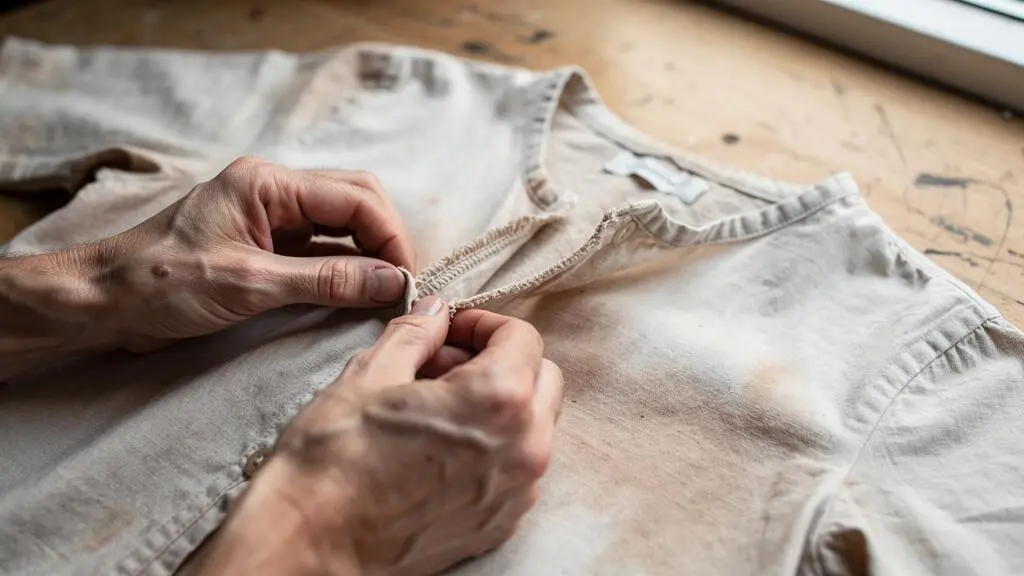
A useful home assessment is to compare an exposed area of the garment with a less-exposed section, such as the inside of a pocket, an inner placket or a seam allowance.
Inspect both areas in consistent natural light. Uniform softening across exposed surfaces may be consistent with ordinary wear, whereas irregular patches unrelated to normal contact or sunlight exposure can raise questions about processing or cleaning history.
This comparison is not a laboratory colourfastness test. Hidden areas may have started with a different colour depth or received different exposure during manufacture. Nevertheless, the method helps describe the change accurately when speaking to a retailer.
The distinction also affects second-hand resale and gifting. A naturally dyed garment with an attractive, evolved patina may appeal to someone who values material character, but another buyer may interpret its altered shade as deterioration.
Accurate product descriptions, realistic photographs and care information help avoid misunderstandings. A garment should not need an elaborate explanation merely to remain wearable, but expectations should match the properties of its materials.
Colour evolution can be part of a garment’s character, but it should never become an excuse for poor workmanship. Knowing the difference makes it easier to appreciate natural dyes while holding manufacturers accountable for avoidable quality problems.
When Should You Choose Naturally Dyed Colours So They Don’t Sit Unworn?
Choose naturally dyed clothing when the colour suits your existing wardrobe, the garment fits your usual activities and you are comfortable with possible tonal evolution. Muted, versatile shades can make subtle fading less disruptive, but natural dyes are not restricted to earthy colours. A garment’s environmental value also depends on whether it is worn often enough to justify its production.
Colour is frequently treated as an aesthetic decision, yet it also affects practical durability. A piece can remain structurally sound and comfortable while losing its place in the wardrobe because its shade no longer matches the wearer’s expectations.
For daily clothing, subdued browns, greens, creams and other adaptable shades may accommodate gradual colour changes more easily than a purchase made specifically for an exact, saturated trend colour. This is a styling consideration rather than a scientific rule about which dyes are more stable.
Some bright natural dyes perform well under appropriate conditions, while certain muted natural colours may be sensitive to light or washing. Appearance alone cannot establish wash fastness.
Before buying, compare the prospective garment with the clothing already owned. A practical personal rule is to identify several existing pieces that can be worn with it, then consider whether the combinations would still work if the shade became slightly lighter or warmer.
Different usage patterns create different trade-offs:
| Usage scenario | Colour priority | Care consideration |
|---|---|---|
| Frequently worn everyday basics | Versatile colour with dependable wash performance. | Repeated laundering makes reliable care instructions especially valuable. |
| Occasion wear | Appearance appropriate to the event and predictable presentation. | Less frequent washing helps, but storage and light exposure still matter. |
| Outer layers worn repeatedly between washes | Colour that works with several outfits. | Airing and localised cleaning may reduce full-wash frequency. |
| Statement pieces | Distinctive shade that remains desirable if its tone evolves. | Check whether colour changes could affect the intended look. |
A naturally dyed garment may be a thoughtful investment for someone who enjoys its evolving appearance and already follows gentle fabric-care habits. It may be less suitable for someone who expects an identical shade after frequent hot washing.
Similarly, purchasing a naturally dyed garment solely because its production sounds environmentally responsible can be counterproductive if it is rarely worn. The resources used to produce, transport and maintain clothing still matter regardless of the dye’s origin.
Rather than counting on a label to make a purchase sustainable, consider whether the piece fills a real wardrobe need. A frequently worn garment with dependable colour and suitable care requirements can be a more practical choice than a rarely used purchase made for its environmental messaging.
The most useful colour is one that remains appealing through normal wear and realistically manageable care. That decision becomes easier when the clothing already owned, rather than the novelty of a dye claim, guides the purchase.
How to Extend Garment Life With a 10-Minute Weekly Routine, Not Special Detergent
A simple weekly garment-care routine can help reduce avoidable fading without requiring specialised products. Airing suitable garments, treating small marks promptly, preparing clothes properly for washing and checking early signs of wear all support longer use. The benefit depends on the dye, fibre and hygiene requirements, but reducing unnecessary laundering is often a sensible starting point.
Every wash exposes clothing to water, detergent and mechanical movement. Repeated friction and cleaning can gradually change the surface appearance of fabric, even when the dye itself is comparatively stable.
Yet washing is only one factor. Poor dye fixation, sunlight exposure and fibre-specific chemical sensitivity can also affect colour retention. Care habits can manage some risks without compensating for every weakness in manufacture.
A weekly ten-minute inspection is a practical household habit rather than a scientifically established treatment duration. The purpose is to catch small issues before they become reasons to wash unnecessarily or stop wearing an otherwise useful garment.
A five-step weekly colour-care check
- Sort the worn garments: Separate those requiring washing from those that can safely be aired and worn again. Deliverable: two clearly identified groups of clothing.
- Air suitable items: Hang lightly worn garments in a ventilated place away from prolonged direct sunlight. Deliverable: a set of refreshed, dry garments ready for reassessment.
- Inspect and spot-clean: Identify small marks and, where the care label allows, treat them gently after checking an inconspicuous area. Deliverable: a garment with the mark addressed without an unnecessary full wash.
- Prepare the wash: Read the care symbols, separate vulnerable colours and turn suitable garments inside out. Deliverable: a wash load grouped by compatible care requirements.
- Check colour and construction: Look for developing fade lines, loose seams and localised damage. Deliverable: a short list of items needing gentler care, repair or further inspection.
For machine-washable garments, a cooler suitable cycle and reduced agitation may help preserve colour. Shade drying can also be preferable for light-sensitive shades. However, clothes exposed to significant dirt, bodily fluids or other hygiene concerns should be cleaned appropriately rather than simply aired.
Specialised colour-care detergents may contain formulations intended to protect appearance, but the available evidence here does not establish that their benefits are always marginal or unnecessary. A suitable detergent can make a difference, particularly for delicate fibres or specific dye chemistry.
What matters is choosing a product appropriate for the fabric rather than assuming that an expensive or heavily marketed detergent will rescue poorly fixed colour. Following the garment label remains more important than adopting a universal laundry rule.
Someone prepared to wash selectively and handle delicate fabrics gently may find naturally dyed clothing easy to live with. Someone who needs frequent, straightforward machine washing may prefer an item with documented wash performance and less demanding care requirements.
How to Read Fibre Blends So You Don’t End Up Sweaty, Static, and Uncomfortable
Read fibre percentages before judging a garment by its dye description. Cotton, linen, wool, polyester and other fibres differ in moisture behaviour, static tendency and dye compatibility. A blend can combine useful properties, but it may also develop uneven colour changes if its components respond differently to washing. Comfort therefore depends on the complete fabric, not simply whether its fibres are natural.
UK textile composition labels normally express fibre content by percentage and identify the components according to their proportion. A garment described as 65% polyester and 35% cotton contains more polyester, even if marketing prominently calls it a cotton blend.
That composition provides useful information, but the majority fibre does not determine every comfort characteristic. Yarn structure, fabric thickness, knit or weave, finishing and garment fit also influence breathability, moisture handling and static.
For example, a lightweight polyester sports knit designed to move moisture away from the skin can feel more comfortable during exercise than a heavy cotton fabric that stays damp. Conversely, a loosely woven cotton or linen shirt may feel pleasant in warm everyday conditions.
Fibre composition also affects how a garment receives colour. Cellulose fibres, protein fibres and synthetic polymers are typically dyed using different dye classes and conditions.
In a blended textile, manufacturers may need to colour the components through separate steps or use a dyeing method suited to the combination. If the components differ in dye uptake or colourfastness, their appearance may change at different rates.
Consider these practical selection factors:
| Fibre or blend | Potential comfort characteristics | Dye and care considerations |
|---|---|---|
| Cotton and cotton-rich blends | Often soft and absorbent; comfort depends on weight and construction. | Cellulose-compatible dyes can perform well, but wash behaviour depends on fixation. |
| Linen and linen-rich blends | Can feel airy in lightweight constructions and tends to crease. | May show surface wear or tonal variation; follow the specific dye-care instructions. |
| Wool blends | Can provide insulation and moisture buffering. | Heat, agitation and inappropriate detergent may damage the fibres. |
| Polyester-rich blends | Can dry quickly; moisture comfort and static depend on construction and finishing. | Compatible dyes may offer strong colourfastness, while mixed components require suitable processing. |
For someone prone to feeling sweaty, the best fabric is not necessarily the one with the highest natural-fibre percentage. Evaluate ventilation, weight, moisture response and fit. For someone bothered by static, a fabric’s blend, finish and the surrounding humidity can all influence the result.
When shopping in person, feel the material and check whether its thickness and surface match the intended season. Online, look for precise fibre percentages, fabric construction and complete care instructions.
A warning to wash separately or avoid particular washing conditions is valuable information, especially for a strongly coloured garment. If care guidance is missing, ask the seller how the fabric should be cleaned and whether any dye-transfer precautions apply.
Understanding the fibre blend connects two purchasing decisions that are often treated separately: how a garment feels against the body and how reliably its colour will survive the care it needs.
Key takeaways before choosing everyday clothing
- Assess the finished garment’s dye fixation and washing requirements rather than assuming that natural, low-impact or conventional labels predict colourfastness.
- Match fabric properties to actual use: frequent washing, moisture comfort, static and skin contact may require different compromises.
- Compare environmental claims with expected wear frequency and practical care needs, because an unworn or prematurely discarded garment offers little long-term value.
Are Synthetic Fibres Always Bad, or Are Some Actually the Best Choice for Daily Wear?
Synthetic fibres are not automatically the wrong choice for everyday clothing. Polyester, nylon and other manufactured fibres can provide useful durability, dimensional stability, quick drying and strong colour retention when paired with appropriate dyes. Their environmental impacts still matter, particularly fossil-derived raw materials and microfibre shedding, so the best choice depends on intended use, comfort, garment longevity and washing habits.
Different synthetic fibres serve different purposes. Polyester is common in everyday basics and performance clothing because it can retain shape and dry relatively quickly. Nylon is useful in products requiring abrasion resistance, while elastane is often included in small proportions to provide stretch and recovery.
These advantages do not make all synthetic garments equally durable or comfortable. A loosely constructed synthetic fabric may pill, while a well-designed blend may outlast a poorly made garment regardless of fibre origin.
Colourfastness is similarly conditional. Polyester dyed with suitable disperse dyes can demonstrate strong wash performance, but resistance to washing, rubbing, light and perspiration are separate properties. No fibre category guarantees every form of colour stability.
Synthetic clothing can also release microfibres during laundering. Shedding varies with fibre type, textile construction, manufacturing and care. The environmental trade-off is therefore broader than the dye bath alone.
Comparing typical scenarios helps clarify where different materials may be useful:
| Daily-wear scenario | Potentially suitable choice | Main trade-off |
|---|---|---|
| Frequently washed everyday T-shirt | Well-dyed cotton, cotton blend or suitably constructed synthetic fabric. | Balance skin comfort and wash stability against care and fibre impacts. |
| Exercise and high-perspiration activity | Purpose-designed polyester or nylon blends. | Quick drying and moisture management versus synthetic microfibre shedding. |
| Casual clothing for sensitive skin | Comfortable fabric with relevant harmful-substance testing and appropriate finishes. | Individual irritation risks cannot be predicted from fibre origin alone. |
| Occasion wear with limited washing | Natural or synthetic fibres selected for fit, appearance and documented care. | Colour presentation, storage and long-term versatility may matter more than wash frequency. |
| Outerwear requiring shape stability | Durable synthetic fabrics or well-designed blends. | Mechanical performance must be weighed against production and end-of-life impacts. |
No single category wins every comparison. A naturally dyed cotton garment may be a good choice for someone who values its colour character and follows gentle care. A certified, low-impact synthetic-dyed garment may be preferable for someone who wants consistent colour through frequent washing.
Likewise, a performance fabric that makes daily activity more comfortable and remains wearable for years can have a defensible place in a wardrobe, even if synthetic fibre production introduces environmental concerns.
Before purchasing, use this decision sequence:
- Identify the garment’s real purpose and expected washing frequency.
- Check the fibre composition and whether it suits the required comfort and performance.
- Find out whether the dye is natural, synthetic or simply described through an environmental process claim.
- Look for relevant finished-product testing, colourfastness information and clear care instructions.
- Decide whether the expected colour evolution and maintenance requirements fit your normal habits.
Where detailed product information is unavailable, avoid assuming that a natural label indicates low environmental impact or that a synthetic fibre guarantees durability. Ask for specific evidence rather than relying on broad claims.
For skin-sensitive shoppers, verified substance limits, comfortable construction and appropriate laundering remain important regardless of the fibre. For environmentally motivated shoppers, the ability to wear and maintain the piece regularly should form part of the same decision.
For your next clothing purchase, start with the care label and fibre composition, then check the seller’s explanation of the dyeing process. Choose the garment whose colour performance, comfort and maintenance requirements fit how you genuinely dress and wash clothes. That is a more reliable basis for long-term wear than treating any single dye or fibre category as inherently superior.
Does organic cotton mean the garment uses natural dyes?
No. Organic cotton describes how the cotton fibre was produced under the applicable organic standard. It does not automatically establish the origin or environmental impact of the dyes used after harvesting. Check the finished garment’s dyeing information and relevant certifications separately.
Can vinegar or salt stop naturally dyed clothes from fading?
Neither is a universal colour-fixing treatment. Dye fixation depends on the colourant, fibre and original processing chemistry. Adding vinegar or salt to a domestic wash may not correct inadequate fixation and could be unsuitable for some fabrics or finishes. Follow the manufacturer’s instructions rather than attempting an unverified home treatment.
Does coloured water during the first wash mean the garment is defective?
Not necessarily. Some dye may be released during early washing, but the significance depends on the garment and its care instructions. Persistent transfer onto other items, substantial colour loss or uneven patches may indicate a quality issue worth discussing with the seller. Observe the garment after drying before drawing conclusions.
Does OEKO-TEX STANDARD 100 guarantee that clothing will not irritate sensitive skin?
No. OEKO-TEX STANDARD 100 provides evidence of testing against defined harmful-substance requirements appropriate to product classes. It does not guarantee freedom from every possible allergic or irritant reaction. The American Academy of Dermatology’s contact dermatitis guidance also recommends washing new clothes before use and seeking professional assessment for recurring reactions.
What should a buyer ask when a clothing brand says its dyes are low-impact?
Ask which dyeing process is used, which environmental impacts the claim addresses, whether independent verification is available and what testing supports the garment’s washing performance. Also request specific care instructions. A transparent explanation is more informative than an undefined “eco-dye” or “organic colour” label.