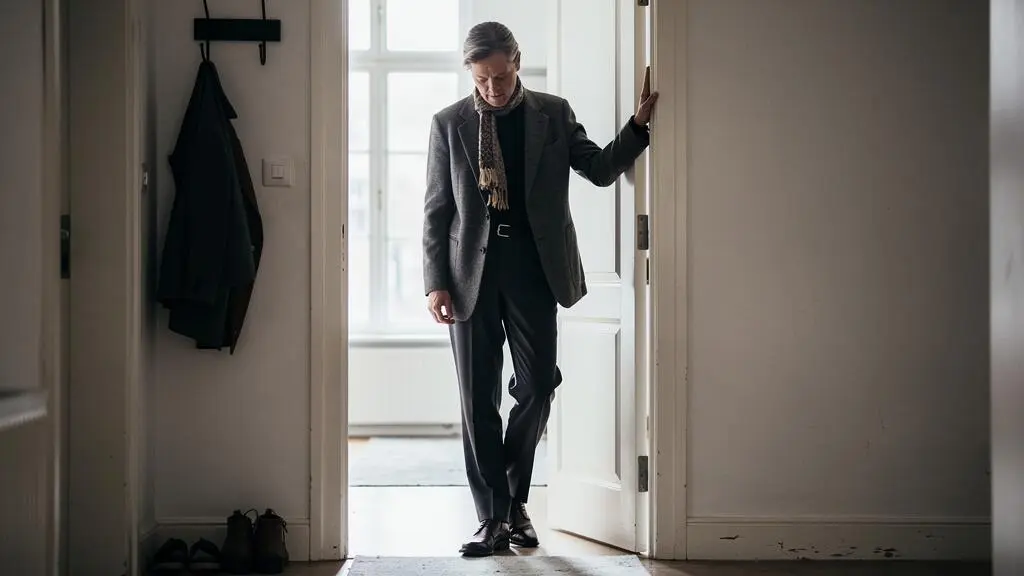
A wardrobe full of good clothes does not automatically produce good outfits. A beautifully cut blazer can feel awkward with the wrong trousers. Expensive shoes can distract from an otherwise understated look. Even a carefully coordinated neutral palette can appear cluttered when every garment demands attention.
The difference is often composition rather than shopping. An intentional outfit has a clear silhouette, a controlled relationship between proportions and a recognisable focal point. Its individual pieces contribute to the same visual idea instead of competing to establish different ones.
For everyday dressing, that means learning to assign roles to garments, judge how fabrics interact and edit what you wear before adding another accessory. These decisions can be practised with clothes already in your wardrobe, whether your week involves commuting, working from home, client meetings or casual weekends.
There is no universal formula for looking stylish. Personal taste, cultural context and comfort matter. However, a few practical principles make it easier to understand why one combination feels convincing while another never quite comes together.
Modern outfit composition: the essentials
- Build around three roles: a comfortable base, a proportion-defining structure layer and one principal finisher.
- Judge the overall silhouette before refining colours, accessories or small details.
- Use fabric condition, controlled texture contrast and selective outfit planning to make everyday dressing more consistent.
- Why Can Great Pieces Still Make an Outfit Look Wrong the Moment You Leave the House?
- How to Build a Modern Outfit Using a Base, a Structure Layer, and One Finisher?
- Shoes, Coat, or Bag: Which One Anchor Makes You Look Most Put-Together?
- The Styling Mistake That Makes an Outfit Look Busy Even in Neutral Colours
- When Should You Pre-Plan Outfits So Monday to Friday Feels Effortless?
- Why Does Fabric Texture Change How “Put-Together” You Look in 5 Seconds?
- How to Modernise Classic Pieces Using One Proportion Change and Zero New Trends?
- How Can Fabric Choice Signal Personal Style Without Looking Like You’re Trying Too Hard?
Why Can Great Pieces Still Make an Outfit Look Wrong the Moment You Leave the House?
Great individual garments can produce an unconvincing outfit when their shapes, textures and visual priorities do not work together. Quality tells you something about each piece; composition determines how the pieces interact. Before leaving home, judge the complete silhouette and identify which garment provides structure and which deserves attention.
Imagine a well-made oversized blazer, beautifully draped wide-leg trousers, a substantial scarf and chunky trainers. Each item might be desirable individually. Together, however, their combined volume can conceal the body’s outline and leave the eye without a clear point of emphasis.
The issue is not that oversized clothing is inherently unflattering. It is that the garments have no clearly differentiated visual roles. Their proportions compete instead of creating a deliberate relationship.
The educational framework described in Utah State University Extension‘s clothing design principles identifies balance, proportion, emphasis, rhythm and harmony as important elements of clothing composition. These ideas help explain why an ensemble should be judged as a whole, although harmony remains partly subjective.
A useful practical exercise is the doorway test. Before leaving, stand far enough from the mirror to see your entire outfit. Ask three questions:
- What forms the quiet foundation of the outfit?
- Which garment establishes its shape or proportions?
- What single element attracts attention first?
If those roles are difficult to identify, try removing a piece or adjusting one relationship before introducing anything new. A half-tuck, a different jacket length or an unfastened coat may clarify the composition without changing the garments themselves.
Then walk a few steps, sit down and check the outfit again. A static mirror view can hide problems that become obvious in movement: a shirt bunching beneath a jacket, trousers gathering around the shoes or a layer that continually needs repositioning.
This is a practical diagnostic exercise, not a scientifically validated test. Its value lies in shifting attention away from isolated details towards the appearance and behaviour of the complete outfit.
Clothing also communicates differently across situations. A research review on dress and first impressions explains that observers draw inferences about social identity, status and aesthetic preferences from appearance, while emphasising the importance of cultural context and individual expectations.
Consequently, the objective is not to eliminate every unconventional combination. It is to distinguish a deliberate stylistic contrast from one that has emerged without consideration.
Once each garment has a recognisable purpose, constructing an outfit becomes a repeatable process rather than a succession of guesses.
How to Build a Modern Outfit Using a Base, a Structure Layer, and One Finisher?
Build a modern outfit by selecting a comfortable base, adding one layer that establishes its silhouette, then choosing a single element to create emphasis. The base makes the outfit wearable, the structure layer controls proportion and the finisher provides personality. This three-role method is a practical styling framework, not a compulsory fashion rule.
Start with the base: the garments you can comfortably wear for most of the day. This might be straight-leg jeans and a cotton T-shirt, tailored trousers with a fine-gauge knit, or a simple column dress.
The base should already work in terms of fit, movement and comfort. It does not need to be visually striking, because its primary role is to support the rest of the composition.
Next comes the structure layer. A blazer, waistcoat, open shirt, substantial cardigan or knit draped over the shoulders can alter the outfit’s outline by adding or redirecting volume.
Use the relationship between the base and the layer as a decision guide:
- With a narrow or fluid base, consider a more substantial layer that adds definition through the shoulders or torso.
- With a loose base, consider a shorter, more fitted or visually structured layer that clarifies the waist or shoulder line.
- With an already architectural base, keep the additional layer simple or omit it if the silhouette needs no further adjustment.
The final role is the finisher: the element you want the eye to notice first. It could be polished loafers, an expressive scarf, an unusual belt or a striking coat.
Choosing one principal finisher does not prohibit wearing other accessories. It simply means assigning visual priority. Understated earrings and a practical bag can still accompany distinctive shoes without competing for attention.
Consider a hypothetical wardrobe containing dark straight-leg trousers, a white top, a charcoal blazer, an open cotton overshirt and black loafers. Keeping the trousers, top and shoes constant while changing the blazer for the overshirt produces two different silhouettes suitable for different levels of formality.
This illustrates why outfit composition can be more valuable than accumulating garments: the same pieces support different appearances when their relationships change.
Build and check one complete outfit in five actions
- Choose your base. Lay out two comfortable garments that work together and record the combination as your starting point.
- Identify the dominant shape. Note whether your base is slim, straight, wide or draped, producing a clear one-line silhouette description.
- Add one structure layer. Try a jacket, cardigan or overshirt and take a full-length photograph to assess the new proportions.
- Select one finisher. Choose the shoes, outerwear or accessory that should draw attention first and name it explicitly.
- Edit and validate. Remove one competing detail if necessary, then check the outfit standing and walking. Save a photograph of the version you would confidently wear outside.
The framework becomes more flexible with practice. Some outfits need no visible extra layer, while others deliberately feature multiple focal points. Understanding the three roles simply gives you a useful starting point for making those choices consciously.
Shoes, Coat, or Bag: Which One Anchor Makes You Look Most Put-Together?
A coat is often the strongest outfit anchor outdoors because it frames much of the visible silhouette. Shoes become more important when the coat comes off, particularly in offices and indoor settings. A bag works best as the principal accent when the rest of the outfit is understated. Choose according to context, not a universal hierarchy.
An anchor is the item that makes an outfit feel visually resolved. It may introduce a strong outline, reinforce the desired formality or supply the clearest point of emphasis.
Its effectiveness depends partly on how much of the garment remains visible throughout the day.
| Anchor | Where it works best | What to check |
|---|---|---|
| Coat | Commuting, outdoor appointments and colder weather | Length, shoulder shape, fabric condition and how it sits over other layers |
| Shoes | Office days, indoor events and coat-free outfits | Condition, shape, trouser hem relationship and appropriate formality |
| Bag | Simple outfits with few competing details | Scale, structure, texture and how it sits against the clothing |
For example, a long, clean-lined wool coat can unify a simple knit and trousers during a winter commute. Once indoors, the relationship between trouser length and shoe shape may become the more important visual detail.
A bag, meanwhile, generally occupies a smaller portion of the silhouette. It can still be distinctive, particularly when paired with quiet clothing, but relying on an elaborate bag to resolve an otherwise confused outfit is often ineffective.
Coordination is not the same as exact matching. A structured leather bag does not need to reproduce the precise colour of leather shoes. More useful relationships may involve similar levels of formality, compatible finishes or a balanced contrast in scale.
Suppose a relaxed charcoal suit is worn with polished brown loafers and a soft dark bag. The elements can feel connected through their restrained finishes and purposeful mix of tailored and relaxed shapes, without matching exactly.
The limiting factor is suitability. An otherwise impressive coat that pulls over the shoulders, uncomfortable shoes or an awkwardly oversized bag can interfere with movement and weaken the intended effect.
When the most visually powerful item is in poor condition or inappropriate for the occasion, simplify the composition rather than compensating with increasingly elaborate accessories.
The best anchor supports the day’s practical demands while clarifying the outfit’s visual direction. Once that choice is made, the remaining details should reinforce rather than challenge it.
The Styling Mistake That Makes an Outfit Look Busy Even in Neutral Colours
Neutral outfits can look busy when too many fabrics, finishes and decorative details compete within the same visual area. Beige, navy, grey and black reduce some colour contrasts, but they do not automatically create cohesion. To simplify a neutral outfit, edit its texture and detail density rather than relying on colour coordination alone.
Imagine a brushed wool jacket worn over a heavily ribbed jumper, with a fringed scarf, a leather bag featuring prominent hardware and trousers with conspicuous stitching. Every piece might share a restrained palette, yet the combination presents numerous surfaces that attract attention.
The problem is surface competition. Ribbing creates repeated lines, brushed wool produces a soft visual finish, polished leather introduces reflected light and hardware adds small high-contrast details.
These effects are not intrinsically incompatible. The difficulty arises when none is clearly subordinate to the others.
As explained in Utah State University Extension’s elements of clothing design, textile texture depends on factors including fibre content, yarn structure, construction and finishing treatments. Texture influences the visual character of a garment alongside line, silhouette and colour.
A practical way to evaluate this is the three-metre density test. View the outfit from across a room, or briefly narrow your eyes to reduce your focus on fine details. Notice which textures and shapes continue to demand attention.
If the scarf, jacket collar, necklace and bag hardware all appear equally prominent near the face and shoulders, try removing one of them. The aim is not for garments to disappear into a uniform surface, but for the eye to encounter an intelligible visual hierarchy.
One useful styling convention is to make a single texture the leading feature within each area of the outfit. For example, a brushed knit can become the main texture around the torso while the jacket and accessories remain comparatively smooth.
Alternatively, smooth tailoring can provide a quiet frame for an expressive scarf. The contrast becomes deliberate because the scarf has space to stand out.
This convention is not a proven optimum. Highly textured combinations can be successful when their overall proportions, repetition and stylistic intention are clear. The question is whether the visual complexity contributes to the outfit or merely accumulates.
Neutral dressing can encourage overconfidence because garments appear to coordinate chromatically. Yet colour agreement cannot compensate for every clash of scale, silhouette or finish.
Editing one distracting surface often produces a clearer result than introducing another neutral layer. This is especially useful for anyone who prefers understated outfits but struggles to make them look considered.
When Should You Pre-Plan Outfits So Monday to Friday Feels Effortless?
Pre-plan outfits for days when the schedule imposes clear constraints: early departures, important meetings, travel or unpredictable transitions between settings. For flexible days, choosing clothes spontaneously may be more practical. A sustainable weekly system prepares a few reliable combinations without turning every morning into an inflexible wardrobe appointment.
The first step is to review your calendar rather than opening your wardrobe. Identify the occasions that genuinely affect what you need to wear.
A presentation may require a particular level of formality. A long commute may make comfortable footwear essential. A day divided between indoor meetings and outdoor travel may demand adaptable layers.
These are the moments when advance decisions can be useful.
Research into implementation intentions offers a relevant, though indirect, explanation. The University of Konstanz‘s research summary on implementation intentions discusses how linking foreseeable situations with predetermined actions can support decision-making and follow-through.
That research does not specifically test outfit planning or establish an ideal number of prepared looks. Applying the principle to wardrobes is a practical adaptation.
Instead of scheduling five entirely different outfits, prepare two or three dependable compositions that can accommodate small adjustments.
For instance, a hypothetical working week might involve:
- A tailored trouser, fine knit and blazer combination for presentations or formal meetings.
- Dark jeans, an open overshirt and polished trainers for ordinary office days.
- A comfortable base, substantial coat and weather-suitable shoes for travel or outdoor commitments.
Each composition can be repeated with a different base colour, structure layer or restrained accessory. The objective is not to prevent repetition, but to avoid rebuilding the entire look under time pressure.
For a UK autumn or winter week, checking the weather forecast shortly before wearing an outfit is particularly useful. Rain, wind and temperature changes may affect footwear, outerwear and layering more than aesthetic preferences do.
However, pre-planning introduces its own risk when treated as a strict obligation. An outfit selected days earlier may feel uncomfortable, unsuitable for the actual weather or simply wrong for your mood.
Leave room for one unplanned day or make spontaneous substitutions whenever circumstances change. The system should support confident dressing, not demand compliance with a schedule.
A small collection of tested combinations provides useful starting points. Their success still depends on the condition, comfort and appearance of the fabrics you choose to wear.
Why Does Fabric Texture Change How “Put-Together” You Look in 5 Seconds?
Fabric texture affects the immediate impression of an outfit because surfaces influence how garments reflect light, hold their shape and interact visually. Crisp cotton, brushed wool, ribbed knitwear and fluid fabrics create different effects. Although there is no established universal five-second judgement rule, texture is worth checking before refining accessories or styling details.
From a distance, viewers can register the general silhouette and visible surface characteristics without inspecting individual fibres. A jacket that holds its shoulders communicates a different visual quality from one that collapses around the torso.
Likewise, smooth trousers and heavily textured trousers may produce quite different impressions even when their colour and fit are similar.
This does not establish that texture is always perceived before colour or cut. These visual elements interact, and their relative importance varies with lighting, viewing distance and the individual garment.
One of the most practical uses of texture awareness is checking fabric condition.
Before selecting the final outfit, examine the most visible pieces for:
- Pilling on knitwear, particularly around areas exposed to friction.
- Unwanted surface shine or flattening on frequently worn trousers and jackets.
- Stretched collars, sagging cuffs or distorted hems.
- Creasing that changes the intended drape or appearance.
- Lint and other visible surface debris that can distract from otherwise clean lines.
Not every mark of wear makes clothing unsuitable. Patina can be part of an intentional aesthetic, especially in casual garments. The relevant distinction is between a chosen lived-in appearance and deterioration that contradicts the desired finish.
Fabric weight and recovery also matter when deciding which garments should provide structure. A blazer or tailored trouser generally needs material and construction capable of supporting its intended shape. Softer fabrics may be better suited to draped bases, scarves or relaxed layering.
A limp fabric is not automatically poor quality. It may be exactly right for a fluid blouse or loose dress. Problems emerge when its behaviour conflicts with the structural role assigned to it.
Finally, consider the setting. A very heavy wool layer may feel excessive in a warm office, while a performance-oriented technical jacket may appear out of place at a formal dinner unless that contrast is deliberate.
Comfort is relevant here: garments that cause overheating, restrict movement or require repeated adjustment can undermine the ease the wearer is trying to achieve.
Well-maintained textiles and appropriate fabric weight cannot guarantee an elegant outfit, but they allow the intended proportions to remain visible and functional throughout the day.
How to Modernise Classic Pieces Using One Proportion Change and Zero New Trends?
Modernise a classic outfit by changing one relationship between garment lengths, widths or volumes while leaving the rest familiar. Try a relaxed blazer over a narrow base, a shorter jacket with longer trousers or a cleaner trouser hem above the shoes. One deliberate proportional adjustment can refresh the composition without buying trend-driven clothing.
Classic garments are useful because their shapes remain recognisable across different styling contexts. A trench coat, tailored blazer, straight-leg trouser or plain jumper can take on different visual characters depending on what surrounds it.
The most useful distinction is between fit and proportion. Fit concerns how a garment sits on the body: the shoulder alignment, waist comfort, sleeve length or available room for movement.
Proportion concerns how garments relate to one another: the length of a jacket compared with the trousers beneath it, the width of a hem relative to the shoe, or the amount of volume concentrated above and below the waist.
A garment can fit correctly and still feel visually unconvincing in a particular outfit because its proportions conflict with those of the other pieces.
The following examples are hypothetical styling transformations, not claims about universally fashionable measurements.
| Starting combination | Single adjustment | Intended visual effect |
|---|---|---|
| Fitted blazer and straight tailored trousers | Exchange the fitted blazer for a more relaxed version | Add volume and create contrast against the familiar trouser shape |
| Tailored trousers with fabric stacking at the ankle | Adjust the hem to produce a cleaner break or slightly cropped finish | Clarify the relationship between the trouser line and the shoe |
| Classic coat with a tightly wrapped scarf | Wear the same scarf in a longer, open drape | Introduce a more continuous vertical line through the upper body |
In each example, the original classic garment retains an important role. The update comes from altering one visual relationship rather than replacing the entire outfit.
A helpful principle is controlled imbalance. A relaxed upper layer can sit over narrower trousers. Wider trousers may work with a more defined shoe. A shorter jacket can contrast with a long, uninterrupted lower silhouette.
These are options, not obligations. Balanced proportions can be equally contemporary, and different body shapes or stylistic traditions may call for different relationships.
The practical mistake is to change too many variables simultaneously when the intention was merely to refresh a familiar combination. Replacing the blazer, trousers, shoes and accessories at once makes it difficult to understand which change improved the result.
Work with one adjustment, inspect the silhouette and keep the other elements stable. If the change makes the outfit feel less coherent, reverse it or experiment with a different relationship.
Once proportion becomes a conscious choice, familiar clothing can express a range of moods without constant purchases. The final layer of personal identity then comes from choosing materials and finishes that feel natural to wear repeatedly.
Key takeaways before defining your fabric signature
- Choose a material for its appearance, comfort and behaviour, not simply because it looks distinctive on a hanger.
- Let one expressive fabric remain the focus while quieter pieces support the complete silhouette.
- Look for material preferences you can repeat across seasons rather than creating a different visual identity every day.
How Can Fabric Choice Signal Personal Style Without Looking Like You’re Trying Too Hard?
Fabric choice can communicate personal style through recurring preferences for texture, weight and finish rather than conspicuous branding or constant trend changes. A consistent combination of familiar materials often creates a recognisable aesthetic. To keep the result intentional, let one distinctive fabric lead while the surrounding garments provide visual balance.
Personal style does not require every outfit to make a dramatic statement. It can emerge through repeated choices that feel consistent with the wearer’s preferences and everyday life.
Someone who regularly chooses matte wool, softly structured cotton and understated leather might develop a different visual signature from someone drawn to fluid silk-like fabrics, polished finishes and lightweight tailoring.
Neither approach is inherently superior. They simply produce different combinations of texture, shape and light reflection.
Fabric is especially useful because it can create distinctiveness without depending on obvious logos or unusual colour combinations. A coarse linen shirt, brushed wool coat or beautifully draped pair of trousers can become the focus of an otherwise simple outfit.
The one distinctive material principle offers a practical way to control emphasis. If a textured jacket is the central feature, consider quieter trousers, simple shoes and a restrained bag. If a fluid, subtly lustrous skirt creates the strongest visual contrast, surrounding it with matte knitwear can help clarify that role.
There is no scientific threshold at which several expressive garments suddenly become excessive. More maximalist styles can be equally deliberate. The principle is primarily useful for people who want modern outfits that feel considered without appearing heavily styled.
Repeated material preferences can also make wardrobe decisions easier. In warmer weather, breathable fabrics such as linen or lightweight cotton may become recurring choices, subject to individual comfort and garment construction.
During colder periods, wool and other insulating textiles can establish a familiar seasonal language. Repeating a material family does not mean wearing identical outfits; differences in silhouette and layering can provide variety.
For someone dressing through a typical UK year, a consistent style might translate into softly structured cotton during milder months, breathable summer linen and more substantial knitwear as temperatures fall. These are illustrative choices rather than prescriptions for every climate or indoor environment.
The important distinction is between recognisable preferences and unnecessary display. A distinctive fabric can lose its intended effect when competing with elaborate cuts, strong colour contrasts and multiple statement accessories.
Restraint can provide clarity, but it should never suppress genuine preferences. If expressive fabrics, bold colours and layered accessories are central to your personal style, the challenge is to organise that complexity rather than eliminate it.
The most convincing fabric signature is one that remains comfortable, practical and adaptable. Materials that suit your daily routine are easier to wear consistently than pieces chosen solely for their initial visual impact.
Choose one outfit you already enjoy wearing, identify its strongest fabric or proportion and build a second combination around the same principle. Photograph both in natural light and compare how they look and move. That small experiment is a practical starting point for developing an intentional personal style without buying anything new.
Can an outfit look intentional without a blazer or additional layer?
Yes. The structure role does not always require a separate garment. A sharply cut shirt, tailored dress or well-shaped pair of trousers can establish sufficient definition on its own. Treat the three-role system as a way of assigning visual functions rather than a requirement to wear three distinct layers.
How can you tell whether an outfit is too formal for an everyday occasion?
Compare its overall level of formality with the practical setting. If structured tailoring, polished footwear and formal accessories combine to feel excessive for a relaxed day, soften one element. Comfortable knitwear, less formal shoes or an open layer can change the impression while preserving the outfit’s coherence.
Do all the colours in a modern outfit need to match?
No. Cohesion can come from compatible proportions, a controlled level of contrast and a clear focal point. Colours can differ deliberately without making the outfit feel disjointed. Exact matching is only one possible approach, and it cannot compensate for conflicting silhouettes or distracting details.
Is it possible to develop a personal style with a small wardrobe?
Yes. A small wardrobe can support varied outfits when garments have compatible fits, useful layering options and a few distinct finishing pieces. Repeating favourite silhouettes and materials can help establish a recognisable appearance, while changing individual proportions or focal points creates variety without requiring a large collection.
Should comfort or appearance take priority when composing an outfit?
Comfort should form part of the initial selection rather than become an afterthought. Clothing that restricts movement, causes overheating or needs constant adjustment is less practical, even if its static appearance is attractive. Begin with a wearable base, then refine proportion, texture and emphasis within those comfort constraints.