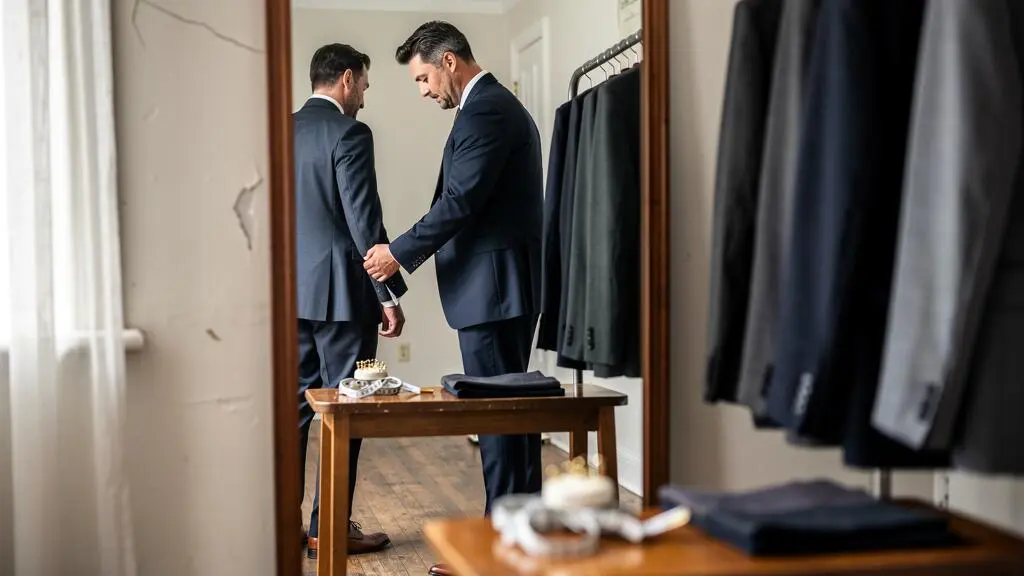
Breaking masculine tailoring rules successfully is not about ignoring them. It is about understanding which details establish credibility, then changing selected elements without disturbing the overall balance. A relaxed jacket, unexpected knit or unconventional shoe can make tailored clothing feel personal, provided the fit, proportions and level of formality remain coherent.
That distinction matters particularly in the UK, where a suit is no longer the automatic uniform of every professional environment. A creative workplace may welcome expressive tailoring, while a formal interview, traditional ceremony or important client meeting may call for greater restraint.
The safest approach is to preserve the structural foundations of tailoring while experimenting with its more flexible conventions. Start with the shoulders, jacket length, trouser drape and fabric condition. Then consider changing one visible feature at a time. The result should communicate that every choice was deliberate, not that the wearer misunderstood the occasion.
Breaking tailoring rules without losing credibility
- Protect the fundamentals: proper fit, balanced proportions, clean fabric and well-maintained shoes matter more than conventional accessories.
- Change one styling variable at a time and keep a recognisably tailored element to anchor the outfit.
- Match the degree of experimentation to the occasion: higher-stakes professional and ceremonial settings generally reward greater restraint.
- Why Do Tailoring “Rules” Still Matter Even When Offices Say They’re Casual?
- How to Personalise Tailoring by Changing One Variable So It Still Looks Intentional?
- Slim or Relaxed Tailoring: Which Looks More Modern Without Losing Sharpness?
- The Tailoring “Rule-Break” That Makes You Look Underprepared in Meetings
- When Should You Stick to Classic Tailoring Codes Because the Stakes Are Higher?
- How to Choose One Suit That Works for Interviews and Weddings Without Looking the Same?
- How to Choose Men’s Accessories Based on What You Carry Every Day, Not Hype?
- When Does Traditional Suiting Still Make Sense in Modern UK Life?
Why Do Tailoring “Rules” Still Matter Even When Offices Say They’re Casual?
Tailoring rules still matter because they provide a shared visual language for judging fit, formality and intention. Even in casual offices, people notice whether a jacket sits properly, trousers fall cleanly and shoes suit the occasion. Knowing these conventions allows you to depart from them deliberately without appearing unfamiliar with professional expectations.
Traditional tailoring contains two different kinds of rules. The first protects how clothing functions and appears on the body. The second reflects conventions about how formal outfits are traditionally assembled.
- Structural principles: shoulder alignment, appropriate jacket length, balanced proportions, comfortable movement and controlled trouser drape.
- Styling conventions: wearing a tie, matching particular colours, choosing a pocket square or pairing a suit exclusively with traditional leather shoes.
Structural principles are difficult to abandon without affecting the appearance of the outfit. Styling conventions offer considerably more freedom because their original purpose can often be fulfilled in another way.
For example, replacing a shirt and tie with a fine-gauge merino jumper removes a conventional formal element. Yet a well-fitted jacket, tailored trousers and polished shoes can maintain visual structure. The jumper changes the outfit’s formality without undermining its proportions.
A 2024 Journal of Applied Psychology review of workplace clothing identifies formality and fashionability among the characteristics relevant to workplace impressions. Crucially, the authors emphasise that clothing interpretations vary across people, situations, cultures and time. The review does not establish universal rules for masculine tailoring or prove that dressing formally improves professional performance.
Before breaking any tailoring convention, ask three questions:
- What purpose did the original rule serve: formality, cohesion or proportion?
- Which remaining garment will preserve that purpose?
- Will the intended audience recognise the change as appropriate?
A patterned shirt beneath a navy suit might appear confident in a design studio. The identical combination could draw unwanted attention during a conservative first client meeting. Neither judgement is universal; the professional setting changes how the choice is likely to be interpreted.
Once those foundations are secure, personalisation becomes a matter of controlled choices rather than wholesale rebellion against traditional dress.
How to Personalise Tailoring by Changing One Variable So It Still Looks Intentional?
The simplest way to personalise tailoring is to change one noticeable element while keeping the rest of the outfit familiar. Experiment with a textured fabric, relaxed trouser shape, alternative shirt or less conventional shoe, but retain a classic anchor nearby. This gives the eye a clear reason for the change and helps the outfit remain coherent.
This one-variable method is a practical styling heuristic, not a scientifically established rule. Its value lies in making experimentation easier to evaluate. When several features change simultaneously, it becomes harder to identify which detail is creating a visual imbalance.
Consider a hypothetical outfit built around a charcoal single-breasted suit. Replacing the white shirt with a dark fine-knit polo creates a noticeable departure from conventional business dress. The familiar jacket, trousers and leather shoes preserve the outfit’s tailored identity.
Now imagine adding oversized trainers, dramatically cropped trousers and an unusually wide jacket at the same time. Each choice may work independently, but their combined effect requires considerably more attention to proportions, setting and styling.
In practical terms, experimentation can be arranged from relatively easy to demanding:
| Variable | Relative styling risk | How to maintain coherence |
|---|---|---|
| Shirt or fine knitwear | Lower | Keep the jacket, trousers and footwear conventional. |
| Subtle colour or texture | Lower to moderate | Use restrained surrounding colours. |
| Alternative footwear | Moderate | Match its formality and visual weight to the suit. |
| Wider trousers or altered break | Moderate | Check how the hem meets the shoe. |
| Unusual lapels or very soft construction | Higher | Preserve a balanced silhouette and suitable occasion. |
These rankings are editorial guidance rather than measured differences in professional risk. The effect of any change depends on how it works with the other garments and who will see the outfit.
The anchoring principle offers a useful safeguard: pair an unconventional garment with something recognisably classic. A loose, pleated trouser can be anchored by a structured jacket. A relaxed knitted top can sit beneath a conventionally cut suit.
Construction changes deserve particular care because they affect the garment itself. A different shirt can be changed immediately; a radically altered lapel or jacket structure usually cannot. For someone building a versatile wardrobe, less permanent changes are a sensible starting point.
As confidence develops, more adventurous combinations become possible. Before changing several elements together, however, make sure the underlying silhouette still looks balanced.
Slim or Relaxed Tailoring: Which Looks More Modern Without Losing Sharpness?
Neither slim nor relaxed tailoring is automatically more modern or sharper. The determining factor is proportion: the jacket and trousers must have compatible volumes, the shoulders must sit deliberately and the trouser hem must meet the footwear cleanly. Relaxed tailoring can look exceptionally considered, while a restrained slim cut can remain elegant when it allows natural movement.
Contemporary menswear has broadened the range of acceptable silhouettes beyond the closely fitted suits that dominated many wardrobes in previous years. Extremely tight trousers and jackets may therefore look dated in some settings, especially when pulling fabric or restricted movement makes the fit appear forced.
That does not mean every slim suit needs replacing. A slightly shaped jacket with comfortably fitted trousers can still look appropriate. The distinction is between a silhouette that follows the body and one that visibly constricts it.
Relaxed tailoring introduces different challenges. Extra fabric needs enough structure and weight to drape rather than collapse. Three details deserve particular attention:
- Shoulder position: a natural or softly extended shoulder should look designed, not simply oversized. The upper sleeve should fall without uncontrolled bunching.
- Trouser length: a wider leg needs a deliberate hem position. Excess fabric collecting heavily around the shoes can obscure the intended line.
- Leg shape: the relationship between thigh width, knee width and hem opening should remain balanced. Taper is optional, but an abrupt change in width can distort the drape.
A practical transition from slim to relaxed tailoring begins with trousers. Slightly more room through the thigh, a straighter leg and a carefully measured hem can refresh an existing jacket without requiring a complete wardrobe replacement.
The next step is to consider a softer or roomier jacket that complements the new trouser proportions. Going directly from a fitted suit to an oversized jacket and very wide trousers makes it harder to establish what feels comfortable and convincing.
Body shape and height also influence how volume appears. A longer jacket may create an elegant continuous line on one frame but visually overwhelm another. Conversely, a sharply cropped jacket may interrupt the proportions of a fuller trouser.
Use a full-length mirror or a straight-on photograph taken at a natural viewing distance. Compare the shoulder line against a doorframe, check whether the jacket and trousers appear proportionate, and look for fabric pulling or bunching. This is more informative than judging a fit from a close-up selfie.
Specialist tailoring advice supports the importance of evaluating the garment before focusing on fashion. Permanent Style’s comparison of ready-to-wear and made-to-measure suits emphasises construction, fit and style, particularly the shoulders and chest. Its conventional starting recommendations are useful reference points, although the article does not establish which silhouettes are fashionable today.
The goal is not to make every garment looser or closer-fitting. It is to establish a silhouette that works on the body and continues to look deliberate in motion.
The Tailoring “Rule-Break” That Makes You Look Underprepared in Meetings
The most damaging tailoring mistake in a professional meeting is allowing casual details to undermine an otherwise formal outfit. A creased, shapeless jacket, conspicuously informal clothing beneath a suit or footwear that clashes with the setting can suggest insufficient preparation. The problem is usually not individuality itself, but a mismatch between the outfit and the occasion.
Consider a hypothetical first meeting with a prospective corporate client. A navy suit and dark leather shoes establish a familiar level of formality. Replacing a traditional shirt with a fine-gauge knit may still communicate a measured, contemporary approach.
Now replace the knit with a visibly worn graphic T-shirt, add distressed trainers and leave the jacket heavily wrinkled. These details introduce competing messages. An observer might interpret them as deliberate creative styling, but in a conservative business setting they also create avoidable uncertainty about judgement.
There is an important asymmetry in this decision. Conventional dress is often less visually distinctive, while an unsuccessful experiment is more noticeable. That makes a relatively conservative outfit a practical default when professional expectations are unknown. This is a risk-management judgement, not a proven numerical relationship between clothing and career outcomes.
Research provides some context without justifying absolute claims. A 2017 British Journal of Psychology experiment examined interactions between clothing and posture in impressions of professionalism, confidence and other perceived attributes. Its results underline that visual judgements depend on more than clothing alone. The study did not measure real workplace competence or establish that particular tailoring choices determine meeting success.
Before selecting an unconventional outfit, assess the room:
| Setting | Example: suit with minimalist trainers | Practical judgement |
|---|---|---|
| Informal creative team meeting | Potentially coherent with established team dress. | Usually easier to accommodate if clean and proportionate. |
| First meeting with a traditional corporate client | May conflict with expectations not yet understood. | Consider leather derbies or understated loafers instead. |
| Formal interview | Could introduce unnecessary uncertainty. | Follow the stated dress code and the role’s conventions. |
Decision-making seniority matters, but so do industry, company culture and the relationship already established. A senior executive in a creative business may welcome a different presentation from a client representative working within a formal institutional environment.
Five checks to complete before an important meeting
- Identify the audience: write down the meeting type, key participants and any known dress expectations in a one-line brief.
- Inspect the jacket: check shoulder placement, chest comfort and fabric condition; confirm the result in a full-length mirror.
- Check the trousers: stand and walk in the complete outfit, then take a photograph showing the hem and shoe relationship.
- Audit the footwear: inspect cleanliness, condition and formality; choose the pair that best supports the rest of the outfit.
- Review the deviation: identify the single unconventional element and confirm in one sentence why it suits this particular meeting.
These checks do not guarantee a positive impression. They help eliminate preventable inconsistencies before appearance becomes an unnecessary distraction.
When the consequences of a poor first impression become more significant, the appropriate level of experimentation generally becomes narrower.
When Should You Stick to Classic Tailoring Codes Because the Stakes Are Higher?
Classic tailoring is usually the safer choice when an occasion involves unfamiliar decision-makers, established dress protocols or significant professional consequences. Formal interviews, court appearances, funerals and first meetings with conservative clients generally call for restraint. More expressive choices become easier once the setting, expectations and your standing within the room are understood.
The reasoning is straightforward: clothing is one of several visible signals people may use when forming an initial impression. It cannot establish actual reliability or competence, but an outfit that clearly respects the occasion removes one possible source of doubt.
This matters especially when professional relationships are new. Established credibility gives an individual more freedom to depart from conventional presentation without making clothing the focus of attention.
The following grid is a practical guide rather than a universal UK dress code:
| Occasion | Suggested starting point | Room for individuality |
|---|---|---|
| Formal job interview | Conservative suit or appropriately formal separates. | Subtle colour and texture choices. |
| Court or formal institutional setting | Follow the applicable role-specific requirements. | Limited where a prescribed dress code applies. |
| Funeral | Respectful, subdued dress suited to family and cultural expectations. | Usually restrained. |
| First client meeting | Match the client’s expected level of formality. | One controlled styling departure. |
| Salary negotiation | Professional clothing consistent with the workplace. | Moderate, depending on established norms. |
| Internal presentation | Established workplace standard. | Often greater flexibility. |
| Creative industry event | Tailored base with expressive details. | Potentially substantial. |
UK court dress is particularly context-dependent: professional advocates may be subject to specific requirements that do not apply to ordinary attendees. Likewise, funeral expectations vary by family, faith, community and the stated wishes of organisers. Neither situation should be reduced to a universal requirement to wear a particular suit.
For most formal occasions, an 80/20 approach is useful as a styling principle: establish the fundamentals before using details for personal expression. The ratio is illustrative, not a measured formula.
- Ensure the jacket and trousers fit comfortably and hang cleanly.
- Wear clean, suitably pressed clothing.
- Maintain shoes in good condition.
- Keep visible styling details appropriate to the occasion.
These foundations leave room for personality through a considered tie, restrained pattern, interesting wool texture or carefully chosen accessory.
A recognised expert or senior professional may have greater latitude. Someone whose judgement is already trusted can sometimes use distinctive tailoring to reinforce an established personal style. However, seniority does not override explicit dress requirements or the need to respect ceremonial occasions.
A versatile wardrobe should therefore contain at least a few combinations that can meet formal expectations without last-minute compromises.
How to Choose One Suit That Works for Interviews and Weddings Without Looking the Same?
Choose a navy or mid-grey suit with a moderate cut, natural shoulders, conventional lapels and a versatile mid-weight fabric. For interviews, wear it with a formal shirt, restrained tie and dark leather shoes. For weddings, change the shirt, accessories and footwear according to the dress code, keeping the suit itself unchanged.
The principle is to buy versatility into the base garment rather than depend on accessories to disguise an unsuitable suit. A distinctive evening suit cannot always become interview-appropriate simply by changing its tie.
Start with a single-breasted jacket, conventional notch lapels and trousers that offer comfortable movement without an extreme taper. A moderate jacket length and balanced silhouette are generally easier to adapt across settings than deliberately exaggerated proportions.
Fabric also matters. A breathable, mid-weight wool with a restrained surface finish can be useful across much of the year, although personal comfort and seasonal conditions remain important. Very heavy winter fabrics and exceptionally lightweight summer cloth are less adaptable to contrasting temperatures.
Consider two hypothetical ways to wear the same mid-grey suit:
| Element | Formal interview | Wedding guest |
|---|---|---|
| Suit | Mid-grey wool, conventional fit | The same mid-grey wool suit |
| Shirt | White or pale blue dress shirt | Open-collar shirt or a more expressive dress shirt |
| Neckwear | Muted tie where appropriate | Textured or coloured tie, or none if permitted |
| Shoes | Dark leather derbies or oxfords | Polished loafers or suitable dress shoes |
| Accessories | Minimal and restrained | Optional pocket square or celebratory detail |
For a traditional wedding ceremony, a shirt and tie may still be preferable to knitwear or an open collar. A black-tie invitation requires a different approach and should not be interpreted as permission to substitute an ordinary business suit for a dinner suit.
Some suit characteristics are considerably harder to adapt. An unusually vivid colour, strongly contrasting lining, exaggerated lapels or extreme cropped cut may define the garment so clearly that changes to shirts and shoes cannot alter its character. A shawl-collar dinner jacket is similarly associated with evening dress rather than ordinary business wear.
Alterations require particular foresight. Trousers shortened dramatically for one outfit cannot regain their length for another occasion without sufficient fabric allowance. An aggressive taper may also limit which shoes and styling combinations look balanced.
Ask a tailor to establish a neutral trouser length and a jacket fit that works with several shirts and appropriate footwear options. The trousers should be assessed in the shoes most likely to be worn with the suit.
A successful versatile suit should not look identical on every occasion, but it should never require substantial alterations merely to fit the next event.
How to Choose Men’s Accessories Based on What You Carry Every Day, Not Hype?
Choose men’s accessories by examining what you actually use rather than what is currently fashionable. Start with your wallet, bag, watch, glasses, keys and other everyday essentials. Prioritise practical construction, condition and compatibility with your clothing, then introduce decorative pieces only when they add something useful to the overall appearance.
Accessories are often treated as an afterthought, but everyday objects can have considerable visual presence. A bulky, brightly coloured backpack may influence how a tailored outfit reads more than an understated pocket square ever could.
The sensible starting point is a needs-first audit. Write down what you routinely carry and how each item is used. A commuter carrying a laptop, documents and charging equipment requires a different bag from someone who travels with only a phone and keys.
Review the items in three categories:
- Essential everyday objects: wallet, phone, keys, glasses and work bag. Prioritise comfort, usefulness and durability.
- Functional style accessories: belt, watch, scarf and weather-appropriate accessories. Choose versions that complement the outfit’s formality.
- Decorative additions: pocket squares, jewellery and expressive details. Add these after the essentials work together.
Consistency is more important than rigid matching. A leather belt and shoes do not always need to be identical in shade, while a watch and bag can use different materials. Their formality, visual weight and overall character should nevertheless make sense together.
For instance, a restrained navy suit, dark loafers and a slim leather briefcase create a recognisable professional combination. Replacing the briefcase with a heavily worn sports bag changes that impression even if the tailoring itself remains immaculate.
Conversely, a simple canvas tote may work particularly well with relaxed linen tailoring in a casual creative environment. Context determines whether a contrast appears thoughtful or contradictory.
Trend-driven accessories deserve scrutiny because they can introduce visual novelty without improving everyday use. Rather than buying an item purely because it is currently prominent in menswear photography, consider whether it will work with several outfits and remain useful after the immediate trend fades.
Cost per wear offers a straightforward way of assessing value: divide the purchase cost by the number of times the item is actually used. This is a personal budgeting calculation, not a guarantee of quality or longevity. A frequently used, well-maintained accessory may offer greater practical value than a cheaper decorative item that rarely leaves the wardrobe.
Finally, treat accessories as part of the one-variable approach. An unusual watch, patterned scarf or expressive bag may provide sufficient individuality without adding several competing elements.
Once daily essentials are coherent, tailored clothing becomes easier to adapt to changing levels of formality without accumulating unnecessary purchases.
Key takeaways before deciding whether to own a traditional suit
- Assess actual invitations, professional obligations and recurring formal occasions rather than assuming suits are either essential or obsolete.
- Separate occasions where formal dress is expected from those where tailoring is a personal choice.
- Prioritise a versatile, well-fitting suit when your calendar justifies ownership; otherwise, build around adaptable tailored separates.
When Does Traditional Suiting Still Make Sense in Modern UK Life?
Traditional suiting still makes sense in modern UK life whenever the occasion, profession or dress code benefits from a recognisably formal appearance. Weddings, certain ceremonies, funerals, formal business settings and some professional roles continue to give suits a practical purpose. Whether you need to own one depends less on fashion trends than on the events and expectations you regularly encounter.
The British suit has undergone a significant change in its everyday role. Office dress was becoming less formal before the COVID-19 pandemic, and increased home working accelerated an existing shift towards more casual clothing.
The Guardian’s reporting on the decline of men’s suits in Britain described these changes in April 2022, including the removal of men’s suits from the Office for National Statistics consumer price inflation basket that year. The report also cited historical Kantar Worldpanel spending figures. Those observations illustrate the shift in purchasing and workplace habits at the time; they do not establish the size of the suit market in 2026.
2022
The year men’s suits were removed from the ONS representative consumer price inflation basket, as reported by The Guardian. The change reflected consumer spending patterns, not the disappearance of formal suiting from British life.
The Guardian, reporting published 18 April 2022, referring to the ONS basket change.
For many UK professionals, this creates an interesting distinction between wearing a suit by obligation and choosing one voluntarily. The former requires attention to established expectations. The latter can provide an opportunity to express individuality precisely because the wearer has selected tailoring rather than default casual clothing.
A navy suit with soft shoulders, generous trousers and a fine-knit polo may stand out in a relaxed office while retaining a composed silhouette. In that situation, the suit itself supplies structure, allowing the styling to be less conventional.
Traditional suiting nevertheless retains clear practical uses:
- Weddings and formal celebrations, according to the invitation and stated dress code.
- Funerals and remembrance occasions where subdued formal dress is appropriate.
- Client-facing roles in organisations with established professional presentation expectations.
- Selected legal, financial, institutional and hospitality settings, subject to the requirements of the particular role.
- Ceremonies and special events where a conventional suit is expected or preferred.
None of these categories establishes a universal requirement across the UK. A financial technology office may be considerably more relaxed than a traditional advisory firm. Likewise, event dress codes depend on organisers, participants and the nature of the occasion.
For a practical wardrobe decision, review the previous twelve months rather than relying on broad claims about the future of the suit. Count occasions where a conventional suit was required, occasions where it would have been useful and events where separates were sufficient.
If several formal occasions recur, owning a versatile suit may simplify preparation. If they are rare, a tailored jacket and coordinated trousers may cover much of everyday life, although an exceptional formal invitation could still require a more specific outfit.
The distinction also guides spending priorities. Someone who wears a suit regularly has a stronger reason to invest in fit, maintenance and suitable alternatives. Someone who wears one occasionally may benefit more from a restrained design that remains adaptable over time.
Review your calendar, identify your most formal recurring occasion and assemble one complete outfit that meets it comfortably. Then experiment with a single detail in a lower-stakes setting. That approach makes individuality a deliberate extension of good tailoring rather than a substitute for it.
Can you wear trainers with a tailored suit without looking sloppy?
Yes, particularly in casual or creative environments where tailored clothing and informal footwear are accepted. Choose clean, understated trainers whose shape complements the trousers. Avoid bulky or visibly worn pairs when they conflict with the suit’s proportions or the occasion’s formality. For traditional interviews and formal ceremonies, conventional dress shoes are generally a safer starting point.
Should a tailored jacket always have structured shoulders?
No. Soft natural shoulders can look polished when the jacket fits well through the upper body and the fabric drapes properly. Heavy padding is not necessary for every silhouette. What matters is that the shoulder line looks intentional and the jacket does not pull, collapse awkwardly or restrict movement.
Can a suit be worn without a tie in a professional setting?
Often, yes. Many workplaces accept open-collar shirts or fine knitwear with tailoring. However, expectations differ by organisation, role and occasion. If an interview, client meeting or formal event has a conventional dress code, wearing a tie may be the more appropriate choice. Removing the tie should not be confused with ignoring an explicit requirement.
How can someone tell whether an oversized suit is intentional or simply too big?
Look at the complete silhouette rather than the garment’s size label. Intentional relaxed tailoring normally retains a coherent shoulder line, controlled drape, balanced jacket and trouser volumes, and a deliberate hem position. A suit that pulls in some areas, collapses in others or interferes with movement may require a different cut or alterations rather than further styling.
What is the easiest first step towards a more individual tailored wardrobe?
Start with an existing outfit that already fits well and replace one conventional element. A textured tie, fine-knit top, softly coloured shirt or different but appropriate shoe can introduce personality without changing the underlying silhouette. Wear the combination in a familiar, lower-stakes environment and assess how it looks standing, walking and sitting before making further changes.