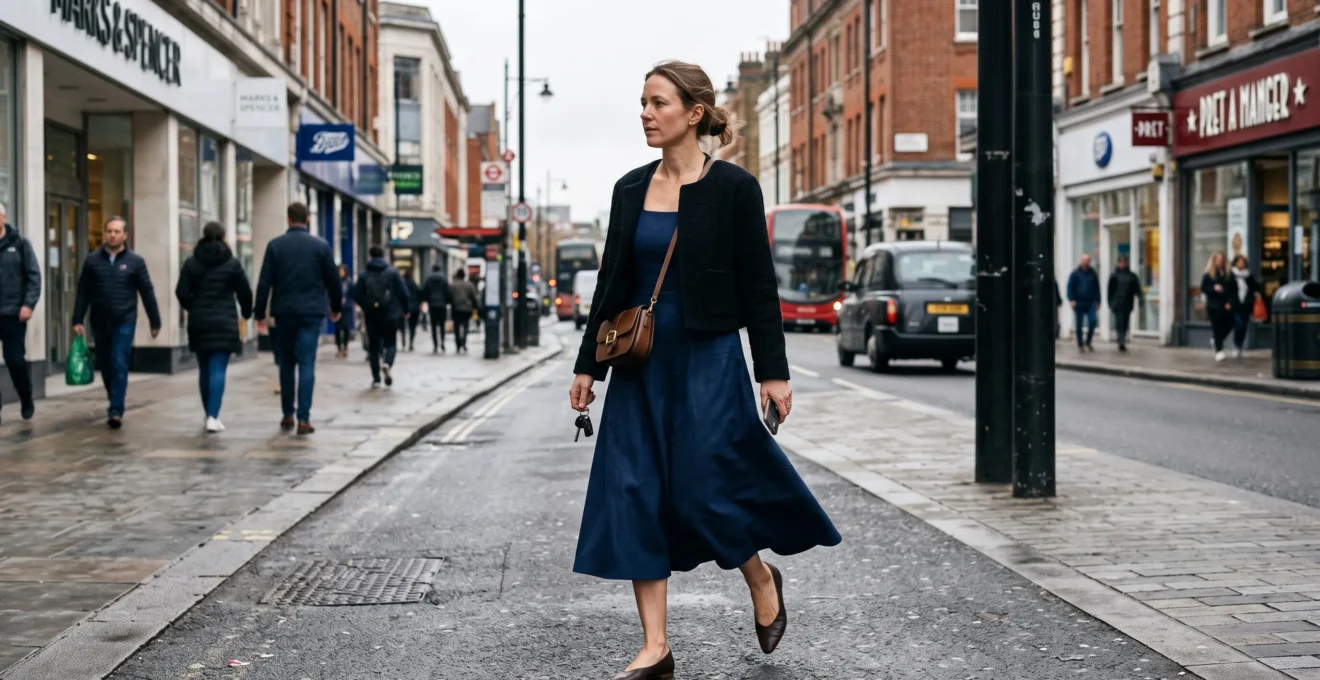
An A-line dress looks modern when its familiar flared silhouette is balanced with clean proportions, considered fabric and accessories that do not all reference the same decade. The dress itself rarely needs reinventing. Often, changing the shoes, adjusting the outer layer or choosing a more defined neckline is enough to give it a contemporary feel.
That distinction matters when an A-line is one of the most comfortable shapes in your wardrobe. Its widening skirt offers movement without requiring an oversized fit, while a defined waist can create a useful starting point for workwear, weekend dressing and evenings out. Yet the same shape can feel unexpectedly nostalgic if every detail reinforces a particular vintage aesthetic.
For British everyday dressing, practicality also counts. A dress needs to work beneath a coat, through a commute, while sitting at a desk and potentially at dinner afterwards. The most useful approach is to evaluate how the garment moves, where its proportions fall and which styling elements change its character without compromising comfort.
How to make an A-line dress look contemporary
- Keep the flared skirt, but balance its softness with a defined neckline, streamlined footwear or a structured accessory.
- Choose the hem and fabric for how they behave when walking, sitting and layering, not just how they look on a hanger.
- For day-to-evening dressing, change one or two finishing elements rather than rebuilding the entire outfit.
- Why Can an A-Line Dress Look Dated Even When the Cut Is Flattering ?
- How to Choose Neckline and Length in an A-Line Dress So It Works All Day ?
- Structured or Fluid A-Line: Which Looks More Polished for After-Work Plans ?
- The Footwear Choice That Makes an A-Line Dress Look Like a Theme Outfit
- When Should You Add a Layer Over an A-Line Dress Without Losing the Shape ?
- Why Does Fabric Texture Change How “Put-Together” You Look in 5 Seconds ?
- Woven or Knit: Which Drape Works Better for All-Day Workwear Comfort ?
- How Do You Build Modern Womenswear Looks That Work for Work and a Last-Minute Dinner ?
Why Can an A-Line Dress Look Dated Even When the Cut Is Flattering ?
An A-line dress can look dated when its accessories, finishing details and proportions collectively evoke a particular period, even though the silhouette itself remains flattering. The problem is usually not the widening skirt but the combination of elements surrounding it. Updating one prominent styling detail can make the outfit feel intentional rather than accidentally nostalgic.
Consider a hypothetical outfit: a full-skirted dress with a fitted cardigan, nude tights, very rounded ballet flats and a small shoulder bag. Each piece can work individually. Together, however, they may evoke a recognisable earlier fashion aesthetic, particularly when the dress also has a decorative collar or a heavily gathered waist.
The solution is not to abandon feminine details. It is to decide whether the vintage reference is deliberate. A rounded flat can look excellent with an A-line dress when balanced by a sharper jacket or a contemporary bag. Similarly, a cardigan can feel modern when its shape, texture or styling introduces something unexpected.
Separate the silhouette from its execution. A-line describes how the garment widens towards the hem. It does not determine the neckline, sleeve volume, waist treatment, print scale or skirt length. Those choices strongly influence the finished impression.
A lightly flared midi with a clean bodice has a different character from a short, highly gathered dress with puffed sleeves. Both belong to the A-line family, but they suggest different styling directions.
As a practical self-audit, look for three or more details that seem to reference the same era:
- Footwear with a particularly recognisable vintage shape.
- A matching period-inspired bag and hairstyle.
- A hem, print or sleeve treatment associated with the same aesthetic.
This is a styling heuristic, not a scientific rule. If the combination feels too theatrical for your intention, replace one prominent element rather than changing everything.
General design principles support examining the complete outfit rather than judging the dress in isolation. Utah State University‘s clothing and textile design principles explain how proportion, balance, line, texture and emphasis contribute to an ensemble’s overall appearance. They do not, however, establish which specific fashion combinations are current or dated.
Because an A-line skirt adds visual width below the waist, more controlled shapes around the shoulders, neckline or accessories can provide a useful counterbalance. A crisp collar, geometric neckline or structured leather bag may be enough.
Once the overall styling direction feels right, the next decision is whether the dress’s neckline and hem will remain comfortable and balanced throughout the day.
How to Choose Neckline and Length in an A-Line Dress So It Works All Day ?
Choose an A-line dress neckline that balances the width of its skirt and a length that remains comfortable when sitting, walking and commuting. Square, boat and modest V-necklines are useful options, while knee-length and midi hems offer different styling possibilities. The best combination depends on your proportions, workplace and preferred shoes.
Because the skirt widens below the waist, the upper part of an A-line dress plays an important role in the overall silhouette. A defined shoulder line or clean neckline can visually anchor the flare without making the bodice feel restrictive.
A square neckline creates a clear geometric frame around the upper body. A boat neckline draws attention across the shoulders, while a modest V introduces a longer visual line through the torso. None is universally more flattering: shoulder shape, bust fit and personal comfort remain important.
Length involves a separate decision. A dress described as midi may finish just below the knee on one person and closer to the ankle on another. The location of the hem matters more than the label.
For an office-based day in the UK, these comparisons provide a practical starting point:
| Length | Practical advantage | What to check |
|---|---|---|
| Just below the knee | Easy to style for work and informal evening plans. | Whether the hem stays comfortable when sitting and walking. |
| Mid-calf | Offers more coverage while allowing the skirt to move. | Whether the hem finishes at a point that works with your footwear. |
| Lower midi | Creates a longer, flowing silhouette. | Whether the extra fabric feels manageable on stairs and during commuting. |
The fuller the skirt, the more important hem placement becomes. A wide flare creates a substantial visual shape, so the point where it ends can influence the apparent balance between the dress and the visible lower leg. Experiment with different lengths rather than relying on a universal proportion rule.
Before buying, sit in the dress, stand up and walk a short distance. Check whether the fabric gathers awkwardly across the lap, rides upwards or requires repeated adjustment. This simple fitting-room test is more revealing than standing motionless in front of a mirror.
Also consider the layers you regularly wear. A square neckline may sit neatly beneath a blazer, while a V-neck can accommodate a fine knit underneath. A dress that works with existing outerwear is easier to wear across different settings.
Once the proportions work in motion, fabric construction becomes the next factor in whether the dress still feels polished at the end of the working day.
Structured or Fluid A-Line: Which Looks More Polished for After-Work Plans ?
A structured A-line dress generally creates a sharper outline, while a fluid version produces a softer, more relaxed effect. For formal meetings, a fabric that maintains defined lines may be preferable. For spontaneous evening plans, drape and ease can feel more natural. The better choice depends on the occasion and how the fabric behaves after hours of wear.
Structured fabrics such as cotton poplin and suitable wool suiting can hold the skirt away from the body, making the A-line shape more architectural. This can give a dress visual definition without relying on bold accessories.
However, structure is not a guarantee of low maintenance. Some crisp cotton fabrics crease noticeably when sitting, while certain tailored materials can feel restrictive if the bodice lacks sufficient ease.
Fluid fabrics behave differently. A softer viscose blend or suitable jersey may follow movement more closely and create a less formal appearance. The amount of drape depends on fabric weight, construction and finishing, so two dresses with similar fibre labels can perform differently.
The decision becomes clearer when connected to your actual schedule.
| Decision | Structured A-line | Fluid A-line |
|---|---|---|
| Visual impression | Crisp, defined and architectural. | Soft, relaxed and movement-led. |
| Work context | Useful for presentations and more formal settings. | Useful for flexible workplaces and informal schedules. |
| Movement | Depends on cut, lining and available ease. | Often moves more freely, depending on weight and construction. |
| After-work styling | Can be softened through accessories or knitwear. | Can be sharpened with structured jewellery or outerwear. |
| Care consideration | Check creasing and fabric stiffness. | Check cling, static and shape recovery. |
Wrinkle recovery is particularly relevant for day-to-evening dressing. A dress that looks excellent at 9am may not retain the same finish after a commute and prolonged sitting. Rather than assuming that a fibre composition guarantees performance, examine the fabric’s recovery and follow its care instructions.
Try sitting for several minutes in a prospective purchase, then check the lap and back of the skirt. Look for persistent creases, pulling around the waist and changes in the drape.
A structured dress need not remain formal all evening. For example, a hypothetical navy poplin A-line worn with a tailored blazer during the day could be styled for dinner by removing the blazer and adding distinctive earrings.
Conversely, a fluid charcoal dress can feel more refined with a compact leather bag and clean-lined footwear. The key is to make the finishing deliberate rather than to force the dress into another silhouette.
Fabric sets the overall character, but footwear can change the perceived era of an A-line outfit almost instantly.
The Footwear Choice That Makes an A-Line Dress Look Like a Theme Outfit
The footwear most likely to make an A-line dress feel like a themed outfit is a shoe that reinforces an already strong vintage reference. Very rounded flats combined with a full skirt and period-inspired outerwear can create a distinctly nostalgic impression. Streamlined flats, refined boots or simple trainers can shift the same dress towards a contemporary everyday look.
There is nothing inherently outdated about a round-toe shoe. The effect comes from repetition. When the dress, shoe, bag and outerwear all suggest the same historical aesthetic, the outfit may look deliberately retro even when that was not the intention.
A pointed or almond-toe flat can provide a cleaner visual finish beneath a flared skirt. A streamlined ankle boot introduces another practical option for cooler weather, particularly with a dress whose hem leaves some space above the boot.
Minimal leather trainers can also work when the dress is sufficiently relaxed and the rest of the outfit supports a casual direction.
The objective is contrast without visual conflict. A shoe should bring a different styling reference or a neutral shape, not necessarily the most exaggerated contemporary trend available.
For example, a very heavy platform trainer may overwhelm a lightly draped midi dress, especially if the skirt has delicate movement. A sleeker trainer can achieve the same casual effect with less competition between proportions.
Similarly, a substantial boot can work with a heavier wool A-line because both pieces have comparable visual weight. The same boot might dominate a fine, softly flowing dress.
Use a quick photograph to evaluate the complete outfit. Look at the silhouette from head to toe rather than concentrating on whether the individual shoes are fashionable.
- If the outfit resembles an intentional vintage look, decide whether that is what you want.
- If the shoes attract more attention than the dress, test a simpler shape.
- If the lower half looks visually heavy, compare a slimmer sole or less substantial upper.
- If the outfit feels too delicate, add one cleaner or more structured accessory.
For UK commuting, practical considerations remain essential. Suitable grip, weather resistance and walking comfort matter more than achieving an idealised fashion silhouette. A sleek ankle boot that handles wet pavements may be more useful than a delicate flat on a rainy day.
Once the footwear feels coherent, outerwear presents another proportion challenge: keeping warm without hiding the dress’s defining flare.
When Should You Add a Layer Over an A-Line Dress Without Losing the Shape ?
Add a layer over an A-line dress when it complements the waist and skirt rather than obscuring both. Cropped jackets can preserve the visible flare, while longer tailored coats can create a clean outer silhouette. If a fluid layer covers the skirt, wearing it open or defining the waist can help retain the dress’s shape.
The main challenge is where the outer layer ends. An A-line dress changes width below the waist, so a jacket hem falling across the expanding skirt can interrupt its geometry.
A cropped jacket ending around or above the waist allows the skirt to flare visibly from beneath it. This creates an obvious distinction between the upper and lower halves of the outfit.
A longer coat can work just as well, especially in colder British weather. A tailored coat with enough room for the skirt avoids compressing the fabric beneath it. Wearing the coat open when appropriate reveals the underlying silhouette.
By contrast, a loose mid-thigh jacket worn over a midi A-line may conceal the waist without extending far enough to create a separate, deliberate outer shape. That combination can feel less defined, although the result depends on the specific garments.
A useful starting point is to choose an outer layer that finishes clearly near the waist or extends beyond the dress’s hem. These are styling options rather than inflexible requirements. An intermediate length can still succeed when its cut, fabric or belt creates a considered shape.
Belting a longer layer is one alternative. A belt around the natural waist, worn over a suitable cardigan or coat, can reintroduce definition when the original waistline is hidden. Ensure that the fabric gathers comfortably rather than creating bulky folds.
For colder months, the solution may also involve layering underneath the dress. A fine knit can add warmth beneath a sufficiently roomy bodice without disturbing the skirt’s outline.
Try the complete combination while standing and walking. The jacket should not repeatedly catch on the skirt, and the dress should retain enough movement for a normal day.
When the proportions work, fabric texture becomes a useful finishing consideration, particularly when combining knitwear, outerwear and the dress itself.
Why Does Fabric Texture Change How “Put-Together” You Look in 5 Seconds ?
Fabric texture influences how polished an A-line dress appears because its surface changes the way light, folds and garment details are perceived. Matte, crisp, smooth, textured and glossy materials create different visual impressions, even in similar cuts. A coordinated combination of fabric and accessories can make an outfit feel more deliberate, though these impressions remain subjective.
Imagine two A-line dresses with identical proportions. One is made from smooth, substantial fabric that falls cleanly from the waist. The other has a lightweight surface that clings, puckers around seams or produces irregular folds.
The first may appear more composed, while the second can look less controlled. That difference is not necessarily about price or fibre content. It is partly about how the material behaves in the garment’s construction.
The five-second idea is a useful reminder to examine first impressions, not a scientifically established measurement of how quickly people judge clothing.
Texture and visual weight should work together. A crisp cotton A-line can pair naturally with a structured bag or tailored jacket because the elements share a defined quality. A softer, draped dress may feel more coherent with fine knitwear, supple leather or restrained jewellery.
Mixing textures is not inherently wrong. In fact, contrast can make a simple outfit interesting. The distinction is between a contrast that feels deliberate and one that creates several competing focal points.
British autumn and winter conditions make fabric appearance under different lighting worth checking. Overcast daylight and indoor office lighting can reveal sheen, creases and surface irregularities differently. Rather than assuming that matte fabrics are always superior, examine the dress in more than one lighting environment.
For a practical comparison, check four areas:
- Seams: does the fabric sit smoothly, or does it pucker?
- Hem: does the material fall evenly, or does it twist and catch?
- Surface: does the finish create the level of shine or texture you want?
- Movement: does the skirt retain a pleasing shape after walking and sitting?
Texture also influences accessories. A smooth leather bag can sharpen a soft dress, while a woven or lightly grained bag can introduce interest to a plain, structured style.
For an A-line silhouette, pay particular attention to the skirt because its width makes the fabric’s surface and movement highly visible. A well-behaved hem can contribute more to the finished impression than an elaborate accessory.
The remaining fabric decision is structural: whether woven construction or knit construction better supports the shape and comfort required for repeated wear.
Woven or Knit: Which Drape Works Better for All-Day Workwear Comfort ?
A woven A-line dress is generally useful when you want a defined skirt shape, while a knit A-line can offer greater flexibility and softer movement. Neither construction guarantees comfort or polish. The choice depends on fabric weight, stretch, recovery, fit and how much time you spend sitting or moving during the working day.
Woven and knitted fabrics behave differently because of how their yarns are constructed. Wovens generally use interlaced yarns, while knits are formed from connected loops. This affects their potential stretch and drape, although fibre blends and finishing can substantially change the result.
A woven A-line can hold a clear triangular shape, particularly when made from a fabric with sufficient body. This may suit occasions where defined lines are part of the desired impression.
However, limited stretch may become noticeable during long seated periods, especially if the dress is tightly fitted through the waist or torso. A small amount of stretch or additional ease can improve comfort without sacrificing the silhouette.
A knit A-line often follows the body more readily. A suitable substantial jersey may allow comfortable sitting and walking while maintaining a softly flared skirt.
Fabric weight matters as much as construction. A very thin knit may cling around the hips or reveal garment lines, while a heavier knit may create a smoother, more substantial outline. Equally, a lightweight woven can be fluid rather than crisp.
The most reliable approach is to compare the actual garments rather than assuming that all knits are comfortable or all wovens are polished.
For a dress you expect to wear repeatedly at work, examine whether it returns to its original shape after being stretched or sat in. Persistent bagging around the hips, seat or knees can undermine an otherwise neat silhouette.
For less frequent formal occasions, a structured woven may provide the appearance you want, provided the fit remains comfortable for the required duration.
Five checks before choosing an everyday A-line dress
- Try the dress while standing and sitting. Record whether the waist and skirt remain comfortable in both positions.
- Walk several metres in your usual type of shoes. Note whether the hem moves freely or needs adjustment.
- Inspect the fabric after sitting. Identify any persistent creases, stretching or unwanted cling.
- Try your intended jacket or coat over the dress. Confirm that the waist and flare remain visually clear.
- Photograph the complete outfit from the front and side. Keep the images as a reference for judging proportions and accessories.
These checks are practical fitting suggestions, not laboratory fabric tests. Their value lies in revealing whether the specific dress suits your routine before you commit to wearing it regularly.
Once the dress passes those tests, it becomes easier to build a wardrobe combination that moves from an ordinary working day into an unplanned evening without a complete outfit change.
What matters when choosing a versatile A-line dress
- Choose a dress whose waist definition and hem remain comfortable in both seated and standing positions.
- Use fabric behaviour and visual weight to guide accessories rather than relying only on matching colours.
- Make the evening transition through a deliberate change of styling emphasis, not through an entirely different outfit.
How Do You Build Modern Womenswear Looks That Work for Work and a Last-Minute Dinner ?
Build a modern work-to-dinner outfit around an A-line dress that already fits well, moves comfortably and has a clear visual identity. Keep the dress and practical footwear as your foundation, then change the outer layer or one accessory to alter the mood. A successful transition should feel intentional without requiring a complete change of clothes.
Begin with the dress itself. A comfortable waist, a dependable hem and a neckline that works with your existing outerwear reduce the number of decisions required throughout the day.
For example, consider a hypothetical weekday outfit built around a charcoal A-line midi dress with a square neckline. At work, it is worn with a tailored blazer, almond-toe flats and a structured shoulder bag.
For an informal dinner, the blazer comes off, distinctive earrings become the focal point and the same shoes remain in place. The outfit feels different, but its proportions and practical foundation are unchanged.
If the dress is particularly fluid, a compact bag or more architectural jewellery can provide definition. If the dress is crisp and tailored, a softer cardigan or subtly textured accessory can make it feel less formal.
Modernity comes from consistency of intention, not simply from following trends. The pieces should look as though they were chosen together, even when they differ in texture, structure or degree of formality.
A common difficulty is trying to make an outfit suitable for everything by removing every distinctive element. A plain dress, neutral shoes, unstructured bag and anonymous outer layer may be versatile in theory, yet feel more like a uniform than a considered outfit.
Instead, allow the A-line dress to contribute some character. That might come from a clean square neckline, an appealing fabric texture, a precise waist seam or a hem that creates movement.
Then reserve one element for the transition from work to evening. A distinctive earring, textured handbag or considered lip colour can be enough to change the impression.
Footwear only needs replacing when it strongly signals a particular setting or is unsuitable for the evening’s plans. Comfortable shoes that already complement the dress can stay.
For a last-minute dinner, follow this simple sequence:
- Remove or adjust the day’s formal outer layer.
- Check that the dress still falls neatly after sitting and commuting.
- Add one personal accent, such as jewellery or a distinctive bag.
- Reconsider the shoes only if their style or practicality requires it.
This method also helps prevent unnecessary purchases. Rather than buying separate dresses for work and evening use, evaluate whether one well-chosen garment can be styled convincingly for both.
Choose one A-line dress already in your wardrobe and assemble two versions: one for a normal working day and another for an informal dinner. Photograph both, identify the single change that makes the greatest difference and use that combination as a reliable starting point for future outfits.
Can an A-line dress look modern without wearing heels?
Yes. Pointed or almond-toe flats, streamlined ankle boots and minimal trainers can all complement an A-line dress. The most important consideration is how the footwear’s shape and visual weight relate to the skirt. Heels are not necessary to create a balanced or contemporary outfit.
Are floral A-line dresses automatically old-fashioned?
No. A floral print can feel contemporary when combined with clean accessories, a considered neckline and footwear that avoids reinforcing an unintended vintage theme. Print scale, colour and the dress’s other details all influence the result. A floral A-line can also be deliberately styled in a retro direction if that is your preference.
Can you wear an A-line dress with tights in winter?
Yes. Tights can make an A-line dress more practical for colder weather. Consider their colour, opacity and texture alongside the shoes and dress. A coordinated dark tight and streamlined boot can create a continuous visual line, while contrasting combinations can work when the distinction is intentional.
Is a belt necessary with an A-line dress?
No. Many A-line dresses already create sufficient definition through their seams, shaping or fitted bodice. A belt may be useful when the waistline is hidden beneath a longer cardigan or coat, but it should improve the proportions without creating discomfort or excessive gathering.
What should you prioritise when buying just one versatile A-line dress?
Prioritise a comfortable fit, a hem that works when seated and standing, fabric that behaves well after wear and a neckline compatible with your usual layers. Choose a colour and texture that suit your wardrobe, then test the dress with both your work shoes and preferred evening accessories before buying.