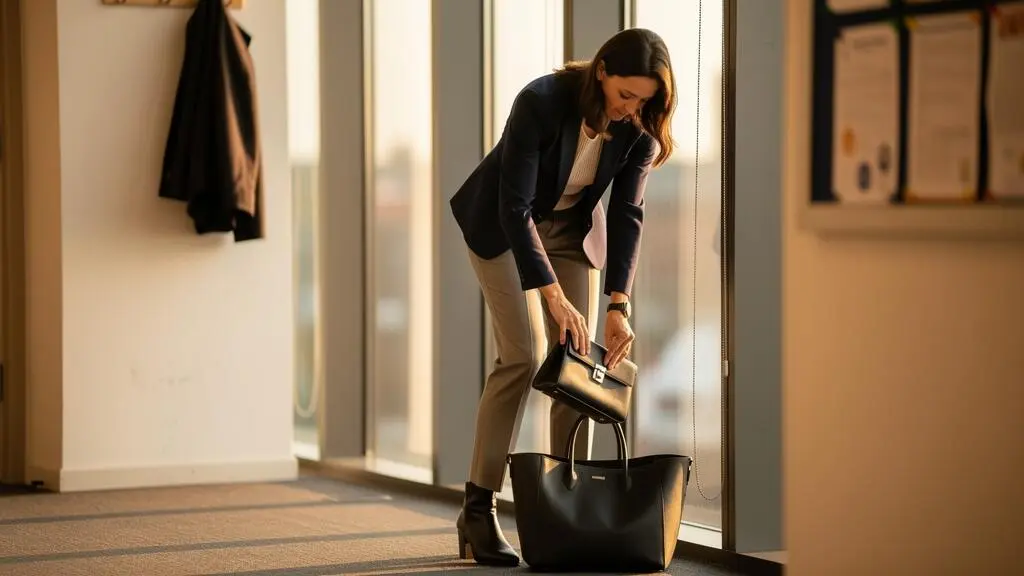
The most useful modern womenswear outfit is not necessarily the one that makes the strongest first impression. It is the one that still looks deliberate after an eight-hour working day, a crowded commute and an unexpected dinner invitation.
For women balancing hybrid work, client meetings and social plans across the UK, that means choosing clothes for several environments rather than one imagined occasion. A blazer that looks authoritative on a video call also needs to feel comfortable on the train. A dress that works in a meeting should still look appropriate under restaurant lighting. And shoes must survive the actual distance between those places.
The solution is a structured foundation, comfortable fabrics and one or two controlled changes. Build the daytime outfit with enough polish to meet the day’s strictest requirement, then adjust its visual emphasis for evening. Prioritise reliable fit, garments that keep their shape and pieces that combine with the rest of your wardrobe. That is more practical than maintaining separate work and evening wardrobes.
Modern womenswear: the practical essentials
- Start with a comfortable, structured outfit appropriate for the most formal setting on your calendar.
- Use one or two switch pieces, such as a compact bag, earrings or different shoes, to change the evening mood.
- Choose versatile separates, maintain the fit of your best garments and plan their rotation around your working week.
- Why Does Modern Womenswear Prioritise Comfort Now Even in “Formal” Settings?
- How to Build a Day-to-Night Outfit Using Two Switch Pieces in Under 5 Minutes
- Co-Ord Set or Separates: Which Gives More Outfit Options in a 5-Day Work Week?
- The “Transitional” Outfit Mistake That Looks Fine at 9 a.m. but Wrong by 7 p.m.
- When Should You Schedule Your Best Pieces So You Don’t Burn Them Out by Thursday?
- How to Choose Neckline and Length in an A-Line Dress So It Works All Day
- How to Look More Expensive Using One Fit Fix, One Fabric Upgrade, and Zero New Outfits
- How Do You Wear an A-Line Dress So It Looks Modern, Not Retro-by-Accident?
Why Does Modern Womenswear Prioritise Comfort Now Even in “Formal” Settings?
Modern womenswear increasingly makes room for comfort because an outfit often needs to serve several professional and social situations without a complete change. Rather than relying on restrictive tailoring, women can achieve a polished appearance through thoughtful fit, fabric structure and proportion. Comfort matters physically, but so does feeling appropriately dressed for the people and occasion.
A working day might begin at home, move into a meeting room and end in a restaurant. Even when individual workplaces have different dress expectations, clothes that can handle this range are particularly useful. The aim is not to make every outfit casual. It is to make polished clothing easier to wear for longer.
28%
Of working adults in Great Britain followed a hybrid working pattern between January and March 2025. This measures working arrangements, not fashion preferences or changes in office dress codes.
Office for National Statistics analysis of hybrid working in Great Britain
There are two different kinds of comfort to consider. Physical comfort concerns how a garment feels when you sit, walk, bend or spend several hours travelling. Breathability, fabric weight, flexibility and the position of seams all affect it. Psychological comfort is the confidence that you have dressed appropriately for the room. A soft jersey dress may feel excellent but leave you uncomfortable during a formal client presentation.
The best modern workwear addresses both. Fabric construction makes a particular difference:
- Ponte: a relatively substantial knitted fabric that can provide stretch while maintaining a clean silhouette, depending on its weight and construction.
- Refined jersey: smooth, well-draping jersey that works for tops and dresses when it is sufficiently opaque and resists distortion.
- Structured knits: knitted pieces with defined edges and enough body to look intentional rather than slouchy.
- Stretch wool: tailoring that combines wool with a degree of flexibility, provided its overall construction remains suitable for the garment.
Fibre composition offers clues, but it does not guarantee performance. Textile Exchange‘s overview of synthetic fibres identifies elastane as a resilient fibre used to provide elasticity. A small amount may help movement, yet comfort still depends on fit, fabric construction and finishing. Elastane blends can also create recycling challenges, so stretch is not automatically the best choice in every garment.
Professional context remains the limiting factor. Before choosing a comfort-led outfit, ask who will be present and what the dress code is intended to communicate. An internal planning day may accommodate knitted trousers and smart trainers. A formal client presentation, ceremony or conservative professional setting may require more conventional tailoring.
Once that foundation is in place, the same clothes become much easier to adjust for an evening invitation without sacrificing the credibility of the daytime look.
How to Build a Day-to-Night Outfit Using Two Switch Pieces in Under 5 Minutes
Build a day-to-night outfit by starting with polished clothing and changing no more than two elements that influence how formal or evening-appropriate it appears. A smaller bag, different shoes, statement earrings or the removal of a blazer can shift the impression without rebuilding the outfit. The process should take minutes because the foundation stays unchanged.
A switch piece is an accessory or removable layer that alters the outfit’s visual message without changing its main structure. Think of a navy trouser suit with a fine-knit top. It already looks composed during the day. For dinner, removing the blazer and swapping a work tote for a compact bag may be enough.
The number of changes should match the venue rather than a rigid definition of eveningwear.
| Evening setting | Recommended change | Reason |
|---|---|---|
| Casual pub or relaxed dinner | One switch: smaller bag or more distinctive earrings | The daytime outfit already provides sufficient polish. |
| Smart restaurant or evening event | Two switches: bag and shoes, or layer and jewellery | The combination creates a more deliberate evening finish. |
| Formal dinner with a stated dress code | Check the dress code before relying on switches | Accessories cannot necessarily make business-casual clothing formal. |
Use the following sequence when the invitation arrives:
- Assess the venue. Consider its dress expectations, lighting and atmosphere. A softly lit restaurant may call for a more defined silhouette, while a noisy, informal bar rarely requires extra formality.
- Adjust the area near your face. Remove a scarf, open the neckline slightly if appropriate or add earrings. This changes the visual focus quickly without disturbing the rest of the clothing.
- Change shoes last. Only swap footwear after checking how it alters posture, trouser length and the movement of a skirt. A hem that looks correct with flats may sit differently over boots.
The counterintuitive rule is to make the daytime version the more fully dressed baseline. A structured blazer or tailored coat earns its place during a meeting. At night, removing that layer can reveal a simpler, sharper outfit. Adding multiple accessories, by contrast, may make an otherwise restrained look feel overworked.
For an office-to-dinner routine, portability matters as much as styling. A soft jewellery pouch, slim clutch or compact fabric belt fits easily into a tote. Earrings are particularly effective because they add little weight or bulk. Shoes need more space, so choose a pair that fits comfortably into your bag rather than assuming large boots are a practical daily extra.
A crease-resistant fabric bag or a soft, unstructured accessory travels more easily than something that needs careful packing. Keep jewellery in a case, and protect shoes with separate bags to avoid transferring dirt to other belongings. If you regularly leave work directly for dinner, storing one spare pair of shoes at the office may be simpler than carrying them.
The best transition looks effortless because most of the decisions happened before leaving home. That depends heavily on whether the garments already work together throughout a normal week.
Co-Ord Set or Separates: Which Gives More Outfit Options in a 5-Day Work Week?
Separates generally offer more flexibility when their colours, proportions and fabrics work across several outfits. A co-ord set provides an immediately cohesive look, but its real value depends on whether the top and bottom also work independently. For a five-day working week, the strongest approach is often one coordinated set supported by versatile existing separates.
A matching co-ord is attractive because it removes decision-making. Put the two pieces together and the outfit already has a clear colour story and visual balance. The problem appears when the matching combination becomes the only one you wear.
Consider a hypothetical wardrobe containing three compatible tops and two compatible bottoms. You are considering adding a two-piece co-ord.
If both new pieces combine successfully with everything already owned, the co-ord provides one matched outfit, up to three outfits using the new bottom with existing tops, and up to two using the new top with existing bottoms. That gives up to six combinations involving the purchase, before considering whether any are too similar or impractical.
But if neither piece works outside the matching set, the purchase provides just one usable combination.
This is why wardrobe maths is more useful than deciding whether co-ords or separates are inherently better.
| Criterion | Co-ord set | Individual separates |
|---|---|---|
| Morning convenience | High: a matched outfit is ready | Depends on how well the wardrobe coordinates |
| Outfit combinations | High only if both pieces work separately | Potentially high with compatible colours and fits |
| When a piece is in the wash | The matched outfit becomes unavailable | Other combinations may remain available |
| Visual consistency | Built into the matching set | Requires repeated design elements |
| Best use | Polished client-facing days and modular dressing | Varied internal days and flexible styling |
The two approaches also have different failure modes. A co-ord can start to feel like a uniform if it is repeatedly worn together. Separate it: matching trousers with a crisp shirt, or wearing the coordinated jacket over a dress, changes the impression without losing the original investment.
Separates can look disjointed when their design languages conflict. Solve that by repeating one anchor colour, similar fabric weights or consistent hardware. For example, charcoal trousers, a navy knit and a structured coat can appear cohesive when the proportions and finishes complement each other.
A practical five-day strategy is to wear the complete co-ord once, style each component separately on another day, and use alternative separates for the remaining outfits. If you have several external meetings, prioritise the matching set for the most formal one. If your week mostly involves internal meetings and home working, a capsule built around adaptable separates may be more useful.
Cost per wear deserves consideration too. A hypothetical £150 co-ord worn as a complete outfit ten times costs £15 per wear of the set. If its components become part of many additional successful outfits, the effective cost per use can decrease. That arithmetic is an illustration, not a prediction: actual value depends on wear frequency, maintenance and how long you continue liking the garments.
The Ellen MacArthur Foundation distinguishes physical durability from emotional durability in its article on designing clothes for longer use. That distinction matters here: a well-made garment is not especially useful if it stops feeling relevant or proves difficult to combine with the rest of your wardrobe.
Versatility is only useful, however, if the outfit continues to look intentional at the end of the day. Some combinations deteriorate visually long before dinner begins.
The “Transitional” Outfit Mistake That Looks Fine at 9 a.m. but Wrong by 7 p.m.
The biggest transitional outfit mistake is choosing clothes that look polished when freshly dressed but lose their structure, surface quality or visual impact after hours of wear. Morning daylight can flatter soft fabrics and pale colours, while accumulated creasing and evening lighting make the same outfit appear less deliberate. Preventing that change matters more than adding accessories later.
Picture a cream lightweight knit, loose linen-blend trousers and very flat casual shoes. At 9 a.m., the combination can look understated and relaxed. By 7 p.m., the knit may have stretched at the elbows, the trousers may show pronounced seat creases and the footwear may look noticeably casual against a smarter restaurant setting.
None of those pieces is necessarily unsuitable on its own. The problem is how they perform together after a full day.
Fabric sheen, creasing and shape retention change how clothing is perceived. Direct morning light can make a matte fabric look clean and fresh. Warmer, lower restaurant lighting may expose uneven shine or surface wear differently. Pale colours are not automatically too casual for evening, but they can need stronger tailoring or more defined accessories to maintain visual contrast.
The highest-risk garments are those that depend on a freshly pressed appearance:
- Lightweight linen blends that develop strong creases after sitting.
- Loose or delicate knitwear that stretches visibly at the elbows or neckline.
- Light-coloured trousers that reveal marks or distortions easily.
- Very casual flat shoes that may not suit the evening venue.
More resilient choices may include substantial ponte, well-constructed wool-blend trousers, refined jersey with good recovery and structured footwear. These are practical candidates rather than guarantees: individual garments still need testing.
Run a quick midday assessment. After sitting for a reasonable period, stand up and check whether the garment falls back into its intended line. Look at the elbows, knees and seat. Check whether your accessories still match the outfit’s level of formality. If possible, examine its colour and texture under indoor lighting rather than judging it only beside a window.
The five-step midday outfit rescue check
- Check the silhouette: stand in front of a full-length mirror and identify one area where the garment has lost its line; note whether it needs smoothing, adjustment or a different layer.
- Inspect the fabric: look for obvious creases, stretched areas or marks and identify the single most visible issue.
- Reset the focal point: choose one face-framing adjustment, such as earrings, collar positioning or lip colour, and confirm that it suits the venue.
- Check the footwear: walk several steps and inspect the trouser or skirt hem; confirm that any shoe change preserves comfortable movement.
- Approve the final look: take one mirror check under indoor lighting and remove any accessory that makes the outfit feel overloaded.
When the outfit has already drifted towards casual, repair the most obvious weakness rather than everything at once. Structured shoes can improve an otherwise relaxed trouser outfit. A clearer lip colour can sharpen a minimal dress. Rolling or resetting sleeves neatly can restore a deliberate line to a soft layer.
Avoid stacking jewellery over tired fabric, layering a second oversized garment over a stretched knit or changing to shoes that distort the hem. Those interventions can draw more attention to the original problem.
Reliable garments reduce the need for emergency fixes. They also make it easier to plan your strongest looks around the days that actually need them.
When Should You Schedule Your Best Pieces So You Don’t Burn Them Out by Thursday?
Schedule your strongest pieces for the days with the highest professional or social exposure, then build less demanding outfits around them. Repeating a favourite garment is not automatically a problem, but planning prevents unnecessary wear, rushed cleaning and outfit fatigue. The aim is to rotate distinctive pieces while keeping dependable wardrobe staples available throughout the week.
Start with your calendar rather than your wardrobe. Identify where appearance carries the greatest importance: a client presentation, an interview, a conference or a significant dinner. Give those days first access to your most polished, reliable clothes.
Then consider audience overlap. Wearing the same distinctive jacket twice in one week matters less when the groups of people are entirely different. Repetition may be more noticeable when you are presenting to the same colleagues or clients on consecutive days, although it is rarely a genuine professional problem by itself.
A hypothetical five-day rotation could work like this:
| Day | Exposure level | Outfit approach |
|---|---|---|
| Monday | High: client presentation | Best tailored co-ord with understated accessories |
| Tuesday | Low: home working and internal calls | Comfortable structured knit with relaxed tailored trousers |
| Wednesday | Medium: office and dinner | Versatile dress with a planned evening switch |
| Thursday | High: external meeting | Statement jacket with alternative separates |
| Friday | Low: internal collaboration | Reliable capsule basics and practical footwear |
The distinction is between outfit fatigue and garment wear. Outfit fatigue is the feeling that you are relying on the same recognisable combinations. Physical wear involves actual deterioration: stretched knitwear, tired shoes, creases or surfaces that need maintenance.
Material-specific care should influence the schedule. The Woolmark Company recommends giving wool clothing 24 hours of rest between wears to help the fibre recover its shape. Its wool garment care instructions also distinguish storage methods: woven wool garments can be hung on suitable shaped hangers, while knitted wool pieces should be folded.
That guidance applies to wool rather than every fabric. Other garments should be maintained according to their construction and care labels. Leather shoes may also benefit from appropriate drying and care between wears, particularly after exposure to rain.
When important events fall on consecutive days, change the styling rather than forcing yourself into completely different clothes. A tailored trouser can appear more formal with a jacket and fine knit, then more relaxed with a crisp shirt and loafers. Changing a belt, tuck or layering order may also shift the overall silhouette.
There is no reason to avoid repeating an excellent outfit just because somebody might remember it. Reliability is often more valuable than novelty, especially when travelling or attending several demanding events.
With the week’s demands mapped out, versatile dresses become especially useful. The right A-line dress can cover several settings, provided its proportions are chosen for real movement.
How to Choose Neckline and Length in an A-Line Dress So It Works All Day
Choose the neckline and length of an A-line dress separately. The neckline determines how formal and face-framing the dress appears, while the hem and amount of flare influence sitting, walking and movement. For a work-to-dinner wardrobe, select a neckline suited to your daytime setting and test the skirt under the conditions of your actual commute and working day.
An A-line silhouette widens gradually from a more fitted upper section. That shape can offer useful freedom of movement without looking shapeless. But a flattering photograph or mirror pose does not tell you whether the dress will work on stairs, in a meeting room or during a windy walk to the station.
Start with the neckline:
- High or crew neckline: often creates a composed daytime appearance. For evening, earrings, a more defined bag or the removal of an outer layer can bring attention back towards the face.
- V-neckline: gives a more open, adaptable frame and can move easily between day and evening, depending on its depth and fabric structure.
- Scoop neckline: can look understated and contemporary, but a very soft, low-cut jersey version may feel too casual for formal office situations.
- Collared neckline: can add daytime definition, especially when the rest of the dress has a simple construction.
Next, assess the hem independently. A dress that looks balanced while standing may rise considerably when seated. A midi length can be practical, but its exact position matters alongside your height, footwear and the skirt’s volume.
Use three fit tests in the changing room. Sit in a chair similar to one used at work and check the hem and comfort around the hips. Raise your arms as if reaching for a shelf and observe whether the dress pulls upwards. Finally, take several full strides and simulate climbing a step. The skirt should move freely without requiring constant adjustment.
Proportion needs more attention than any fixed length rule. A wide flare can create a strong silhouette even with a relatively short hem, but additional volume may also lift or move in the wind. Longer skirts with substantial flare need enough weight and considered styling to avoid feeling excessively traditional.
For cycling or a particularly active commute, test how the fabric behaves in motion and consider whether the dress is genuinely suitable for that journey. A narrower flare, appropriate layer or change of commuting clothes may be more practical than trying to force one dress into every activity.
Sleeves and straps deserve equal consideration in UK workplaces. Sleeveless dresses may be entirely acceptable in some offices, while others expect shoulders to be covered during meetings. Choose the dress with its planned blazer or cardigan already in mind. A bulky jacket shoulder can disrupt the balance of a delicate A-line, whereas a clean, structured layer may complement it.
The neckline should also remain comfortable beneath that layer. Try the dress and jacket together, not as separate purchases. If the neckline bunches, the sleeves pull or the jacket ends at an awkward point across the flare, the combination needs reconsideration.
Once the silhouette fits the way you actually live, its perceived quality depends much more on finish and maintenance than on whether it was an expensive purchase.
How to Look More Expensive Using One Fit Fix, One Fabric Upgrade, and Zero New Outfits
To make existing outfits look more expensive, correct the most visible fit problem, prioritise the better-quality fabrics already in your wardrobe and remove signs of wear. Hem length and shoulder alignment are useful places to start. A clean surface, balanced proportions and well-maintained footwear can noticeably improve the overall impression without assembling a new outfit.
Start by diagnosing the garment rather than assuming you need a different one. Look at yourself from the front and side in a full-length mirror, wearing the shoes and layers you normally use.
If the jacket shoulder seam falls in the wrong place, the upper garment may collapse or pull. If the trouser hem breaks awkwardly over your shoe, the entire lower half can look poorly proportioned even when the waist fits perfectly.
Choose one alteration with the greatest visual impact. A trouser hem is often a comparatively straightforward starting point. Shoulder alterations can be more complex and may not be economical or structurally feasible, especially on a tailored jacket. Ask a professional tailor to assess the garment before committing to a change.
Do not alter hems based only on standing barefoot. Take the shoes you wear most frequently and check the way the fabric falls over them.
The fabric upgrade does not need to involve shopping. Instead, substitute a better piece from your existing wardrobe into the area that attracts the most attention. Replace a thin, tired cardigan with a more substantial knit you already own, or use a well-constructed blazer over a top that otherwise looks too casual.
Look beyond the fibre label. Consider the garment’s weight, surface finish, drape and construction. A fabric that falls cleanly, holds its edges and does not become visibly transparent under normal lighting often gives a more considered impression.
Matte finishes can look restrained and sophisticated, but shine is not inherently cheap. The issue is whether the finish appears deliberate and appropriate for the setting. An unevenly shiny or worn surface can be distracting, whereas a well-maintained satin detail can work beautifully in the evening.
Before leaving home, complete a five-point visual inspection: check for pilling, faded or uneven black fabric, scuffed shoes, loose buttons and visible creases. These details can undermine a well-fitted outfit more quickly than an unfamiliar brand name or a modest original purchase price.
Maintain each item according to its care label. Removing pills with a suitable fabric tool, cleaning appropriate footwear and securing loose buttons may extend the garment’s useful life. Avoid aggressive steaming, brushing or cleaning methods on delicate materials without confirming that they are suitable.
There is a limit to this method. Perfectly pressed casual joggers will not necessarily meet a formal office dress code. A correctly fitted cotton T-shirt can look excellent, but it will not automatically replace a tailored blouse or jacket for a ceremonial event.
Improving perceived quality is different from changing a garment’s dress-code category. Apply fit and maintenance improvements to pieces that already belong in the right context.
With fit, surface quality and proportion under control, the final styling decision becomes easier: making familiar silhouettes feel contemporary without abandoning clothes that already work.
What to remember before styling your next outfit
- Start with the shape of the outfit rather than the number of accessories; one deliberate contrast can change its character.
- Choose footwear that supports both the silhouette and your actual journey, especially when wearing a fuller skirt.
- Separate an ageing print from an otherwise useful dress shape before deciding whether to restyle or replace the garment.
How Do You Wear an A-Line Dress So It Looks Modern, Not Retro-by-Accident?
An A-line dress looks modern when its volume is balanced with a deliberate contrasting element, such as structured footwear, a boxy jacket or clean accessories. The dress itself is rarely the problem. A combination of a full midi skirt, delicate flats and consistently dainty styling can create an unintentionally vintage effect, while changing one major element can make the same dress feel contemporary.
An A-line dress does not belong to one particular decade. Its visual character comes from the relationship between the skirt, footwear, outerwear and accessories.
For example, a simple midi A-line dress with ballet flats, a cropped cardigan and a delicate necklace can evoke a nostalgic silhouette. That may be exactly what you want. But if your intention is modern work-to-evening dressing, the combination can feel too carefully coordinated around one historical aesthetic.
The fastest intervention is usually footwear. Structured loafers add a practical, professional edge. Sleek ankle boots provide visual weight and can make the skirt look more grounded. Minimal, clean trainers can introduce a relaxed contemporary contrast where the workplace dress code permits them.
Consider the order of changes:
- Footwear first: assess how the shoe’s shape and weight balance the flare of the skirt. A heavy sole may work with a substantial fabric but overwhelm a lightweight dress.
- Outerwear second: try a shorter, boxy jacket for contrast or a longline coat for a continuous vertical line. Avoid assuming every cropped cardigan will flatter every A-line.
- Accessories last: simplify jewellery or introduce a more structured bag. Let the silhouette carry most of the visual interest.
The central proportion rule is to contrast softness with structure. A flowing skirt already provides movement and volume. Pairing it with something more defined prevents the entire outfit from becoming soft, rounded or overly decorative.
This principle works across body shapes, but the precise balance is individual. A cropped structured jacket may define the upper body effectively on one person, while a longer, open blazer creates a better vertical line on another. Judge the complete outfit in motion rather than applying a universal hem or jacket-length formula.
Prints and colours can complicate the picture. A small floral print, rounded collar and full skirt may communicate a particular vintage influence more strongly together than any single feature. Replacing delicate accessories with modern footwear can sometimes create enough contrast.
To identify the real issue, mentally separate the print from the shape. Would you like the silhouette if the dress were plain navy or charcoal? If yes, the garment may only need more contemporary styling. If the shape still feels wrong, the issue may be its flare, bodice, hem or proportions.
Similarly, if the print dominates every combination and never suits your existing wardrobe, adding more accessories is unlikely to solve the problem. It may be better to reserve that dress for occasions when its particular aesthetic feels appropriate, or eventually move it out of your regular rotation.
For an office-to-dinner look, try a solid-colour A-line dress with a structured blazer and loafers during the day. In the evening, remove the blazer, change to ankle boots if the hem works with them and carry a compact bag. The dress remains the same; its surrounding proportions communicate the transition.
Before your next mixed work-and-evening day, choose one reliable outfit, check it after sitting and walking, and identify the single styling change that will make it dinner-ready. If it passes those tests without requiring constant adjustment, it is already doing the job.
Can smart trainers work for both the office and dinner?
Yes, when both settings permit casual footwear. Choose clean, well-maintained trainers with a streamlined shape, and balance them with structured clothing such as tailored trousers or a substantial dress. For conservative meetings, formal restaurants or events with explicit dress codes, loafers or smart boots may be more appropriate.
Which colours make a small work-to-evening wardrobe easier to coordinate?
Begin with one or two anchor neutrals already present in your wardrobe, such as navy, charcoal, black or chocolate brown. Add lighter tones or accent colours that work with those anchors. Consistent colour relationships are more important than committing to an entirely neutral wardrobe, especially when mixing co-ords with separates.
How can you handle a last-minute dinner without carrying spare clothes?
Wear a sufficiently polished base outfit and keep a compact switch piece in your work bag. Earrings, a soft small bag or a slim belt may be enough for a casual dinner. If the venue is noticeably smarter, adjust the neckline or remove an office layer. A formal dress code may still require a different outfit.
How do you stop work trousers from looking tired by the evening?
Choose trousers that maintain their intended line after sitting, with an appropriate fabric weight and well-fitted waist, seat and hem. Test them after extended wear rather than relying on how they look freshly pressed. Follow their care instructions, allow suitable recovery between wears and address persistent fit problems through alteration where feasible.
Is a capsule wardrobe better than owning separate office and evening outfits?
A capsule wardrobe can be more practical when your office and social dress requirements overlap. Shared trousers, dresses, jackets and accessories create more potential combinations with fewer pieces. However, occasional formal events or highly specialised professional settings may justify dedicated garments. The best arrangement depends on what you actually wear, not a fixed number of clothes.