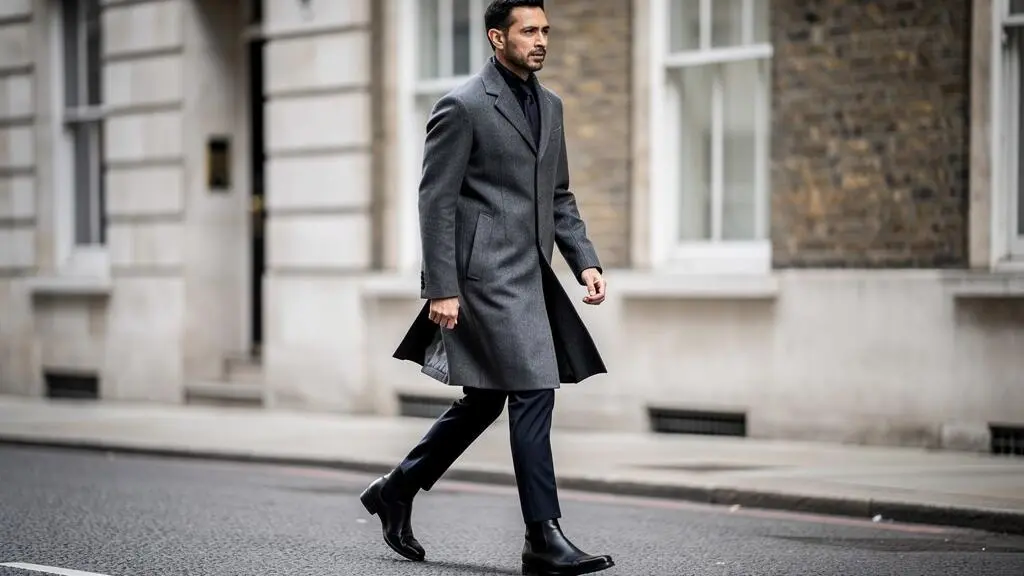
Looking expensive has remarkably little to do with how much you spend. A convincing high-end appearance comes from the way clothes fit, how fabrics hold their shape, how well shoes and accessories are maintained, and how deliberately an outfit is put together. For UK professionals, these details matter because a polished wardrobe needs to work across office days, commuting, meetings and weekends without requiring a constant stream of new purchases.
The most effective approach is to improve what is already in your wardrobe before shopping for anything else. A properly adjusted trouser hem, a clean wool coat, a well-maintained pair of leather shoes and restrained accessories can create a stronger impression than several expensive labels worn without coordination. The objective is not to imitate wealth or follow a trend. It is to develop a consistent visual standard built around fit, material, condition and proportion.
A high-end aesthetic is therefore a practical wardrobe discipline: identify the details that influence appearance, correct the weaknesses that undermine it, and spend selectively where an improvement will make a lasting difference.
The Principles of an Expensive-Looking Wardrobe
- Prioritise restraint: A coherent silhouette, understated colours and one focal point create a more deliberate appearance than competing logos and accessories.
- Improve before replacing: Correct fit, remove pilling, press garments and maintain shoes before buying new outfits.
- Invest according to visibility: Choose better outerwear, footwear or everyday accessories according to what people actually see you wearing.
- Why Does a High-End Look Come From Restraint More Than Logos?
- How to Look More Expensive Using One Fit Fix, One Fabric Upgrade, and Zero New Outfits?
- Shoes or Coat: Which Purchase Makes You Look More High-End in Everyday UK Life?
- The Detail That Destroys a High-End Look Even If the Outfit Cost a Lot
- When Should You Replace or Repair Key Items So You Always Look Polished Without Overspending?
- Why Does Fabric Texture Change How ‘Put-Together’ You Look in 5 Seconds?
- How to Choose Men’s Accessories Based on What You Carry Every Day, Not Hype?
- Which Men’s Designer Accessories Add Refinement Without Looking Flashy?
Why Does a High-End Look Come From Restraint More Than Logos?
A high-end look often comes from restraint because it allows the construction, fit and materials of an outfit to attract attention rather than competing branding. When colours, accessories and visible labels are kept under control, the overall silhouette becomes easier to appreciate. However, discreet branding is not a universal indicator of wealth: different audiences interpret luxury signals differently, making overall coherence a more reliable styling objective than following a single aesthetic trend.
The visual mechanism is straightforward. An outfit contains several signals: colour, shape, texture, condition, branding and accessories. When too many elements demand attention simultaneously, the result can appear visually busy. Removing unnecessary details gives the remaining elements more definition. A structured coat, clean trousers and carefully maintained shoes become the focus because nothing else competes with them.
Research summarised by the American Marketing Association explains that luxury brand prominence communicates status differently across consumer groups. Some affluent consumers favour inconspicuous branding, while others prefer visible logos. The distinction matters: discreet branding can communicate a particular form of status, but it should not be treated as proof that every logo-free garment looks expensive or that all conspicuous branding appears unsuccessful. The American Marketing Association’s research summary on luxury brand prominence provides useful context for understanding these different signals.
For everyday styling, a more practical principle is the one focal point rule. Choose one element that deserves attention and allow the rest of the outfit to support it.
- Coat-led outfit: A well-structured charcoal overcoat, dark trousers and understated boots.
- Shoe-led outfit: Simple leather shoes with neutral trousers and an uncomplicated jacket.
- Accessory-led outfit: A restrained watch with a clean shirt, knitwear and minimal additional hardware.
Problems arise when several focal points compete. A prominent designer belt, oversized logo bag, statement watch and heavily branded trainers can make an otherwise sophisticated outfit feel disconnected. The issue is not that any individual item is necessarily unsuitable. It is that the outfit has no clear visual hierarchy.
Restraint also makes financial sense. Neutral garments are easier to combine, reducing the need to purchase separate outfits for different occasions. A smaller collection of well-fitting pieces can provide more combinations than a larger wardrobe of trend-dependent items. The money saved can be directed towards alterations, shoe care and better-quality materials where they genuinely improve everyday wear.
The strongest result is not an outfit that announces its price. It is one in which every element appears intentional, comfortable and appropriate to the occasion.
How to Look More Expensive Using One Fit Fix, One Fabric Upgrade, and Zero New Outfits?
You can make an existing wardrobe look considerably more polished without buying another outfit by correcting one visible fit problem, improving the presentation of your fabrics and maintaining your garments properly. These three changes address the details that most directly influence appearance. Start with the item you wear most frequently, identify its weakest feature and correct that before considering a replacement.
First, correct the fit. Clothing does not need to be extremely slim or sharply tailored to look refined. It needs to follow the body’s proportions without pulling, sagging or creating unnecessary folds. A small alteration can make an existing garment look more considered.
Start with four areas:
- Trouser break: Check where the trouser hem meets the shoe. Excessive fabric pooling around the ankle can make trousers look untidy. A clean, appropriate break creates a more deliberate finish.
- Shoulder seams: On a structured jacket, the shoulder seam should generally align with the natural end of the shoulder. A seam falling noticeably beyond it can make the garment appear oversized.
- Sleeve length: Jacket sleeves should be proportionate to the wrist and, where appropriate, allow a small amount of shirt cuff to show.
- Hem clearance: Check that trousers, coats and shirts have enough length for their intended use without dragging or appearing accidentally cropped.
A simple pinch test can help identify excess fabric. At the waist, thigh or side seam, gently pinch the material to see whether it creates unnecessary volume. This is only a preliminary fit check, not a substitute for professional tailoring, because garment construction and intended ease also matter.
Second, improve how existing fabrics look. You do not necessarily need to replace a garment to make its material appear better. A clean, pressed cotton shirt, a properly brushed wool jumper and trousers without excessive creasing can look more refined than similar pieces that have been neglected.
Pay attention to surface appearance. Wool, cotton twill and dense knitwear can provide attractive structure and a relatively matte finish. However, fibre content alone does not determine quality. Fabric weight, construction, weave, finishing and how a garment has been maintained all influence its appearance. A well-made synthetic fabric can also perform effectively, particularly in practical outerwear.
Third, establish a 30-minute maintenance routine. This is a practical wardrobe exercise, not a manufacturer-prescribed procedure. Set aside time to:
- Press or steam suitable garments according to their care labels.
- Remove lint from coats, trousers and knitwear.
- Carefully remove visible pilling with an appropriate fabric comb or shaver.
- Inspect loose or mismatched buttons and arrange suitable replacements where needed.
- Brush and clean footwear using products appropriate to its material.
Woolmark explains that pilling develops through friction and can make wool clothing appear worn. It also describes methods for removing pills, including suitable fabric shavers and garment combs. Its guidance supports maintenance rather than automatic replacement when small surface imperfections appear. Delicate garments still require care: aggressive shaving or unsuitable tools can damage the fibres. See Woolmark’s explanation of fabric pilling for further technical guidance.
Your Five-Step Wardrobe Upgrade Checklist
- Choose one frequently worn garment: Record the item that currently looks least polished in your regular wardrobe.
- Identify its main fit problem: Write down the specific issue, such as excessive trouser pooling or an unsuitable jacket shoulder.
- Assess its fabric condition: Note visible creases, lint, pilling, loose threads or surface damage.
- Complete the maintenance: Press, clean, brush or carefully depill the garment as appropriate, recording what has been improved.
- Check the finished outfit: Photograph the garment with suitable shoes and other existing pieces to verify the improvement in proportion and overall presentation.
Once the wardrobe is properly maintained, any future purchase becomes easier to evaluate. Instead of buying more clothing to solve a styling problem, you can identify the specific missing function or material that would genuinely improve what you already own.
Shoes or Coat: Which Purchase Makes You Look More High-End in Everyday UK Life?
Neither shoes nor a coat is automatically the better investment. The right purchase depends on which item is most visible during your normal working week and which one currently limits the quality of your outfits. In the UK, outerwear deserves particular attention because rain and changing temperatures influence daily clothing choices. Shoes, meanwhile, communicate care and finish at close range, especially in professional and indoor environments.
A useful way to make the decision is to consider visibility per wear rather than prestige or purchase price. Someone who walks, commutes by public transport and spends substantial time outdoors may benefit more from a well-structured coat. Someone who travels mainly between a car, office and indoor meetings may gain more from clean, versatile footwear.
Met Office‘s UK long-term climate averages for 1991–2020 record approximately 159 days per year with at least 1 mm of rainfall. This is a UK-wide average rather than a prediction for any particular city or an indication of continuous rainfall. Nevertheless, it demonstrates why weather suitability deserves consideration when choosing outerwear.
159.08 days
Average annual number of UK days with at least 1 mm of rainfall in the Met Office’s 1991–2020 climate averages. Regional conditions vary, and this statistic does not establish how frequently any individual needs a coat.
Met Office, UK long-term climate averages.
For a coat, the most important visual characteristics include:
- Shoulder structure: The garment should sit naturally without excessive padding or collapsed shoulders.
- Collar condition: A clean, properly shaped collar frames the face and makes the entire garment look more considered.
- Fabric and drape: The material should fall naturally without excessive shine, distortion or unwanted creasing.
- Practical weather resistance: A coat suitable for local conditions is more useful than an attractive garment that becomes difficult to maintain in wet weather.
For shoes, simplicity and condition matter more than an elaborate design. A clean leather derby, understated loafer or well-maintained boot can work across several professional settings. Pay attention to the shape of the last, the condition of the upper, the sole and the heel. Quality leather can develop character through use, but deep scuffs, damaged edges and neglected soles weaken the overall impression.
The following comparison provides a practical decision framework.
| Decision factor | Prioritise a coat | Prioritise shoes |
|---|---|---|
| Daily routine | Frequent walking, outdoor exposure and public transport | Office-based work and mostly indoor environments |
| Current problem | Poor structure, unsuitable weather protection or visible wear | Scuffed uppers, worn soles or unsuitable styling |
| Visual contribution | Defines the outer silhouette and is often the most visible layer outdoors | Completes the outfit and receives close-range attention |
| Maintenance | Appropriate cleaning, brushing and weather care | Regular cleaning, conditioning where suitable and professional repairs |
| Best purchase logic | Versatility, suitable construction and practical weather performance | Comfort, simple design, durable materials and repairability |
Consider an explicitly hypothetical example. A professional commuting five days a week through a rainy city might receive greater practical value from a versatile, weather-appropriate coat than from replacing already-presentable shoes. A colleague who works mainly indoors and wears the same footwear throughout the week might benefit more from upgrading worn shoes. Neither choice is universally superior; the best option addresses the most visible weakness in the individual’s routine.
Ultimately, a high-end wardrobe is not built by choosing the most expensive category. It is built by identifying which item carries the greatest practical and visual responsibility in everyday life, then selecting one that can be maintained properly.
The Detail That Destroys a High-End Look Even If the Outfit Cost a Lot
The detail that most consistently undermines an expensive-looking outfit is poor condition. Pilled knitwear, scuffed shoes, yellowed shirts, fraying hems and loose buttons can make otherwise good clothing appear neglected. Price cannot compensate for visible deterioration. A clean, properly maintained outfit made from affordable garments can therefore look more polished than an expensive ensemble that has not received basic care.
This is particularly important because people rarely evaluate an outfit by examining each garment’s original retail price. They see the overall result: whether the clothes fit, whether the materials look cared for and whether the person appears appropriately dressed. A single obvious flaw can draw attention away from several well-chosen pieces.
Common examples include:
- Pilled knitwear: Fuzzy balls on jumpers can create a worn appearance, particularly around the elbows, sides and sleeves.
- Scuffed footwear: Dirty uppers, worn heels and damaged sole edges can undermine an otherwise neat outfit.
- Yellowed white shirts: Discolouration around collars and cuffs can make formal clothing look tired.
- Unfinished hems: Loose threads, fraying and uneven alterations are especially visible on trousers.
- Damaged accessories: Worn bag straps, peeling surfaces and scratched hardware can make everyday essentials look neglected.
Woolmark identifies friction during wear as a cause of pilling and explains why the resulting surface can look unsightly. The important distinction is between removable surface wear and damage that cannot reasonably be restored. A few pills may be treatable; thinning fabric, holes or substantial structural deterioration require a different decision.
The most effective habit is a brief inspection before leaving home. A 60-second scan can catch details that are easy to overlook when dressing quickly.
- Check the collar and cuffs for stains, discolouration and creasing.
- Inspect the front and sides of knitwear for visible pilling or loose threads.
- Look at trouser hems to check for fraying, dragging or excessive creasing.
- Check shoe uppers, soles and heel edges for dirt or obvious damage.
- Inspect bag straps, hardware and visible accessories for wear.
Grooming should receive the same attention. Clean hair, maintained facial hair, tidy nails and appropriate personal hygiene contribute to a coherent appearance. The objective is not an elaborate grooming routine or an artificial standard of perfection. It is to avoid preventable details that distract from an otherwise considered outfit.
There is also a difference between natural signs of use and neglect. A leather item can develop an attractive patina, and a wool coat can show normal signs of wear without looking unsuitable. The question is whether the item remains clean, functional and visually consistent with the rest of the outfit.
A polished appearance is maintained through small, repeatable habits rather than occasional expensive purchases. Once condition becomes part of the dressing routine, the wardrobe becomes easier to manage and fewer items need premature replacement.
When Should You Replace or Repair Key Items So You Always Look Polished Without Overspending?
Repair an item when its main structure remains sound and the visible damage can be corrected at a reasonable cost. Replace it when deterioration is permanent, affects its function or makes it unsuitable for the occasions when you wear it most. Shoes and well-constructed outerwear can often justify professional maintenance, while some inexpensive shirts and knitwear may be more economical to replace. The correct decision depends on condition, repair cost and expected future use.
The first step is to distinguish between repairable damage and irreversible deterioration.
| Item or problem | Consider repairing when | Consider replacing when |
|---|---|---|
| Leather shoes | The upper remains sound and the sole or heel can be repaired. | The structure or upper is too damaged for a worthwhile restoration. |
| Coats | Buttons, hems, lining or minor seams need attention. | The fabric has substantial irreversible damage or the coat no longer serves its purpose. |
| Knitwear | Small amounts of pilling can be removed safely or minor damage can be mended. | The material is badly thinned, stretched or permanently damaged. |
| Shirts | A button, seam or fit issue can be corrected economically. | Persistent discolouration or fabric deterioration affects the visible finish. |
| Trousers | Hems, waist adjustments or minor seam problems can be corrected. | Permanent shine, extensive thinning or irreparable damage affects appearance. |
Ethical Consumer recommends considering repair, alterations and reuse before discarding clothing that remains suitable for continued wear. Its UK consumer guidance also discusses professional shoe repairs as an alternative to purchasing replacement footwear. The Ethical Consumer’s advice on clothing and shoe reuse provides practical context for making these decisions.
However, repairability does not automatically make a repair financially sensible. Compare the cost of the proposed work with the price of a suitable replacement, taking into account how often the item will be worn and how long it is likely to remain useful.
A simple decision framework is:
- Repair immediately: A loose button, minor seam issue or shoe problem that could worsen with continued use.
- Assess professionally: Structural damage to a coat, significant footwear wear or alterations requiring specialist equipment.
- Replace selectively: An item with permanent visible damage that cannot be restored to a suitable standard.
- Keep using: A garment with minor imperfections that remain unobtrusive, functional and appropriate for its intended setting.
Visibility should influence replacement priorities. If a coat is worn throughout the working week, its deterioration is likely to matter more to your daily presentation than damage to a rarely used weekend garment. Similarly, if the same shoes appear in most office outfits, their condition deserves regular attention.
Seasonal planning helps avoid unnecessary emergency purchases. Before colder or wetter weather arrives, inspect coats, knitwear and boots. Before a new professional season or a change in working routine, check shirts, trousers and everyday shoes. This is a planning suggestion rather than a guarantee of savings, but it creates an opportunity to identify repairs and replacements before they become urgent.
Another useful distinction is between an item’s original price and its future value. A more expensive coat may justify repair if it remains versatile and structurally sound. An inexpensive shirt may not justify substantial alteration if replacing it is more practical. Neither outcome should be assumed without comparing the actual options.
Maintaining a wardrobe is ultimately about managing the condition of frequently worn pieces. A few planned repairs and selective replacements are easier to control than repeatedly buying clothes because existing outfits have become difficult to wear.
Key Decisions Before Choosing Your Accessories
- Prioritise materials and textures that complement the weight and structure of your existing clothes.
- Choose everyday accessories according to actual use, professional context and the condition of the items you already own.
- Spend on designer accessories only when their finish, durability or functionality provides a meaningful improvement beyond the label.
Why Does Fabric Texture Change How ‘Put-Together’ You Look in 5 Seconds?
Fabric texture influences how polished an outfit appears because it affects the way garments hold their shape, reflect light and interact with one another. A dense knit, structured wool coat or substantial cotton trouser can create a more deliberate silhouette than a limp or heavily creased alternative. Texture is not a guarantee of quality, but differences in surface, weight and drape can be immediately visible, even when two garments have similar colours and designs.
Consider the difference between two neutral outfits. The first combines a thin, shiny synthetic jumper with lightweight trousers that collapse around the legs. The second pairs a substantial navy knit with structured cotton trousers and clean leather shoes. Neither outfit requires a visible brand, but the second has a clearer relationship between its materials and proportions.
This is the principle of visual weight. Garments should feel compatible in terms of thickness, structure and drape. A heavy winter knit generally works better with trousers that have enough substance to balance it. Conversely, lightweight summer trousers may look more natural with a fine-gauge shirt or lightweight knit than with an oversized, heavy sweater.
Texture also creates visual depth without introducing unnecessary patterns. A monochrome outfit combining matte wool, smooth cotton and restrained leather can look more considered than an outfit containing several competing prints. The colour palette remains simple while differences in surface prevent the outfit from looking flat.
When assessing fabrics, look beyond the label and use several practical observations:
- Check the drape: Observe whether the garment falls naturally or creates unwanted stiffness and folds.
- Assess recovery: Gently stretch an appropriate area and see whether the fabric returns towards its original shape. This is an indication, not a definitive durability test.
- Inspect the surface: Look for uneven finishing, excessive shine, loose fibres and visible damage.
- Check opacity: Hold the material against light where practical to assess whether it is sufficiently opaque for its intended use.
- Consider construction: Examine seams, lining, stitching and finishing rather than judging quality from fibre content alone.
A brief rubbing test should not be treated as a reliable prediction of long-term pilling. Woolmark explains that pilling depends on factors including abrasion, fibre characteristics and fabric construction. Its technical discussion also identifies fibre length, yarn twist and fabric cover factor as relevant considerations in wool textile design.
For professionals building a versatile wardrobe, texture should be considered alongside occasion and season. A dense wool jumper may be suitable for colder months, while a fine cotton knit can work in a more flexible indoor setting. Similarly, a structured cotton overshirt and a formal wool jacket may both be neutral garments but communicate different levels of formality.
One of the simplest ways to improve an outfit is to choose a consistent material weight across its main pieces. This does not mean matching every fabric exactly. It means avoiding combinations in which one item looks noticeably flimsy or visually disconnected from the others.
When materials work together, even a restrained combination of basic garments can look deliberate. The result comes from proportion, surface and construction working together, not from the price printed on the label.
How to Choose Men’s Accessories Based on What You Carry Every Day, Not Hype?
The most useful men’s accessories are the ones that support your actual daily routine. A wallet, belt, watch, bag or key holder deserves attention when it is used regularly, fits your usual environment and remains in good condition. Choosing accessories around daily habits creates a more coherent appearance than buying statement pieces simply because they are fashionable or associated with a particular designer.
Start with a function audit. Identify what you genuinely carry throughout a normal working day. This may include a phone, wallet, keys, laptop bag, watch and belt. Then consider which of these items are visible, handled frequently and important to your professional routine.
The objective is to improve the accessories that contribute most to everyday presentation, not to accumulate a collection.
Use three questions to assess each item:
- Frequency: Is it used daily or only for occasional situations?
- Context: Does it suit the formality of your workplace and the clothes you normally wear?
- Condition: Are the material, edges, stitching and hardware still presentable?
For example, a structured laptop bag may be a more valuable purchase than a statement weekend bag if you carry work equipment every day. Similarly, a practical leather wallet may deserve attention before a decorative accessory that rarely leaves a drawer.
Material and maintenance matter particularly for accessories because they are frequently handled and often seen at close range. Leather can offer durability and develop character when properly cared for, while quality canvas can be practical and understated. Neither material is automatically superior in every situation. Construction, intended use, finish and maintenance requirements should guide the decision.
Pay particular attention to:
- Bags: Inspect straps, handles, corners, stitching and the condition of the main surface.
- Belts: Choose an appropriate width and a buckle that works with your usual clothing and footwear.
- Wallets: Avoid unnecessary bulk and inspect worn edges, loose stitching and damaged surfaces.
- Watches: Consider whether the case size, dial and strap suit the occasions when you wear them.
- Key accessories: Keep everyday objects practical and visually unobtrusive.
Consistency also matters. If your daily wardrobe is built around understated tailoring and neutral colours, a heavily branded sports bag or oversized statement accessory may feel disconnected. This does not mean every item must match perfectly. It means that the accessories should belong to the same general visual language as the clothes.
There is also a practical financial advantage to choosing accessories around use. An item that performs a daily function has a clearer justification for its cost than a trend-led purchase that is rarely worn. Before upgrading, ask whether the existing item can be cleaned, repaired or maintained. A worn leather bag may need professional attention rather than immediate replacement.
For UK professionals, versatility is particularly useful. An accessory that works with office tailoring, smart-casual clothing and weekend outfits is generally easier to integrate than one designed for a narrow trend or occasion.
The strongest accessory collection is not necessarily the largest or most expensive. It is the one in which every item has a clear purpose, complements the wardrobe and remains suitable for repeated use.
Which Men’s Designer Accessories Add Refinement Without Looking Flashy?
Men’s designer accessories can add refinement when their materials, proportions and finishing improve an outfit without dominating it. A simple leather belt, understated watch, clean wallet or well-made scarf can contribute to a polished appearance, whether or not the item carries a designer label. The important distinction is between an accessory that improves everyday presentation and one that exists primarily to make its price or branding visible.
For a restrained wardrobe, several categories deserve consideration.
- Leather belts: A clean, appropriately proportioned belt with restrained hardware can connect trousers and footwear. Matching the general tone of brown or black leather often creates a more coherent result.
- Watches: A simple dial, balanced case size and suitable strap can complement professional clothing without becoming the focal point of every outfit.
- Wallets: A slim design with durable stitching and a neat finish is generally more practical than an oversized wallet covered in prominent branding.
- Scarves: A well-made wool or cashmere scarf can add texture and seasonal practicality while remaining understated.
- Bags: A structured, functional design in leather or quality canvas can work well for commuting and professional environments.
The best selection criteria are independent of the designer name. Look for materials suited to the intended use, consistent finishing, durable construction and branding that does not overpower the item. Hardware deserves particular attention. Using one dominant metal tone across a belt buckle, watch and bag hardware can create a more deliberate appearance, although exact matching is not essential.
There is a useful distinction between refinement and flashiness. An accessory becomes visually dominant when its size, colour, branding or decorative details attract more attention than the rest of the outfit. A single statement item can work in the right context, but several highly visible designer pieces worn together can create unnecessary competition.
This is where the one focal point principle becomes useful again. If the coat is the central feature of an outfit, accessories should support its shape and colour rather than compete with it. If a watch is the focal point, a simple belt and understated bag will generally create a more balanced result.
Designer accessories can justify their price through construction, finishing, durability or functionality. However, the label alone does not guarantee these benefits. A less expensive item with better practical suitability may be the stronger purchase. The question should always be whether the accessory solves a real wardrobe need.
Before purchasing, consider the following:
- Will it work with at least several outfits already in your wardrobe?
- Is the material appropriate for the frequency and conditions of use?
- Does the design remain appealing without relying on a visible logo?
- Can it be maintained or repaired if it becomes worn?
- Does its price reflect a meaningful improvement in construction or everyday function?
Long-term value also depends on the availability and cost of maintenance. A leather bag that can be professionally repaired may remain useful for years, while an inexpensive accessory with poor construction may need frequent replacement. These are possibilities to assess rather than guaranteed outcomes for every product.
For anyone developing a high-end aesthetic on a realistic budget, the most sensible approach is to upgrade accessories gradually. Start with the item that is used most often and has the greatest impact on everyday outfits. Keep the remaining choices understated until a genuine need arises.
A refined wardrobe does not need to prove that every item is expensive. It needs to show that each purchase has been considered, each garment fits properly and each accessory contributes something useful. Begin by reviewing the items already in regular rotation, identify the one that would benefit most from a genuine upgrade, and make that decision on construction, versatility and long-term care rather than branding alone.
Can you look expensive without wearing designer brands?
Yes. An expensive-looking appearance depends more on fit, fabric presentation, garment condition and coordination than on designer labels. Well-maintained neutral clothing, appropriate tailoring and understated accessories can create a polished appearance without luxury spending. Visible branding is only one possible status signal, not a requirement for refined style.
What colours make men’s outfits look more expensive?
Navy, charcoal, black, cream, grey, olive and muted brown are useful colours for building a versatile wardrobe. Their advantage is that they are relatively easy to coordinate, not that they are inherently more expensive-looking. Fit, fabric, contrast and condition remain important. A coherent colour palette also makes it easier to create multiple outfits from fewer garments.
Does expensive-looking clothing have to be made from natural fibres?
No. Wool, cotton, linen and other natural fibres can offer attractive texture and drape, but fibre content alone does not determine quality. Construction, fabric density, finishing, opacity and suitability for the intended use also matter. Some synthetic fabrics provide excellent weather resistance and practical performance. Assess the complete garment rather than relying on its composition label.
How many accessories should a man wear for a polished look?
There is no universal ideal number. The better approach is to use accessories that serve a clear purpose and suit the formality of the outfit. A watch, belt and practical bag may be entirely appropriate for a professional setting. Avoid adding multiple statement pieces that compete for attention. Balance and suitability matter more than counting accessories.
What is the first wardrobe upgrade to make on a limited budget?
Start with the most frequently worn garment that currently has a noticeable problem. If its fit is poor, consider alterations. If it is creased or pilled, assess whether appropriate maintenance can improve it. If it is permanently damaged, compare repair and replacement options. This approach directs spending towards a visible improvement rather than another unnecessary outfit.